

More news on this day
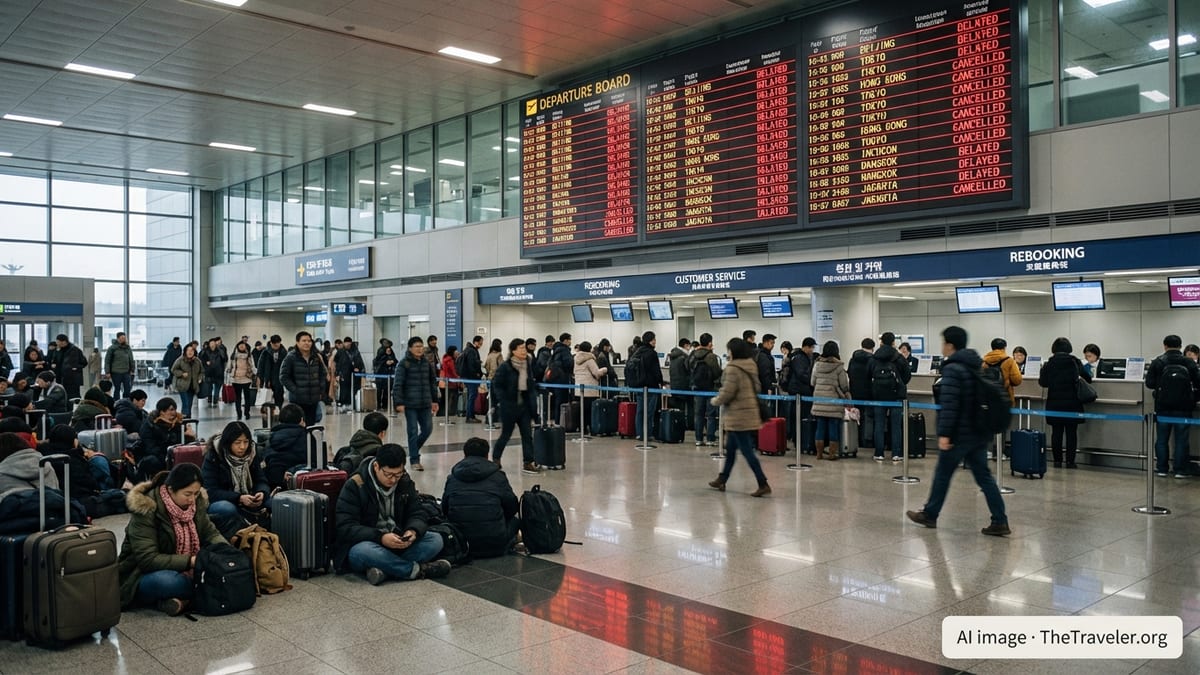
A growing wave of flight delays, cancellations and operational breakdowns is exposing what industry analyses describe as a $34 billion crisis for global aviation, as carriers, regulators and infrastructure struggle to keep pace with record demand and mounting disruption risks.
Get the latest news straight to your inbox!
A Mounting Financial Toll from Chronic Disruption
Recent industry economics reports indicate that delays and cancellations have become a structural cost rather than an occasional shock, with global disruption now estimated to be draining airlines and their partners on the order of tens of billions of dollars each year. One widely cited analysis places the hit from flight delays alone at around 34 billion dollars annually once lost revenue, compensation, crew and aircraft repositioning, and wider economic spillovers are included.
New data from airline performance trackers suggests that disruption is rising faster than traffic. One global disruption review for 2024 and early 2025 found flight volumes up by roughly 6 to 7 percent year on year, while delays and cancellations climbed nearly three times as fast. That imbalance is eroding already thin margins, particularly for carriers operating in congested hubs and weather sensitive regions.
In Europe, economic research from airline and airport groups points to air navigation service provider related delays alone costing more than 16 billion euros up to October 2025, underlining how air traffic management bottlenecks are feeding into the wider global bill. Analysts note that this figure does not capture broader knock on effects such as missed connections, hotel stays or business losses, which help push the worldwide cost of delays toward the 34 billion dollar mark.
Travel insurance and claims data echo the trend from the passenger side. One recent analysis of U.S. flights between mid 2024 and mid 2025 found nearly one in four trips delayed or cancelled, with average consumer claims for disrupted itineraries running into hundreds of dollars per traveler. Those payouts, combined with airlines own reimbursement obligations and loyalty costs, are a growing component of the overall financial burden.
Staffing Shortages and Strained Airspace
Behind many of the delays is a shortage of people in critical roles, especially in air traffic control. Workforce plans and government watchdog reports in the United States highlight a deficit of several thousand certified controllers, with about 90 percent of towers classified as understaffed. Industry analyses point out that nearly two thirds of major U.S. hubs are operating below target staffing levels, forcing airspace slowdowns, ground delay programs and chronic schedule padding.
Recent operational logs show how that staffing gap manifests day to day. In March 2026, for example, ground delay programs were in place for large parts of the month at New York area facilities, with average holdups often stretching from 45 minutes to more than two hours. Similar patterns have been reported at other high density hubs, where the combination of limited controller capacity and rising flight counts has left little room to absorb weather or technical shocks.
Airlines also continue to grapple with their own crew constraints. New flight duty and rest rules in several markets have tightened scheduling margins, while ongoing labor disputes and strikes among cabin crew and ground workers periodically take capacity off line. A recent strike by flight attendants at a major North American carrier, for example, led to widespread cancellations and reignited debate over pay structures that do not compensate crews while aircraft sit delayed at the gate.
Industry consultants warn that unless training pipelines are expanded and working conditions made more attractive, staffing will remain a primary driver of disruption costs. The lag between hiring and fully certifying new controllers or pilots is measured in years, meaning the system is likely to feel the effects of current shortages well beyond the current travel season.
Technology Failures and Cyber Risks Add New Vulnerabilities
Alongside human resource pressures, a series of high profile technology outages has underscored the fragility of aviation’s digital backbone. In 2024 and 2025, multiple carriers and airports experienced system wide disruptions tied to software glitches or IT vendor problems, leading to thousands of cancellations in some cases and leaving passengers stranded across continents.
One of the most disruptive recent episodes followed a faulty software update at a major IT security provider that cascaded through airline and airport systems worldwide, triggering protracted flight cancellations at a leading U.S. carrier and prompting litigation over the resulting losses. More recently, a hardware failure at a North American airline’s data center forced a temporary ground stop that rippled into the next day’s operations.
Cybersecurity incidents are adding another layer of risk. A 2025 cyberattack on airport check in and boarding software used across Europe forced several major hubs, including Heathrow and Brussels, to fall back on manual processing. Published coverage described long queues, significant delays and a rolling wave of cancellations even after systems were restored, as aircraft and crews fell out of position.
Regulators and industry groups have warned that as more of the aviation ecosystem migrates to cloud based, interconnected platforms, the system’s exposure to both cyberattack and simple software failure will grow. Analysts argue that underinvestment in resilience and backup processes effectively transfers additional cost and risk onto passengers, insurers and downstream sectors of the economy.
Weather Extremes and Infrastructure Limits Compound the Crisis
Climate and infrastructure stresses are compounding the financial hit from delays. Recent summer seasons in North America and Europe have seen severe thunderstorms, heat waves and smoke from wildfires repeatedly trigger ground stops and rerouting at key hubs. One analysis of the 2025 U.S. summer travel period reported that more than 27 percent of flights were delayed, with cancellation rates edging higher than the previous year, largely due to convective weather systems colliding with already crowded skies.
Major winter storms are also becoming more disruptive as airlines operate closer to capacity. During a December 2025 winter storm in North America, thousands of flights were delayed or cancelled across the Northeast as snow and freezing drizzle intersected with holiday demand. Airports struggled to keep runways clear and de icing operations on schedule, showing how even predictable seasonal weather can tip a strained system into widespread disruption.
At the same time, physical infrastructure in some regions is straining under passenger growth. Capacity constraints at busy European and U.S. hubs, including limited runway slots and gate availability, mean that any local delay can quickly propagate through the network. Analysts note that major modernization programs in air traffic management and terminal expansion have moved slower than demand growth, widening the gap between what the system can handle and what airlines are scheduling.
Emerging border technologies and security procedures have at times added to congestion. Early reports from new digital entry systems at some European airports have cited longer queues and missed flights, raising questions about rollout planning and coordination with airlines. While such systems are intended to speed flows over the long term, transitional hiccups are currently feeding into the broader disruption picture and associated costs.
Airlines, Regulators and Travelers Reassess the Cost of Reliability
The cascading effects of disruption are forcing a recalibration of how much reliability is worth and who should pay for it. Aviation policy discussions in the United States and Europe are increasingly focused on minimum service standards, refund rights and compensation for passengers facing long delays, particularly when caused by staffing or technical issues under the control of airlines or governments.
Industry bodies argue that more consistent investment in air traffic control modernization, airport infrastructure and cyber resilience would reduce the overall 34 billion dollar drag from delays by cutting the frequency and severity of disruption events. Proposals range from accelerated hiring and training programs for controllers to incentives for airlines to maintain greater schedule buffers and spare aircraft.
For travelers, the new reality is prompting behavioral shifts. Travel insurance providers report rising interest in policies that specifically cover missed connections, extra hotel nights and rebooked flights, reflecting a recognition that disruption is no longer an exception but a recurring risk. Analysts note that this additional layer of protection, while valuable, ultimately adds to the total economic cost of unreliable air travel.
With global demand for flying still climbing and major fleet renewals and infrastructure projects years away from full effect, the tension between growth and reliability is set to define aviation’s near term trajectory. Whether that estimated 34 billion dollar annual hit from delays shrinks or swells will depend on how quickly the industry can turn today’s crisis signals into long term structural fixes.