

More news on this day
Departures from Washington Dulles International Airport on April 9 encountered a new round of delays as the Washington region continued to feel the effects of a volatile spring for U.S. air travel.
Get the latest news straight to your inbox!
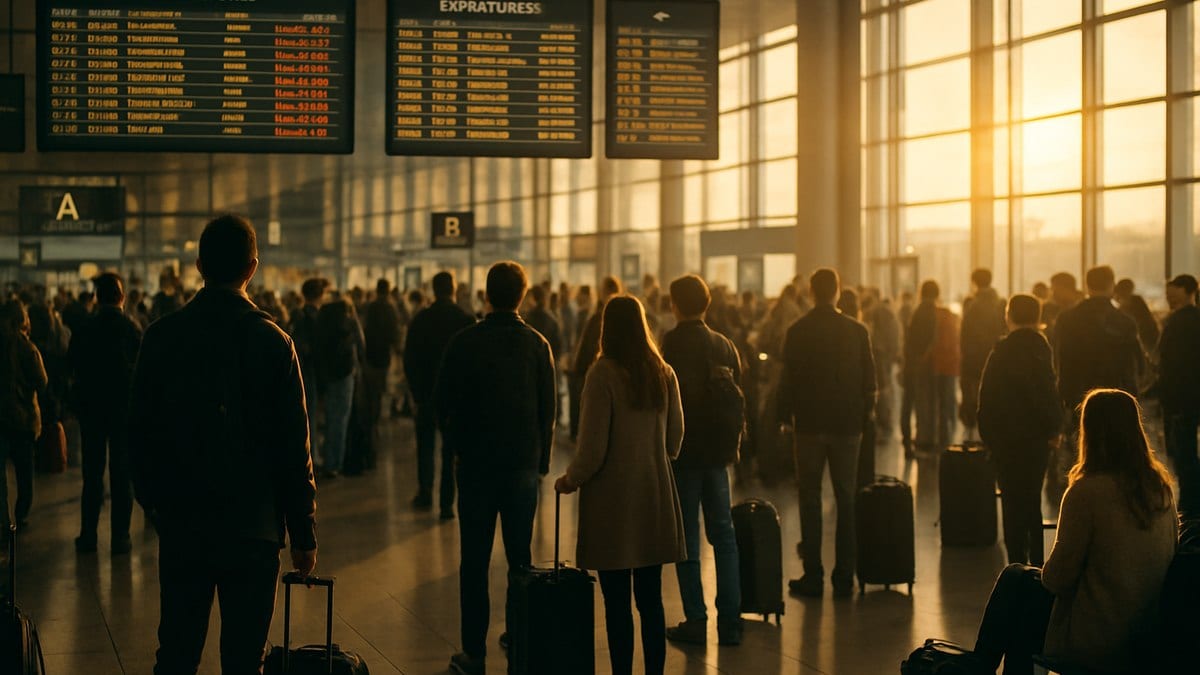
Disruptions Follow Days of Earlier Turmoil at Dulles
April 9 marked the latest in a string of difficult days for travelers using Washington Dulles. Publicly available delay trackers and travel-industry summaries show the airport has been grappling with elevated disruption levels since early April, including a concentrated wave of problems on April 6 that affected well over one hundred flights in a single day. Those earlier disruptions created aircraft and crew imbalances that were still being felt in subsequent schedules.
Travel rights analyses describe April 6 at Dulles as a particularly severe disruption day, with dozens of cancellations and more than a hundred delayed departures and arrivals. That kind of shock can reverberate for several days, especially at a major international hub where many flights are tightly banked around peak connection windows. As airlines worked through those residual operational challenges, April 9 departures had limited margin to absorb any new delays.
Published coverage of nationwide operations in early April paints a similar picture, with the United States recording thousands of daily delays and hundreds of cancellations at major hubs in the days leading up to April 9. In that environment, even airports that avoid headline-grabbing incidents can experience persistent pressure on departure and arrival times as carriers attempt to reposition aircraft and recover regular rotations.
For passengers flying from Washington Dulles on April 9, that translated into longer-than-usual waits at the gate, shifting departure estimates and a higher risk of missed connections at onward hubs. While large-scale cancellations appeared more limited than during the worst days earlier in the month, the cumulative effect of repeated schedule slippages continued to erode punctuality.
Weather, Airspace Bottlenecks and Staffing Combine
Spring weather patterns across the eastern United States have contributed significantly to this month’s flight disruption picture, including at airports serving the Washington region. Industry and local media reports in recent days have pointed to rounds of thunderstorms and unsettled conditions around the nation’s capital and up the Northeast corridor, conditions that frequently trigger ground delay programs at busy hubs.
According to publicly available descriptions of Federal Aviation Administration traffic management tools, ground delay programs are commonly imposed when poor weather reduces the rate at which aircraft can safely land at a particular airport. Departing flights bound for that airport are held at their origin or metered out more slowly, causing rolling knock-on delays throughout interconnected networks. Even when Washington Dulles itself avoids the worst of the storms, constraints at linked hubs and overlying airspace can still slow departures headed to or arriving from affected regions.
Recent aviation industry reporting has also underscored the continuing role of air traffic control staffing constraints in magnifying disruption. Analyses of FAA operational data this spring indicate that several major facilities, including approach control centers serving East Coast hubs, have been operating with limited staffing, which reduces the number of aircraft that can be managed simultaneously. When staffing and weather pressures converge, airports like Washington Dulles can experience rapid slowdowns that take hours to unwind, even after skies clear.
On April 9, travelers at Dulles were navigating this broader context of weather-sensitive airspace and resource limits. Delays tied to congestion at other hubs, wider metering initiatives in the national airspace system and ongoing efforts to balance safety with capacity all contributed to a departure board that remained busier with late flights than many passengers would expect in early spring.
Ripple Effects on Domestic and Long Haul Routes
Washington Dulles functions as a critical hub for domestic and transatlantic traffic, as well as a growing roster of long haul routes to Asia, the Middle East and Africa. Network data compiled in early April shows more than one hundred nonstop domestic and regional routes feeding into the airport, alongside a broad mix of intercontinental services. That connectivity makes Dulles particularly vulnerable to ripple effects when the wider system is strained.
When departures run late from Washington, passengers connecting onward through Dulles to cities in the Midwest, West Coast and Southeast can miss carefully timed bank connections. Similarly, inbound delays from those regions can jeopardize evening transatlantic and overnight departures to Europe and beyond, which typically operate on tight ground turns to maximize aircraft utilization. The result is a complex web where a delay of less than an hour on a feeder leg can cascade into far longer disruptions for travelers at the end of the chain.
Travel industry analyses of nationwide performance earlier in the week described this pattern on a larger scale, with relatively modest cancellation counts but heavy delay volumes at multiple hubs. Carriers have appeared to prioritize operating scheduled flights wherever possible, even with significant time penalties, in an effort to keep aircraft and crew positioned. On April 9 at Dulles, that approach likely helped limit outright cancellations but at the cost of longer ground times and reduced schedule reliability.
For airlines that rely on Dulles as a strategic hub, including large U.S. network carriers and several foreign flag airlines, restoring punctuality over the coming days will depend on more stable conditions across both domestic and international markets. As aircraft rotations normalize and weather-related constraints ease, departure performance at Dulles typically improves, although persistent staffing and airspace limitations mean recovery can take time.
What April 9 Passengers Faced at the Airport
For individual travelers at Washington Dulles on April 9, the operational story translated into a series of practical challenges. Some passengers encountered check-in and security lines that moved in fits and starts as departure times shifted and crowds built unevenly around delayed flights. Others reported spending long stretches at the gate as crew, aircraft and slot availability were juggled to keep as many flights operating as possible.
Even when delays remained under an hour, the uncertainty made planning more difficult. Connections through other hubs became less reliable, airport dining and lounge spaces grew more crowded as departure times slid, and families traveling with children had to navigate extended waits in unfamiliar surroundings. For some international travelers, small delays at Dulles risked running into overnight curfews or tight slot windows at overseas destinations, adding another layer of stress.
Despite these challenges, operational data and public reporting suggest that many flights still eventually departed on April 9, albeit behind schedule. The pattern mirrored broader national trends this week, in which airlines have succeeded in operating the majority of scheduled services but struggled to keep them on time amid compounding pressures.
For those who opted to rebook, airline mobile apps, kiosks and call centers remained primary tools, although capacity on alternative departures was constrained by the same disruption that caused the original delays. In some cases, passengers chose to shift travel by a day or two to avoid the most congested windows, particularly on routes with multiple daily frequencies.
Preparing for Continued Volatility Through April
With spring break travel still underway and storm systems expected to continue affecting parts of the East and Midwest, industry observers anticipate that volatility at Washington Dulles and other major hubs could persist through much of April. Historical disruption reports show that even in relatively stable years, the combination of seasonal weather patterns and dense schedules can produce sustained periods of elevated delays.
Travel guidance emerging from recent disruption days emphasizes preparation and flexibility for anyone flying from Dulles in the coming weeks. Recommendations commonly include monitoring flight status early and often, building in longer connection windows when booking itineraries through multiple hubs, and considering earlier departures in the day, which tend to offer better recovery options if delays occur.
Passengers are also encouraged by consumer advocates to review airline policies on rebooking and assistance in advance, so they understand what support may be available if a departure is significantly delayed or canceled. While compensation rules vary by route and jurisdiction, clear knowledge of available options can help travelers make faster decisions during time-sensitive disruptions at the airport.
For now, the experience of April 9 at Washington Dulles fits into a broader narrative of a U.S. aviation system operating near capacity, where relatively routine weather and staffing strains can quickly translate into crowded departure boards and anxious waits at the gate. Travelers using the airport in the days ahead are likely to benefit from extra planning, early arrival and a readiness to adapt if schedules shift again.