

More news on this day
Flight disruptions centered on Denver International Airport on April 11 created a difficult start to the spring travel rush, as delays affecting United Airlines and its regional partner SkyWest cascaded through routes across North America.
Get the latest news straight to your inbox!
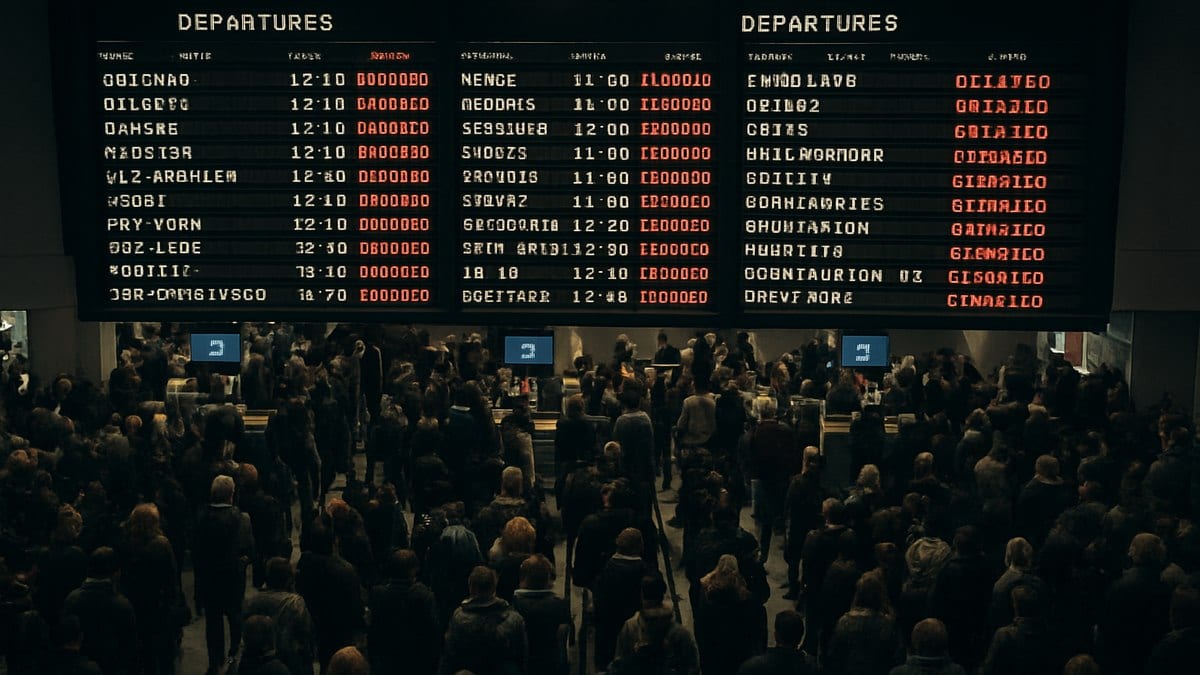
Denver Hub Under Pressure on April 11
Publicly available aviation data and airport status updates for April 11 indicate that Denver International Airport experienced an elevated level of delays relative to a typical spring weekend. Reports show more than two hundred delayed departures and arrivals at Denver alone, along with a smaller number of cancellations, placing the airport among the more heavily affected hubs in the national system that day.
United Airlines, which operates Denver as one of its key hubs, featured prominently in those statistics. The carrier’s large schedule of domestic and transborder routes through the airport meant that even moderate disruptions at Denver quickly translated into missed connections and rolling pushbacks for travelers heading to and from cities such as Los Angeles, Chicago, New York and San Francisco.
SkyWest, operating as a United Express partner, also appeared in the disruption tallies with a limited but visible number of cancellations alongside a broader field of delayed regional flights. Because many United-branded services at Denver are flown by SkyWest under capacity agreements, the operational picture at the two carriers is closely linked whenever problems emerge at the hub.
Industry trackers monitoring performance on April 11 describe Denver as a recurring pressure point this spring, particularly when national weather and air traffic constraints combine with local congestion or staffing challenges. That combination again appeared to be in play, turning a busy travel day into a much longer one for many passengers.
Delays Spread Across United and SkyWest Networks
Data aggregating flight activity across the United States on April 11 points to a nationwide disruption pattern in which Denver played an outsized role for United and SkyWest. Travel-focused analyses show roughly 1,700 or more delayed flights and several dozen cancellations across major U.S. airlines that day, with United and its regional partners contributing a significant share of the delays while recording a smaller portion of the outright cancellations.
Separate tallies focusing on Denver highlight two cancellations directly tied to services involving United and SkyWest, set against a much larger field of late departures. While the raw number of cancellations at the hub remained limited, the concentration of delays on densely scheduled hub-and-spoke banks meant that missed crew connections, aircraft rotations and passenger misconnects accumulated over the day.
Regional routes operated by SkyWest on behalf of United, including services linking Denver with smaller cities in the Mountain West and Great Plains, were particularly exposed. Tracking services for individual flights on April 11 show departure delays on multiple United Express routes feeding into Denver, reinforcing the sense of a system struggling to recover during and after busy afternoon and evening peaks.
Because United leans heavily on Denver to connect shorter regional legs with longer domestic and international segments, disruptions at the hub reverberated as far as the West Coast, Canada and the U.S. East Coast. Passengers traveling through Denver reported extended ground holds, gate changes and rebookings as the carrier attempted to reset its operation.
Weather, Congestion and Recent Incidents Form a Complex Backdrop
Federal aviation status pages for April 11 showed Denver under mostly cloudy skies with some wind, a pattern that can be manageable but occasionally challenging at the high-elevation airfield. While there were no indications of a major storm system centered directly on the airport that day, Denver’s location and layout make it sensitive to crosswinds, convective weather in the region and flow-control decisions elsewhere in the national airspace.
Industry commentary suggests that the elevated delays at Denver on April 11 occurred against a wider backdrop of operational strain across U.S. aviation. In the days leading up to the disruptions, severe weather in multiple regions had already triggered flow restrictions and knock-on delays at other major hubs, with some of those effects still evident in airline schedules.
The disruptions also followed a period of heightened attention on Denver operations for United. Recent coverage has highlighted infrastructure incidents and previous power and systems issues at the airport in March, which required travel waivers and temporary schedule adjustments. Although there is no publicly available evidence directly linking those earlier events to April 11’s performance, the series of challenges has drawn attention to the resilience of hub operations as carriers move into the peak spring and summer season.
For SkyWest, Denver is one of several major partner hubs, alongside airports such as Chicago O’Hare and Salt Lake City. Corporate disclosures emphasize that interruptions or congestion at any of these hubs, whether due to weather, equipment problems or airspace constraints, can quickly trigger a cascade of delays and cancellations throughout its regional network. The pattern observed on April 11 fits that broader risk profile.
Traveler Experience and Knock-On Impact Across North America
For passengers, the April 11 disruptions at Denver translated into long waits, tight connections and, in some cases, unplanned overnight stays. Social media posts and traveler forums from the weekend describe crowded gate areas, rolling departure estimates and difficulty securing alternative routings as seats tightened on later flights.
The effects were not confined to the U.S. domestic market. United’s Denver hub supports services to Canada and connections onward to Mexico and other destinations, meaning that even when international flights departed relatively close to schedule, inbound passengers from delayed regional feeders risked missing those departures. Publicly available tracking data shows multiple instances in which feeder flights into Denver arrived significantly behind schedule on April 11, compressing or eliminating planned connection windows.
Other North American airports also recorded heightened disruption on April 11, with data services listing large numbers of delayed flights at hubs such as Chicago O’Hare, Atlanta and New York area airports. In that context, the problems at Denver appear as part of a continent-wide pattern of strain during a busy travel period, rather than an isolated issue confined to a single airport.
Travel advisories and expert commentary continue to recommend longer connection times at major hubs during peak seasons, particularly at airports like Denver where local weather, altitude and heavy hub schedules can combine to produce recurring waves of disruption. The April 11 performance numbers may reinforce that guidance for travelers planning itineraries through the Rocky Mountain hub in the coming weeks.
What the April 11 Disruptions Signal for Spring Travel
The scale and reach of delays surrounding Denver on April 11 offer an early test of airline and airport readiness for the months ahead. As carriers add capacity for late spring and summer, operational resilience at key hubs like Denver will likely remain a focus for industry analysts and frequent travelers alike.
Published analyses of recent disruption trends note that even on days without extreme weather, tightly scheduled hub operations can struggle to absorb minor shocks, such as short ground stops, brief air traffic restrictions or localized technical faults. When those factors coincide across multiple hubs, as appears to have happened in early April, ripple effects can extend for days.
United and SkyWest enter the core travel season with strong demand across many of their Denver-linked markets, but the April 11 data underscores the vulnerability of complex hub networks to compounding delays. How quickly the carriers can restore on-time performance after such events will be closely watched by travelers, tourism operators and corporate customers.
For now, the April 11 disruptions stand out as a reminder that even under relatively benign skies, a single busy hub can become a chokepoint that sends shockwaves through flight schedules across North America.