

More news on this day
Flight delays affected an estimated 3,281 departures across six major U.S. hub airports in the opening days of April 2026, as a combination of spring storms, packed holiday schedules and tightly wound airline operations produced another round of nationwide disruption for air travelers.
Get the latest news straight to your inbox!
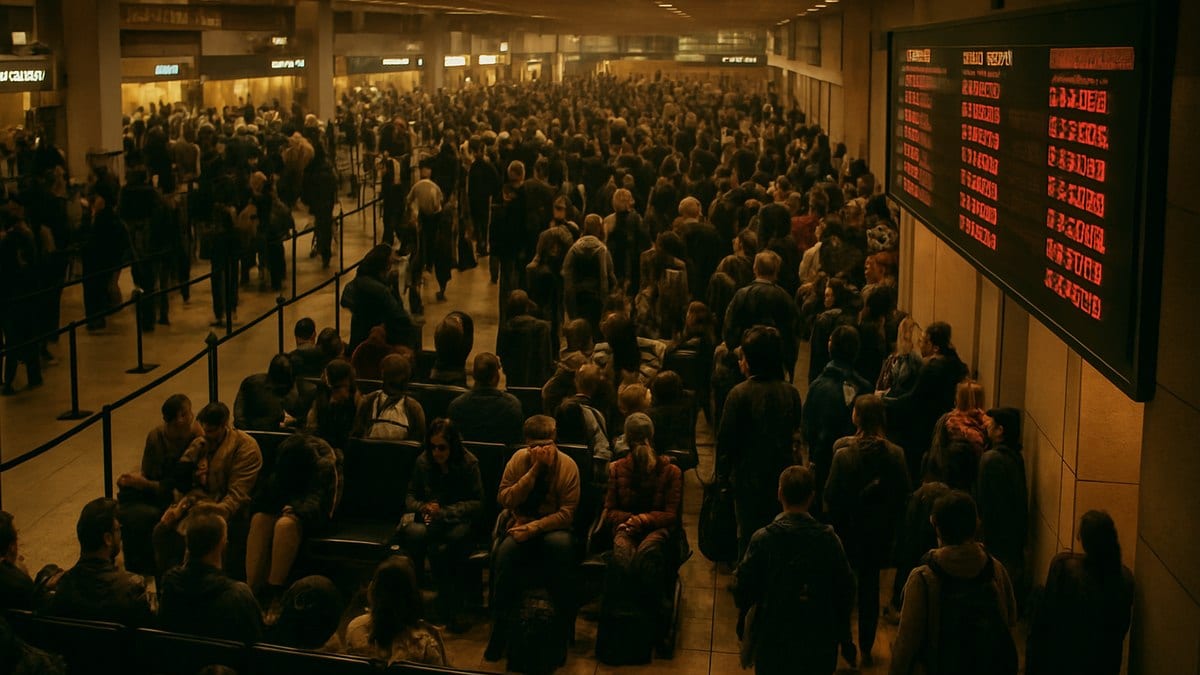
Six Hubs Shoulder the Brunt of April Disruptions
Publicly available flight-tracking data and industry coverage for late March and early April indicate that delays have been heavily concentrated at a familiar group of U.S. hubs, including Atlanta, Chicago O’Hare, Dallas Fort Worth, New York area airports, Los Angeles and Houston. These airports form the backbone of the U.S. hub-and-spoke system, funnelling large volumes of connecting traffic through a limited number of choke points.
Reports from travel and aviation outlets for March 31 and the first week of April describe several days in which individual hubs logged hundreds of delayed departures, with national tallies repeatedly topping 3,000 affected flights in a single day. In one widely cited example, more than 3,100 delays and over 100 cancellations were recorded across the network on March 31, with Chicago, Boston and other Eastern and Midwestern hubs experiencing especially dense congestion.
Coverage focused on early April notes that disruption has not been confined to a single airline or region. Instead, delay counts have built up simultaneously at multiple hubs as lines of severe weather crossed the central United States and then moved toward the East Coast, intersecting with one of the busiest periods of the spring travel calendar.
While precise daily totals vary, the pattern across these hubs points toward a similar experience for passengers: early-morning schedule interruptions, growing queues at departure gates and an evening peak when rolling delays and missed connections leave aircraft and crews scattered far from where they were originally planned.
Weather, Demand and Thin Operating Margins
Spring storms have emerged as a central factor in the April disruption wave. Meteorological reports for late March and early April describe a series of strong storm systems tracking across Texas, the Midwest and the East Coast, bringing heavy rain, thunderstorms and localized flooding. These conditions can temporarily reduce arrival and departure rates at major airports, triggering ground stops, diversions or reroutes that immediately slow the flow of traffic.
Travel industry analyses emphasize that this adverse weather has collided with robust demand. Forecasts for the March to April period suggest that U.S. airlines are carrying several million passengers per day as families travel for spring break and Easter holidays. With planes operating near capacity, there is little slack in the system to absorb interruptions once they begin.
Operational commentary from airline-focused outlets also highlights the impact of very tight scheduling. A single aircraft may be rostered to operate multiple legs in a day, often across several hubs. When an early departure is held on the ground due to storms or air-traffic restrictions, that delay can cascade across every subsequent flight that relies on the same aircraft, amplifying the initial disruption into a network-wide problem.
Industry observers note that staffing and infrastructure constraints remain a background issue as well. While large-scale shortages are less acute than in the immediate post-pandemic period, air traffic control staffing, maintenance windows and gate availability can all limit how quickly airlines and airports recover once delays begin to accumulate.
Airlines and Regional Operators Under Strain
Coverage of March 31 and the following days shows that both major carriers and their regional partners have been pulled into the latest disruption cycle. Reports indicate substantial delay totals at United Airlines, American Airlines and Southwest Airlines, with each logging several hundred delayed flights during the worst days of the period.
Regional airlines operating feeder services into large hubs, including Envoy, SkyWest and others, have also faced significant operational challenges. These carriers often operate smaller aircraft on shorter routes that connect secondary cities to the big coastal and Midwestern hubs. When weather or congestion slows operations at the hub, these regional flights can be among the first to be rescheduled or canceled, especially later in the day when recovery options narrow.
Analysts point out that this mix of mainline and regional disruption is one reason passengers experience delays even when their itinerary does not include a marquee transcontinental flight. A relatively short domestic segment into a hub can be delayed by hours if incoming aircraft or crew are stuck elsewhere in the network, or if a hub is operating under a reduced arrival rate because of storms.
Investor-focused commentary has framed the April disruptions as another stress test for airline reliability. Extended waves of delay and cancellation can translate into higher operating costs, crew repositioning expenses and potential compensation or accommodation outlays, all while pressuring customer satisfaction scores at a time when carriers are seeking to lock in loyal travelers for the busy summer season.
Impacts for Travelers on the Ground
For passengers, the practical effect of 3,281 delays spread across six major hubs is measured in missed connections, overnight airport stays and rearranged plans. Social media posts and accounts from travel publications in recent days have described long lines at customer service desks and rebooking counters, particularly in the late afternoon and evening peaks when options for same-day alternative flights diminish.
Travel advisories and consumer-focused reporting have reiterated familiar strategies that take on new urgency during such disruption waves. These include booking earlier flights in the day when possible, building longer connection times at busy hubs, opting for nonstop services instead of relying on single tight connections and travelling with carry-on luggage to make quick rebookings or aircraft changes easier.
Travel insurance and trip delay protections offered by credit cards are also receiving renewed attention. Guidance from consumer advocates argues that passengers should review what coverage they have before a trip begins, since reimbursement for meals, hotel stays and incidental expenses can help soften the financial blow of an unplanned overnight delay.
At the same time, recent coverage stresses the importance of monitoring flight status through official airline channels and flight-tracking tools. In periods of rolling disruption, departures and gate assignments can change repeatedly within a few hours, and travelers who react quickly to new information may have better options for rebooking or rerouting around the most congested hubs.
What the April Pattern Signals for the Months Ahead
The cluster of 3,281 delays at six U.S. hubs in early April fits into a broader pattern that has been emerging since late winter. A historically active storm season, continued strong travel demand and tight airline scheduling have combined to make the system more vulnerable to spikes in disruption when weather or airspace constraints appear.
Analysts watching the sector suggest that, unless there are substantial changes in scheduling practices, staffing or infrastructure, similar waves of delay are likely to recur during the peak summer travel months when both passenger volumes and the risk of severe thunderstorms increase. Some policy discussions are already focusing on how to improve resilience, from investments in air traffic control modernization to potential scrutiny of schedules that leave little margin for error.
For now, the experience of early April 2026 serves as a reminder that even a few days of unsettled weather can trigger thousands of delays when they intersect with multiple major hubs at once. Passengers planning trips in the coming weeks may not be able to avoid all disruption, but the recent pattern suggests that route choices, connection buffers and flexibility will play a key role in how smoothly their journeys unfold.