

More news on this day
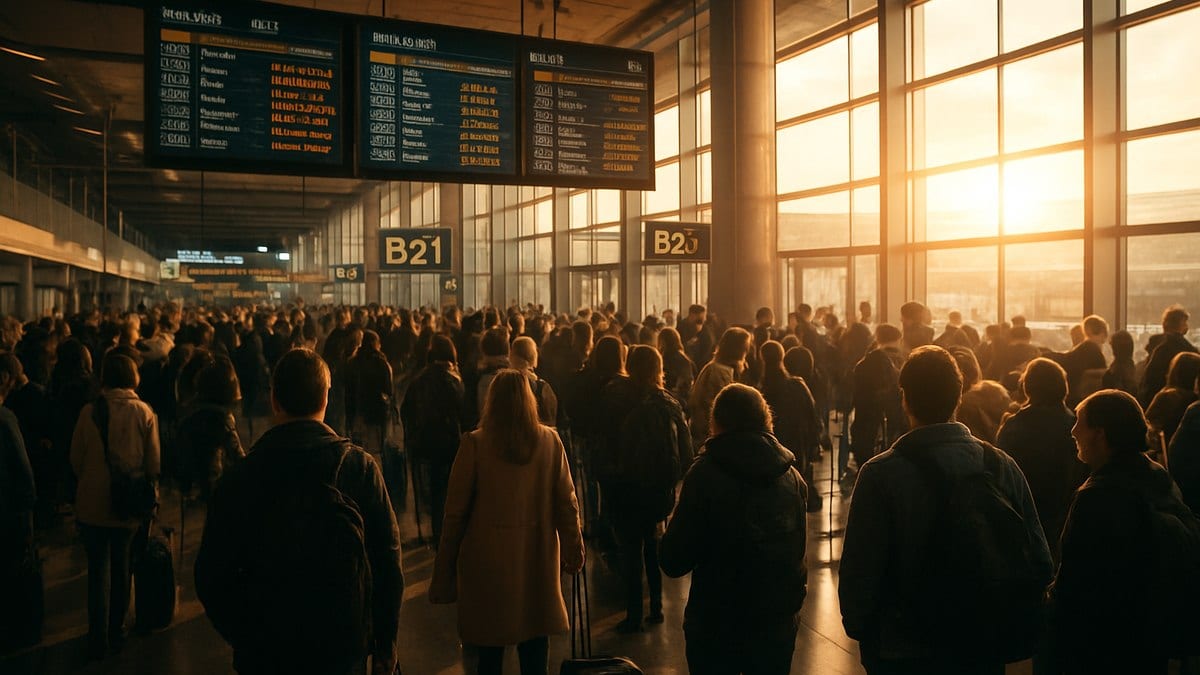
Spring travelers across the United States are confronting a turbulent start to April 2026, as a volatile mix of severe weather, record demand and fragile airline operations has produced cascading flight delays at six of the country’s busiest hubs.
Get the latest news straight to your inbox!
Storm Systems Converge on Key Travel Corridors
Publicly available weather and aviation data indicate that a series of storm systems moving from the Plains into the Midwest, South and East between April 1 and April 8 have repeatedly intersected with the nation’s heaviest air corridors. Forecast discussions and recaps from meteorological outlets show multiday threats of severe thunderstorms, high winds and low cloud ceilings around major population centers, conditions that routinely trigger ground delay programs and arrival metering at large airports.
Industry trackers note that the first week of April followed an already active March for severe weather, leaving airline networks with little time to reset schedules and reposition aircraft. When the latest line of storms pushed into the Midwest and Southeast at the start of April, it collided with an exceptionally busy post‑Easter travel window, amplifying the impact of every delay and cancellation.
Analysts who follow operational data describe a familiar pattern: as storms reduce arrival rates at one or two major hubs, departures from other cities are held on the ground, aircraft and crews miss their planned rotations, and knock‑on disruptions continue even after local weather improves. Early April’s storm sequence has repeated that cycle across multiple days and regions, stretching the resilience of hub‑and‑spoke networks.
Compensation and passenger‑rights platforms report that one of the heaviest single days so far occurred on April 8, when severe thunderstorms and air traffic control restrictions contributed to more than 3,500 delayed flights across dozens of U.S. airports. That spike came on top of widespread disruption over the Easter period just a few days earlier, leaving many travelers facing rebookings, missed connections and extended time in crowded terminals.
Chicago, Dallas and Atlanta Bear the Brunt
Among individual hubs, published coverage and flight‑tracking data point to Chicago O’Hare, Dallas Fort Worth and Atlanta as three of the most heavily affected airports in early April. Reports on the Easter travel weekend highlight O’Hare’s leading role in nationwide delays and cancellations as thunderstorms, low clouds and saturated ground conditions forced a series of ground stops and gate holds.
Operational summaries suggest that on one key April travel day, O’Hare alone registered more than 250 delays and roughly 50 cancellations, putting pressure on already constrained runway and gate capacity. Because the airport serves as a central connecting point for both domestic and international itineraries, disruptions there quickly propagated into missed regional flights throughout the Upper Midwest and Great Lakes.
Dallas Fort Worth, another critical connector for both U.S. coasts and Latin America, has experienced rolling delays tied to storm cells sweeping across North Texas and the Southern Plains. Airline travel waivers issued for thunderstorms in the region around April 4 reflect expectations of prolonged operational challenges as severe weather repeatedly enters and exits the area.
In the Southeast, Hartsfield‑Jackson Atlanta International has faced heavy rain, lightning and runway constraints that slowed departures and arrivals during the first full week of April. Passenger‑rights observers note that even modest numbers of cancellations in Atlanta can ripple widely, given the volume of connecting traffic funneled through the airport and the tight utilization of aircraft serving smaller regional communities.
Florida and the Coasts Add New Pressure Points
The first days of April have also underscored the outsized role of Florida and coastal hubs in shaping the national delay picture. Orlando International, a key gateway for theme park and cruise traffic, has emerged as a central pressure point as thunderstorms in Central and South Florida prompt holding patterns and ground delay programs. Travel coverage indicates that backups building around Orlando have contributed to late‑night and next‑day disruptions as far away as the Midwest and Northeast.
Farther south, Miami International has contended with heavy rain and thunderstorms strong enough to prompt a temporary ground stop for arriving flights on April 7. Local broadcast reports describe a morning period in which inbound traffic was held while storms passed over the airport, compounding the challenges of an already busy spring schedule.
On the coasts, New York‑area airports and major West Coast gateways have seen secondary effects from the storm‑related gridlock in the nation’s interior. While early April weather along the Pacific and Atlantic seaboards has generally been less severe than in the central states, constraints at inland hubs have led to late‑arriving aircraft, crew scheduling complications and missed departure slots at airports such as Los Angeles International and New York’s John F. Kennedy.
For travelers in these coastal cities, the result has often been delays without obvious local causes, highlighting how tightly interconnected the U.S. aviation system has become. Even when skies appear clear over a departure airport, constraints several time zones away can reduce the number of flights airlines are able to operate on schedule.
Record Spring Demand Exposes Operational Fragility
The timing of the early April disruptions has magnified their impact. Forecasts from industry and security agencies released in March anticipated that U.S. airlines would carry around 2.8 million passengers per day through the spring period, setting or approaching records for overall volume. That surge has arrived just as carriers and airports continue to adjust to staffing shortages, higher fuel costs and residual effects from a prolonged federal funding impasse earlier in the year.
Analysts and travel commentators note that higher passenger loads mean fewer empty seats available for rebooking when flights are delayed or canceled. With aircraft scheduled tightly throughout the day to maximize utilization, any disruption in the morning rush can cascade into missed connections and rolling delays deep into the evening.
Security screening and ground handling have added further friction. Travel‑industry coverage in early April describes airports urging passengers not to arrive excessively early, even as they prepare for near‑record numbers of screenings. At some hubs, staffing gaps and surges in demand have produced long queues at checkpoints and check‑in counters, increasing the risk that travelers reach gates after boarding has closed, especially when departure times are adjusted repeatedly.
Observers of airline operations suggest that the combination of record demand and limited slack in staffing and equipment has left little margin for absorbing weather shocks. Under such conditions, a sequence of storms like those affecting the central United States in early April can expose vulnerabilities that might remain hidden during quieter travel periods.
What Travelers Can Expect in the Coming Days
With the calendar only in the second week of April, aviation experts and weather forecasters caution that the pattern of intermittent severe storms is likely to continue as spring progresses. Seasonal outlooks commonly point to April and May as peak months for convective weather in many of the regions now experiencing disruption, suggesting that airlines, airports and passengers may face additional rounds of delays in the weeks ahead.
Publicly available forecasts from national meteorological services indicate that further storm systems are poised to track across parts of the Plains, Midwest and Southeast in the near term. Even if individual events are less intense than those seen around the Easter travel period, their impact on air travel could be significant if they intersect again with peak demand days or already stretched crew schedules.
Travel commentators recommend that passengers monitor airline communications closely, as carriers continue to issue travel waivers tied to specific hubs and date ranges when severe weather is likely. Such waivers generally allow travelers to adjust itineraries without change fees, within certain parameters, potentially reducing the risk of being stranded if conditions deteriorate.
For now, data from trackers and travel‑rights organizations suggest that flight operations are slowly recovering between storm cycles, yet remain vulnerable to renewed disruption at the six most affected hubs. As early April 2026 unfolds, the experience of this week reinforces how quickly adverse weather at a handful of critical airports can ripple across an entire continent‑spanning network.