

More news on this day
San Francisco International Airport is entering one of its first peak travel days under newly tightened arrival rules on April 9, 2026, with schedules, connection banks and passenger expectations all being reshaped by federal safety measures and evolving disruption regulations.
Get the latest news straight to your inbox!
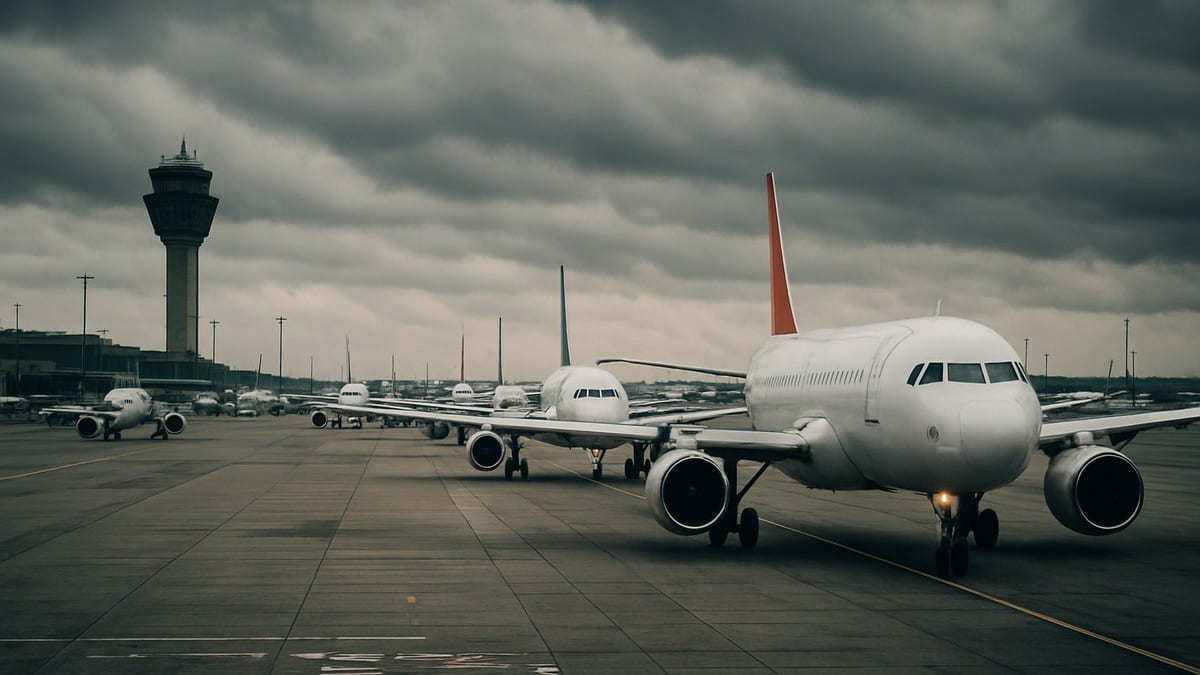
New Arrival Caps Meet a Busy Spring Travel Day
Published coverage from national and Bay Area outlets indicates that San Francisco International Airport is now operating with a significantly reduced arrival rate, after a Federal Aviation Administration rule change and a runway repaving project cut the airport’s capacity from roughly 54 landings per hour to about 36. The new limits, which took effect in late March, are designed around safety concerns related to closely spaced parallel runways and complex regional airspace.
Airport briefings and media analyses suggest that the impact will be particularly visible on days like April 9, when spring travel demand is strong and morning and evening arrival “banks” were previously scheduled near the old hourly maximum. With the tighter cap, flights that once landed in dense clusters are now more spread out, increasing the odds that late departures from other cities will cascade into arrival delays at San Francisco.
Publicly available planning documents show that one pair of north–south runways is closed for months of resurfacing, removing some arrival flexibility just as the parallel-approach rule is being tightened. As a result, operational managers have fewer options to recover from bunching or weather slowdowns, and flow-control programs are more likely when morning marine layer or afternoon winds push the active arrival rate below the new ceiling.
Industry reporting describes April 9 as an early proving ground for how well airlines can absorb the new rules with schedule tweaks, larger aircraft on key routes and more conservative block times. On-time statistics for the day will be closely watched by analysts who are trying to gauge whether the reduced arrival rate translates into persistent delay or settles into a new, more predictable pattern.
Runway Work and Parallel-Approach Limits Drive Schedule Changes
According to reporting from aviation and local news outlets, the rule change affecting San Francisco International centers on the way aircraft use the airport’s parallel runways. For years, controllers sequenced simultaneous approaches to closely spaced runways under specific visibility and wind conditions. Federal safety reviews have now curtailed that practice, effectively reducing the number of arrivals that can be safely handled in a given hour.
At the same time, a major runway resurfacing project has taken one pair of runways partially out of service for about six months, further constraining how traffic can be distributed. Technical primers on SFO’s operations note that when the mix of runways is restricted, the airport reaches its weather-related arrival limit more easily, even on days without major storms. That means that on April 9, any deterioration in visibility or low cloud ceilings during the morning or evening peaks is more likely to trigger ground delay programs affecting inbound flights across the country.
Airline schedules for spring and summer 2026 were largely built before the full operational consequences of the new rules were clear. Carriers with large hub operations at San Francisco have been reviewing their timetables, and several have started to space arrivals more evenly through the day instead of concentrating them into tight connection banks. Analysts point out that this strategy can make connections slightly less efficient while improving on-time performance by giving each flight more breathing room in the arrival sequence.
For April 9, publicly available timetable data shows modest trimming of peak-period arrivals and some upgauging to larger aircraft on transcontinental and long-haul routes. Travel industry observers expect more adjustments as airlines collect performance data under the new rules and as the runway project moves through its most disruptive phases.
Passenger Rights and Tarmac Rules Shape Disruption Response
The operational squeeze at San Francisco International is unfolding at the same time that updated federal consumer-protection rules are focusing attention on how airlines manage delays. Guidance from the US Department of Transportation and published consumer summaries highlight the long-standing “three-hour/four-hour” tarmac-delay thresholds, which require carriers to allow passengers to deplane domestic flights after three hours of ground delay and international flights after four, with limited safety and security exceptions.
Recent DOT updates to contingency-plan requirements, posted in late March 2026, reinforce expectations that carriers must provide access to food, water and restrooms after prolonged delays, and must clearly describe their deplaning procedures in publicly filed plans. Even though a proposed rule for automatic cash compensation on long airline-controlled delays was withdrawn in late 2025, travelers remain entitled to full refunds when flights are canceled and they choose not to travel.
On a day like April 9, when arrival caps and runway work increase the risk of extended ground holds, those tarmac rules create a strong incentive for airlines and traffic managers to meter flights before they depart for San Francisco. Operational primers on flow control emphasize that, when an airport’s arrival capacity drops below scheduled demand, the national command center often assigns departure holds at origin airports rather than allowing long queues to build on the taxiways at the destination.
This dynamic means that many passengers bound for San Francisco on April 9 may experience their longest waits before takeoff in other cities, rather than while sitting on the ground at SFO. Published policy guides encourage travelers to use that time to work with gate agents or digital tools for rebooking, especially when minimum connection times at San Francisco appear tight once flow delays are factored in.
What April 9 Arrivals Could Look Like for Travelers
Operational briefings and media explainers suggest that roughly a quarter of arriving flights at San Francisco International could face delays of 30 minutes or more during the period when both the new rule and the runway project are in full effect. On April 9, that delay pattern is most likely to concentrate in the late-morning and early-evening peaks, when inbound traffic from the East Coast, the Mountain West and short-haul West Coast markets converges on the airport.
Travel industry commentary advises passengers scheduled to arrive on April 9 to treat early-morning flights as the most reliable options, because the arrival banks before 9 a.m. are less affected by the typical buildup of national flow delays. Later in the day, minor disruptions at other airports can compound as aircraft cycle through their rotations, leaving less slack for San Francisco arrivals already constrained by the tighter cap.
Connection dynamics are also shifting. With arrivals stretched over longer windows, some itineraries that once featured tight layovers at SFO may now see wider gaps between inbound and outbound flights. While this can reduce missed connections on a disrupted day, it also means longer total journey times for some passengers. Analysts monitoring booking trends note that some travelers are beginning to route through alternative West Coast hubs when schedules through San Francisco appear particularly exposed to delays.
At the same time, airport communications point to investments in terminal amenities, additional seating and expanded concessions as part of a broader effort to make longer dwell times more tolerable. For passengers arriving on April 9 who do encounter disruption, those improvements may soften the experience, even as the underlying operational picture remains challenging.
Outlook for SFO Operations Through the Rest of 2026
Although April 9 is drawing attention as an early milestone under the new rules, analysts emphasize that the arrival cap and safety-driven approach constraints are not short-term measures. Reporting indicates that the runway resurfacing project is scheduled to conclude in early October 2026, at which point some arrival capacity should return. The underlying safety rule on parallel approaches, however, is expected to remain in place well beyond that date.
For travelers, this points to an extended period in which San Francisco International operates with less margin for irregular operations than it enjoyed in the past. Airlines are likely to continue refining their schedules, adjusting aircraft size and reallocating flying to other hubs as they learn how the airport behaves under different weather and demand scenarios.
Consumer advocates argue in published commentary that the situation at SFO underscores the importance of transparent communication about disruptions and clear, accessible information on refund and rebooking options. With automatic cash compensation rules off the table for now in the United States, passengers’ primary protections remain the ability to secure a refund when the airline cancels a flight, and the baseline tarmac-delay safeguards that limit how long travelers can be kept on board during lengthy ground holds.
As April 9 unfolds, performance data from flight-tracking services and government on-time statistics will begin to show whether San Francisco’s new operating regime results in chronic congestion or a more controlled, if slightly slower, flow of arrivals. Those numbers will inform future debates over whether further infrastructure investments, additional airspace redesign or renewed regulatory proposals are needed to balance safety, reliability and capacity at one of the country’s busiest international gateways.