

More news on this day
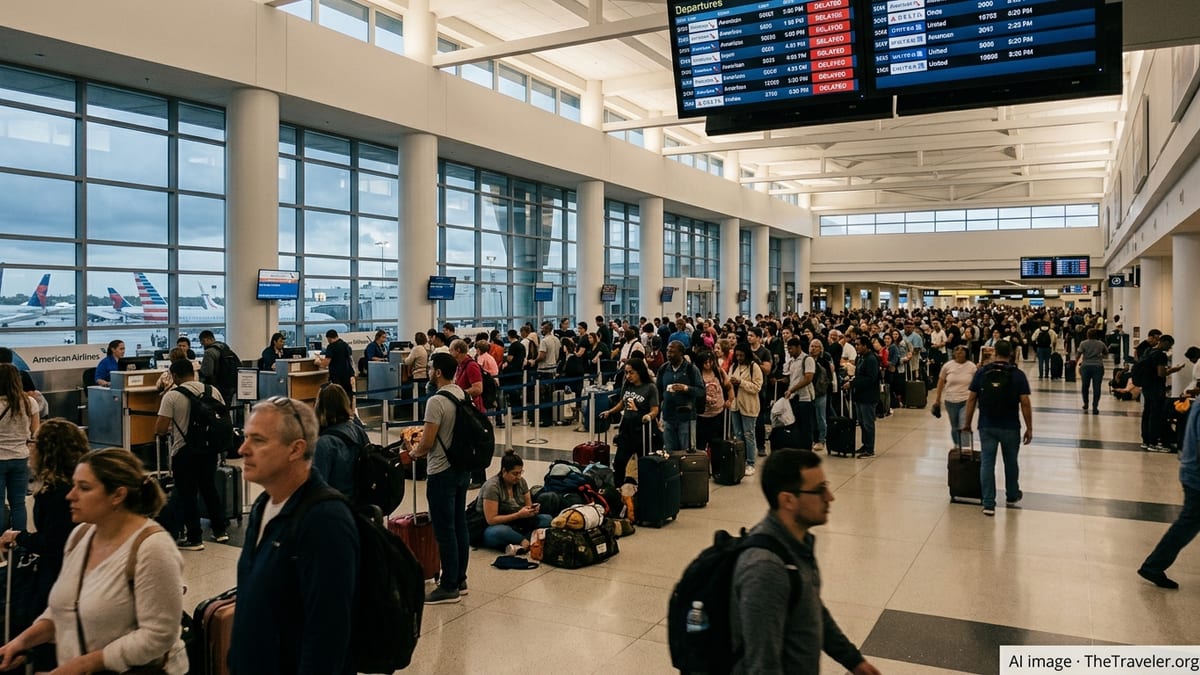
Travelers moving through Miami International Airport on March 18 faced significant disruption as nearly 300 flights were delayed and more than a dozen cancelled, creating long lines, missed connections, and schedule chaos for passengers flying with American Airlines, Delta, United and other major carriers.
Get the latest news straight to your inbox!
Hundreds of Flights Affected Across Miami Hub
Publicly available flight-tracking data for Wednesday, March 18 indicate that Miami International Airport recorded 287 delayed flights and 12 cancellations, affecting departures and arrivals throughout the day. The disruption touched both domestic and international routes, complicating travel plans at the height of spring break demand.
The impact was felt most strongly among the largest carriers at the airport, including American Airlines, Delta Air Lines, United Airlines and several low-cost operators that rely on Miami as a key gateway to Latin America and the Caribbean. With many aircraft and crews tightly scheduled, delays on early flights quickly cascaded into wider timetable disruptions by the afternoon and evening peaks.
Flight-status boards showed clusters of departures pushed back by one to three hours, with some evening services shifting even later. A smaller number of flights were cancelled outright, forcing passengers to seek same-day rebooking or overnight alternatives from already strained airline networks.
While the absolute number of cancellations remained relatively modest compared with large nationwide weather events, the concentration of delayed flights at a single major hub had an outsized effect on travelers relying on Miami to connect to destinations across the Americas and Europe.
Weather and System Strain Rippling Through U.S. Airports
The Miami disruption unfolded as a broader weather system and operational strain affected airports across the eastern half of the United States in mid-March. Meteorological coverage describes a strong March storm complex bringing a mix of wintry conditions, severe thunderstorms and high winds to wide swaths of the country from March 13 to March 17, causing thousands of delays and cancellations at major hubs.
Although conditions were improving by March 18, residual effects from days of severe weather continued to impact aircraft and crew availability. Airlines were still repositioning planes and staff, and congested airspace along popular routes meant that even relatively minor local weather or air traffic control programs could quickly translate into fresh delays.
Reports from other major airports, including Atlanta, Orlando and Detroit, described a difficult travel period marked by rolling delays, late-arriving crews and last-minute cancellations. These national strains increased the likelihood that any operational hiccup in Miami would spread through connecting flights and partner carriers, especially during busy afternoon bank periods.
Industry observers note that in such conditions, even airports not experiencing the worst of the weather can see schedules unravel as disruptions propagate through the complex web of domestic and international connections.
Passenger Experience: Crowded Terminals and Tight Connections
Travelers moving through Miami described a familiar pattern for a high-disruption day: long queues at check-in counters, dense crowds at security checkpoints, and packed gate areas as multiple delayed flights overlapped. With Miami serving as a major hub for connections between North America, Latin America and Europe, missed onward flights became a recurring risk for passengers on tight itineraries.
According to publicly shared accounts, some travelers arriving on late inbound flights found that their onward connections had already departed or were themselves delayed or cancelled, forcing them into standby lists or overnight stays. Others reported spending extended periods in the terminal as new departure times repeatedly shifted in response to incoming aircraft and crew assignments.
Staffing levels at customer-service counters were visibly tested, with lines forming for rebooking assistance and baggage questions. Self-service kiosks and mobile apps provided some relief for rebooking simple domestic itineraries, but more complex international journeys, especially those involving multiple carriers, often required in-person support.
The congestion was particularly noticeable in concourses heavily served by the largest legacy airlines, where passengers from several delayed flights competed for limited seating, power outlets and food options during peak evening periods.
Impact on Major Carriers and Their Networks
American Airlines, which maintains a large presence at Miami International Airport, appeared to shoulder a significant share of the disruptions as delays built through the day. Delta Air Lines and United Airlines, while having smaller footprints at Miami compared with their primary hubs, also experienced knock-on effects as their aircraft and crews cycled through the airport on east coast and Caribbean rotations.
Low-cost and ultra-low-cost carriers serving popular leisure routes to the Caribbean and Latin America were not immune, as delayed inbound aircraft arrived off-schedule and turnaround times in Miami stretched. For airlines operating tight schedules with limited spare aircraft, even a short delay early in the day could jeopardize on-time performance for multiple subsequent legs.
Network analysts point out that Miami’s role as an international gateway magnifies the stakes when operations are disrupted. A delayed or cancelled flight from Miami does not just affect passengers traveling to or from South Florida; it can also strand travelers in connecting cities who are depending on Miami-bound flights to continue their journeys onward to other continents.
The timing of the disruption during the busy spring break period added further strain, as many flights were operating at or near full capacity. That limited airlines’ ability to absorb displaced passengers onto other same-day departures, increasing the likelihood of overnight stays or multi-stop rebookings for some travelers.
What Travelers Can Expect and How to Prepare
Publicly available data and recent travel patterns suggest that, following a widespread disruption day like March 18, some residual delays may linger as airlines work to reposition aircraft and crews back into their normal rotations. However, as weather conditions across the country stabilize and schedules are adjusted, operations at Miami International Airport typically trend back toward normal over the following days.
Travel experts generally recommend that passengers flying through Miami in the aftermath of a major disruption build additional buffer time into their itineraries, particularly if they are connecting to international flights or cruises. Monitoring flight status frequently on airline apps or airport displays, and checking in early, can help travelers respond more quickly if new delays or schedule changes appear.
Under U.S. regulations, compensation and assistance for delays and cancellations depend on the cause of the disruption and the specific policies of each carrier. Passengers whose flights are significantly delayed or cancelled are often encouraged by consumer advocates to review airline customer-service commitments and, when applicable, request meal vouchers, hotel accommodations or alternative routing options.
For Miami International Airport, the day’s disruption highlights how quickly conditions can shift at one of the world’s busiest gateways, especially when broader national weather and operational challenges converge. As spring and summer travel volumes rise, both airlines and passengers are likely to remain alert to the potential for similar high-impact days ahead.