

More news on this day
Passengers traveling through Abu Dhabi are being advised to prepare for continued disruption as Zayed International Airport operates at reduced capacity, with UAE airspace still constrained amid ongoing regional tensions and intermittent security incidents affecting civilian aviation routes.
Get the latest news straight to your inbox!
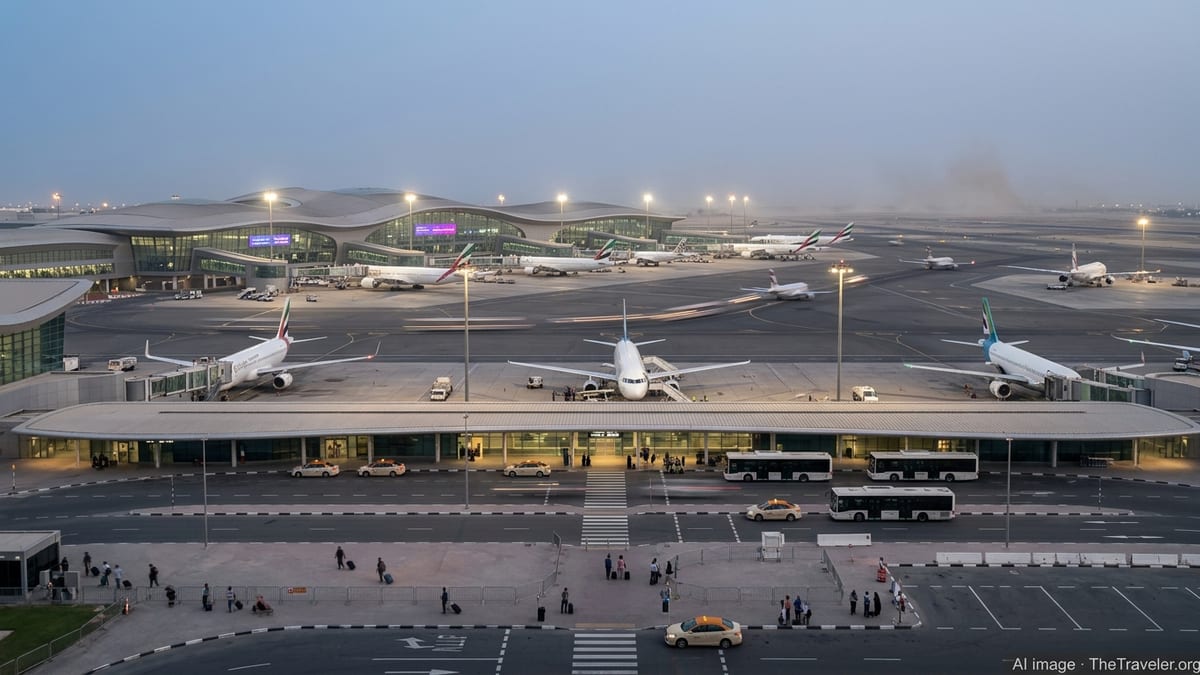
Airport Operations Scaled Back Amid Regional Security Strains
Publicly available information indicates that Zayed International Airport, Abu Dhabi’s primary international gateway, is currently operating below normal capacity as a result of heightened military activity and airspace restrictions across the Gulf. The reduced operations follow a series of Iranian missile and drone strikes in recent weeks that have targeted infrastructure in the wider region and led to temporary nationwide airspace closures in the United Arab Emirates.
Travel advisories and security briefings issued since early March describe Abu Dhabi’s airport status as partially operational, with a limited schedule of departures and arrivals running through designated corridors. Earlier blanket suspensions of flights to and from Abu Dhabi have gradually shifted to a more controlled reopening, but the network has not yet returned to pre-crisis levels.
Regional risk assessments published in the last several days emphasize that while core airport facilities in Abu Dhabi remain functional, air defense activity, changing risk calculations and evolving overflight permissions are keeping capacity constrained. That combination is causing airlines to trim frequencies, consolidate services and prioritize specific routes, particularly long-haul connections and essential repatriation traffic.
UAE Airspace Tensions Continue To Disrupt Flight Schedules
The wider context for Abu Dhabi’s reduced airport capacity is a volatile airspace picture across much of the Middle East. After the escalation of conflict involving Iran, Israel and the United States at the end of February, several Gulf states imposed far-reaching airspace restrictions, sharply limiting civilian overflights. Industry circulars and travel management alerts describe the United Arab Emirates as operating under tight controls, with access to national airspace periodically curtailed or channeled into narrow, heavily monitored flight corridors.
Analyses of regional traffic patterns show that these measures have led to thousands of daily flight cancellations and diversions, affecting not only origin and destination traffic to the UAE but also its role as a major global transit hub. While some routes have resumed with modified flight paths that loop through neighboring states, the reduction in available airspace has created bottlenecks that constrain how many flights can depart or arrive at any given time.
Commercial aviation summaries note that Emirates, Etihad Airways and other regional carriers have all faced rolling schedule changes since the end of February, with complete suspensions on certain days transitioning into limited operations as conditions permitted. Even as some services are restored, airlines continue to warn that renewed interruptions remain possible at short notice if security assessments change or new attacks are reported in the region.
What Travelers Using Abu Dhabi Should Expect Now
For passengers booked through Zayed International Airport, the operational reality on the ground is one of uncertainty and extended journey times. Travel advisories describe flights as running at reduced frequencies, with some carriers rerouting passengers through alternative hubs such as Muscat or other airports on the Arabian Peninsula when direct connections via Abu Dhabi are unavailable. Reports from recent travelers indicate that while some departures are taking off close to schedule, others face significant delays, equipment changes or last-minute cancellations.
Access to the airport itself has tightened in phases during the crisis, at times being limited to ticketed passengers with confirmed flights and valid identification. Security screening queues may fluctuate depending on the day’s alert level and the volume of rescheduled traffic. With capacity constrained, seats on operating flights can be scarce, and rebooking options within the same travel window may be limited.
Industry guidance consistently recommends that travelers monitor their booking status directly with airlines rather than relying solely on third-party intermediaries or generic timetable data. Many carriers are offering fee waivers or flexible rebooking for itineraries touching the UAE during the current period, but specific options vary by airline, route and travel date, and are subject to change as the situation evolves.
Knock-On Effects Across Global Airline Networks
The reduced capacity at Zayed International Airport is also feeding into broader disruption across global airline networks. Abu Dhabi functions as a key transit hub linking Europe, Asia, Africa and North America, so any sustained cutback in operations can cascade through connecting banks of flights and downstream schedules. Aviation analysts point out that when a hub is forced to operate below normal throughput, carriers often consolidate passengers from multiple departures onto a smaller number of flights, leaving some frequencies temporarily dropped from timetables.
Long-haul flights overflying the Gulf have been particularly affected by the airspace tensions, with many airlines lengthening routings to skirt restricted zones. These longer paths can increase flight times and fuel burn, reducing operational flexibility and narrowing the window in which connecting passengers can make onward flights in Abu Dhabi. As a result, previously convenient transit options may involve longer layovers, overnight stays or rerouting through entirely different regions.
The disruption is not limited to passenger services. Cargo capacity through the UAE has also been constrained, with security briefings highlighting ongoing pressure on air freight movements. Priority is frequently given to essential goods and time-sensitive shipments, which can leave standard commercial consignments facing delays. For travelers, this logistical squeeze can spill over into issues such as delayed baggage transfers or limited availability of certain goods and services at the airport.
Planning Ahead: Practical Advice for Passengers
Given the dynamic nature of the situation, publicly available travel advisories are urging passengers to adopt a cautious and flexible approach when planning journeys that involve Abu Dhabi in the coming days and weeks. Prospective travelers are being encouraged to allow extra time between connections, consider booking fully flexible tickets where possible, and ensure that contact details are up to date so airlines can reach them quickly with schedule updates.
Specialists in corporate and leisure travel management suggest that passengers build contingency plans that include alternative transit hubs and routings that bypass the most affected airspace if necessary. For those already ticketed via Abu Dhabi, the recommendation is to follow official airline channels closely and to avoid heading to the airport without a clearly confirmed, operating flight, as terminal access and check-in availability can change with little warning.
For now, the consensus across multiple public sources is that Zayed International Airport remains open but constrained, operating within a fragile regional security environment that leaves flight schedules exposed to rapid adjustment. Until broader airspace conditions stabilize and carriers can reliably plan their networks, travelers should expect continued disruption, sparse seat availability on some routes and a higher-than-usual likelihood of last-minute changes when flying through Abu Dhabi.