

More news on this day
Aviation is confronting a flight disruption problem that is no longer confined to holiday peaks or isolated storms, with recent analyses suggesting systemic delays and cancellations are now costing the sector and wider economy around $34 billion annually.
Get the latest news straight to your inbox!
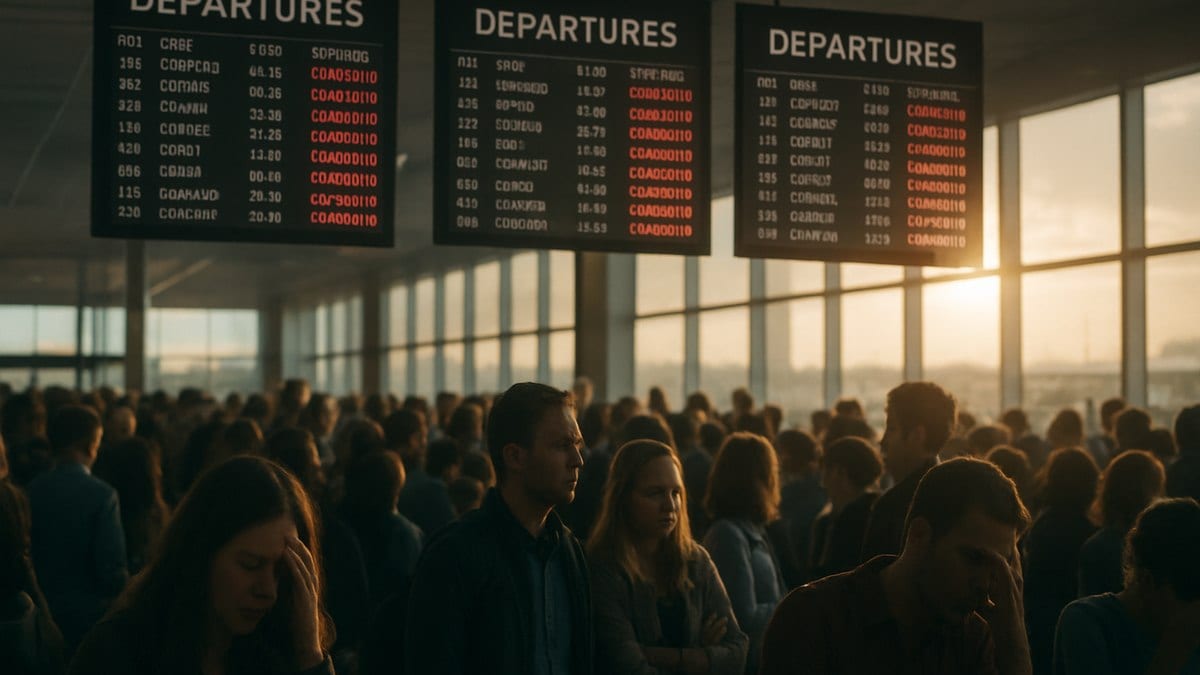
A Growing Cost Burden Hidden in the Schedule
Recent economic assessments of air travel disruption in major markets indicate that delays and cancellations are imposing annual costs in the tens of billions, with the United States alone estimated to lose roughly $30 billion to $34 billion a year through lost productivity, additional airline operating expenses, and knock-on effects across the wider economy. The figures, drawn from government filings and industry research, echo earlier work by passenger rights and data firms that quantified similar disruption costs in the early 2020s and show little sign of easing.
Those earlier studies found that in 2022, disrupted flights in the United States, Europe, and Australia collectively generated economic losses reaching into the tens of billions of dollars, incorporating both direct airline costs and the value of passengers’ lost time. More recent summaries of delay statistics and disruption trends report that U.S. flight delays alone are associated with more than $30 billion in annual economic impact, and that additional crew expenses, maintenance downtime, and insurance claims are climbing.
The pattern suggests that what was once treated as the unavoidable friction of a complex system has hardened into a structural cost line. For airlines running on narrow margins and governments trying to maximize connectivity, a disruption bill in the range of $34 billion a year is increasingly framed in industry coverage as a systemic drag on growth rather than the price of doing business.
At the passenger level, the financial impact appears both in missed business and leisure time and in out-of-pocket spending on hotels, meals, and rebooked tickets when itineraries break down. Aggregated across hundreds of millions of journeys, these micro-costs translate into a macroeconomic problem that is now being cited in regulatory debates and investment research on the future resilience of aviation.
War, Fuel Shocks, and Airspace Closures Reshape Routes
The disruption burden in 2026 is being amplified by geopolitical shocks, particularly the conflict centered on Iran and the closure of key Middle Eastern airspace and maritime routes. Publicly available assessments of the conflict’s economic impact describe a near-total halt in operations at several Gulf hubs that together usually handle a significant share of global long-haul traffic. Airlines have been forced to reroute aircraft around the region, adding hours to some journeys and compressing capacity on remaining corridors.
Oil and jet fuel markets have reacted sharply. Economic analyses of the conflict and associated fuel crisis note that crude prices have surged well above the levels assumed in 2024 and 2025 aviation outlooks, creating acute cost pressure for airlines already wrestling with disruption-related inefficiencies. Recent business reporting shows large carriers warning that sustained elevated fuel prices could add billions of dollars to annual operating costs, with some Asian and Middle Eastern operators already increasing surcharges and adjusting schedules.
At the same time, the sudden loss or downgrading of key hub airports has scattered traffic flows. Travel forums, aviation analysts, and regional media describe passengers stranded across multiple continents after cascading cancellations from Dubai, Doha, and other regional hubs, with some repatriation efforts compared in scale to those of the early pandemic. For global networks that have been optimized for efficient, tightly banked connections through a handful of mega-hubs, these prolonged closures have exposed how quickly the system can reach a breaking point.
These geopolitical and fuel shocks layer on top of more familiar operational challenges, turning localized issues into global ripples. A closure in one region can now trigger missed connections and equipment shortages across multiple continents within hours, multiplying the economic loss well beyond the initial cancellation.
Chronic Strain in Crews, Infrastructure, and Supply Chains
Alongside external shocks, long-running structural weaknesses are compounding disruption. Industry outlooks from airlines and consultancies over the past two years have highlighted chronic staffing gaps in air traffic control, pilot ranks, and ground operations, particularly in North America and Europe. Public posts and advisory notices from regulators and airlines in late 2025 documented capacity caps and temporary flight reductions at busy hubs as authorities tried to manage airspace and staffing limitations.
Airlines are also grappling with aircraft availability constraints, including delayed deliveries and unexpected groundings. Sector reports have drawn attention to the impact of safety fixes and quality concerns affecting portions of the global narrowbody fleet, which in some cases have removed hundreds of aircraft from service and forced carriers to stretch remaining assets. This has left little slack to absorb weather disruptions, technical issues, or sudden demand spikes, making schedule recovery slower and more expensive.
Maintenance and technical delays are another significant cost center. Recent compilations of delay data estimate that maintenance-related disruptions cost airlines hundreds of thousands of dollars per major aircraft-on-ground incident, reflecting not only repair work but also aircraft repositioning, crew imbalances, and passenger reaccommodation. As fleets age unevenly and supply chains for spare parts remain strained, those incidents risk becoming more frequent and longer lasting.
Labor relations add another layer of volatility. High-profile strikes and contract disputes at major carriers in 2024 and 2025, as well as renewed focus on unpaid ground time and fatigue concerns, have demonstrated how quickly schedule reliability can deteriorate when negotiations falter. Compensation settlements and new contracts often raise long-term cost bases, while the immediate disruption from industrial action feeds directly into the growing annual disruption bill.
Passengers Pay More as Reliability Erodes
For travelers, the systemic crisis manifests both in fare structures and in lived experience at airports. Business coverage in early 2026 points to rising ticket prices and new or increased fees as airlines attempt to offset higher fuel costs, staffing expenses, and the financial drag from repeated disruptions. Some carriers are openly signalling capacity cuts on marginal routes and off-peak days, a strategy that can stabilize finances but leaves passengers with fewer options and less redundancy when things go wrong.
In the United States, recent travel reporting and operational data show continued patterns of heavy delays and periodic waves of cancellations at major hubs, even outside traditional storm seasons. Regional affiliates feeding larger networks have been particularly vulnerable, creating a scenario in which a relatively minor delay at a small airport can strand passengers overnight when onward connections are missed or crew duty limits are reached.
Internationally, the Middle East airspace restrictions and escalating fuel surcharges are reshaping long-haul pricing and routings. Travelers between Europe, Asia, and Oceania are encountering longer itineraries, higher fares, and increased uncertainty over last-minute reroutings. Some markets that relied heavily on one or two key transit hubs have seen effective connectivity slashed, prompting corporate travel managers and tour operators to reevaluate routings and budgets.
The combined effect is a perception that air travel is less reliable and more expensive, even as airlines and airports promote digital tools and dynamic rebooking options. For many passengers, those tools are palliative rather than preventative, smoothing the edges of disruption rather than reducing its frequency.
Regulatory Pressure and Industry Responses
The mounting economic toll is drawing closer scrutiny from regulators and policymakers. In the United States, recent transportation rulemaking documents and economic analyses of flight disruptions reference multibillion-dollar annual costs to the national economy, bolstering arguments for stronger consumer protections, clearer refund rules, and improved data transparency around delays and cancellations. In Europe, debates continue around passenger rights frameworks and their cost to airlines, with new impact assessments projecting rising compliance bills as traffic grows.
Industry groups have argued that better air traffic management, infrastructure investment, and cross-border coordination are essential to tackling the root causes of disruption. They point to long-term projects to modernize airspace systems, digitize operations, and adopt more flexible retailing models that could make rebooking and reaccommodation more efficient. Some carriers are investing heavily in predictive analytics and artificial intelligence tools designed to anticipate and mitigate cascading delays before they escalate.
At the same time, the push for decarbonization is creating both challenges and opportunities. Sustainable aviation fuel remains significantly more expensive than conventional jet fuel, adding billions of dollars in projected costs in industry outlooks for the mid-2020s. Yet investments in newer, more efficient aircraft and optimized flight paths could over time reduce both emissions and certain forms of disruption, particularly those linked to maintenance downtime and fuel-related route constraints.
For now, however, the balance sheet of disruption is moving in the wrong direction. With geopolitical risk elevated, fuel markets unsettled, and operational slack still thin, the aviation system enters the 2026 peak travel seasons facing a structural reliability problem that analysts increasingly quantify at roughly $34 billion per year. How governments and industry choose to address that burden will shape not only ticket prices and route maps, but also public confidence in air travel as a dependable part of the global economy.