

More news on this day
Passengers traveling through Cleveland Hopkins International Airport on April 4 faced a fresh wave of disruption, with publicly available tracking data showing 10 flight cancellations and 35 delays affecting services operated by Spirit Airlines, Frontier Airlines, Envoy Air, United Airlines and several other carriers.
Get the latest news straight to your inbox!
Multiple Carriers Impacted Across Key Domestic Routes
The disruptions at Cleveland Hopkins centered on busy domestic links, particularly flights connecting Ohio travelers to Fort Lauderdale, Chicago and the Washington, D.C. region. Data compiled from real time flight tracking platforms and airport status boards indicates that low cost operators and legacy carriers alike contributed to the interruption in service.
Spirit Airlines and Frontier Airlines, which market themselves heavily to budget conscious leisure travelers, were among the carriers with affected departures and arrivals involving Fort Lauderdale and Chicago. United Airlines and Envoy Air, which feed traffic into major hub networks, also saw operations disrupted on routes connecting Cleveland with Chicago O’Hare and Washington area airports.
The mix of carriers involved meant that both point to point passengers and those relying on Cleveland as a stepping stone to longer journeys encountered complications. With cancellations and late arrivals concentrated over several hours, the ripple effects extended to later departures as aircraft and crews fell out of position.
Although the total number of cancellations remained limited compared with large scale national events, the 10 scrapped flights and 35 delayed operations still represented a noticeable share of the day’s schedule for an airport of Cleveland’s size, particularly on heavily traveled early spring weekends.
Weather and Systemwide Strain Add Pressure
The Cleveland disruption unfolded against a backdrop of wider operational strain across the U.S. air travel system. Recent national coverage has highlighted a run of spring delays tied to unsettled weather patterns around major hubs such as Chicago, Dallas Fort Worth and airports in the Northeast, alongside ongoing crew and aircraft utilization challenges.
Reports indicate that thunderstorms, low visibility and shifting wind patterns in recent days have forced traffic management programs and ground stops at several large airports. When those constraints coincide with peak travel periods, downstream stations like Cleveland can experience secondary impacts as inbound aircraft arrive late or are reassigned to other routes.
Publicly available figures compiled from flight status data suggest that carriers including United and Frontier have already been navigating elevated delay volumes at their hub airports since the start of April. In that environment, even a modest bout of disruption at an outstation such as Cleveland can be amplified, particularly when multiple airlines experience schedule pressure at the same time.
Industry watchers note that the confluence of seasonal storms, tight crew scheduling and high aircraft utilization across the low cost and network sectors has left limited margin to absorb irregular operations without visible effects for travelers.
Routes to Fort Lauderdale, Chicago and Washington Affected
The impact was most visible on a handful of high demand routes that link Cleveland with key leisure and business destinations. Fort Lauderdale, a major gateway to South Florida cruises and beach vacations, saw delays and at least one cancellation on flights marketed by ultra low cost carriers serving the Cleveland to South Florida market.
Chicago, one of the nation’s busiest aviation hubs, also featured among the affected routes, as late running inbound segments and schedule adjustments disrupted connections between Cleveland and both O’Hare and Midway airports. Passengers relying on onward flights from Chicago to western and southern destinations faced an elevated risk of missed connections and rebooking.
Service to the Washington, D.C. area, including flights routed through airports such as Washington Dulles and Reagan National, experienced schedule shifts as well. These routes are popular with government travelers, business passengers and weekend visitors, meaning the ripple effects of even short delays can be felt across tightly timed itineraries.
Because many of these city pairs are served by more than one airline, some travelers were able to shift to alternative departures. However, published availability data for early April shows that peak departures around weekends often run close to full, leaving limited spare seats for same day reaccommodation.
Travelers Confront Longer Lines and Itinerary Changes
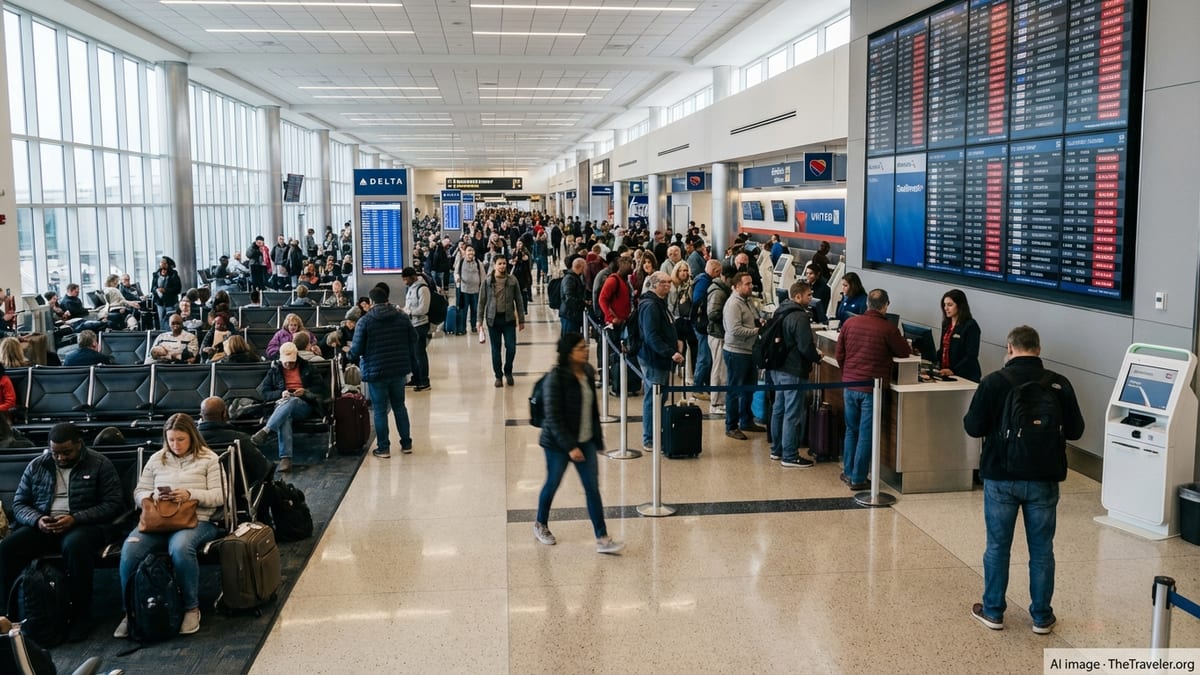
For passengers on the ground at Cleveland Hopkins, the operational issues translated into longer waits at security checkpoints, congested gate areas and a spike in customer service requests. Airport departure boards reflected a patchwork of revised departure times, with some flights pushed back by an hour or more as aircraft arrived late or awaited new crew.
Publicly available social media posts and travel forum discussions from the day described travelers queueing at carrier service desks to obtain new boarding passes, meal vouchers or overnight hotel options when connections became untenable. Others reported opting to reroute through different hubs or to delay their trips by a day in order to secure more reliable options.
Consumer advocates frequently recommend that passengers facing this type of disruption use airline mobile apps and websites to request alternative flights as soon as a delay or cancellation appears. In many cases, carriers open up self service rebooking channels that can reduce the need to stand in line at the airport, especially when several flights are affected at once.
Travel insurance policies and premium credit card protections can also play a role, as some products offer reimbursement for meals, ground transport or lodging when flight disruptions exceed specific time thresholds. However, coverage varies widely, and travelers are encouraged to review their terms before relying on such benefits.
What Upcoming Travelers Through Cleveland Should Know
Looking ahead, publicly available schedule data indicates that airlines serving Cleveland Hopkins are maintaining robust spring timetables to popular destinations including Florida, Chicago and the Washington, D.C. region. At the same time, published industry analysis points to continued vulnerability to weather related and operational disruptions across the broader U.S. network.
Travel planners suggest that passengers departing Cleveland in the coming days build additional buffer time into itineraries, particularly when connecting through major hubs or traveling on the busiest afternoon and evening departures. Morning flights are often less exposed to knock on effects from earlier disruptions elsewhere in the system.
Passengers scheduled on Spirit, Frontier, Envoy Air or United Airlines flights can monitor their bookings through carrier apps and sign up for text or email alerts to receive real time status updates. Keeping an eye on incoming aircraft status for a specific flight may also offer clues about the likelihood of a delay.
While Friday’s tally of 10 cancellations and 35 delays at Cleveland Hopkins falls short of the severe meltdowns seen during major weather events and holiday peak periods, it underscores the importance of contingency planning for any trip. For travelers connecting to cruises from Fort Lauderdale, business meetings in Chicago or political events and sightseeing in Washington, D.C., having flexible arrangements and backup options remains an important part of navigating today’s U.S. air travel landscape.