

More news on this day
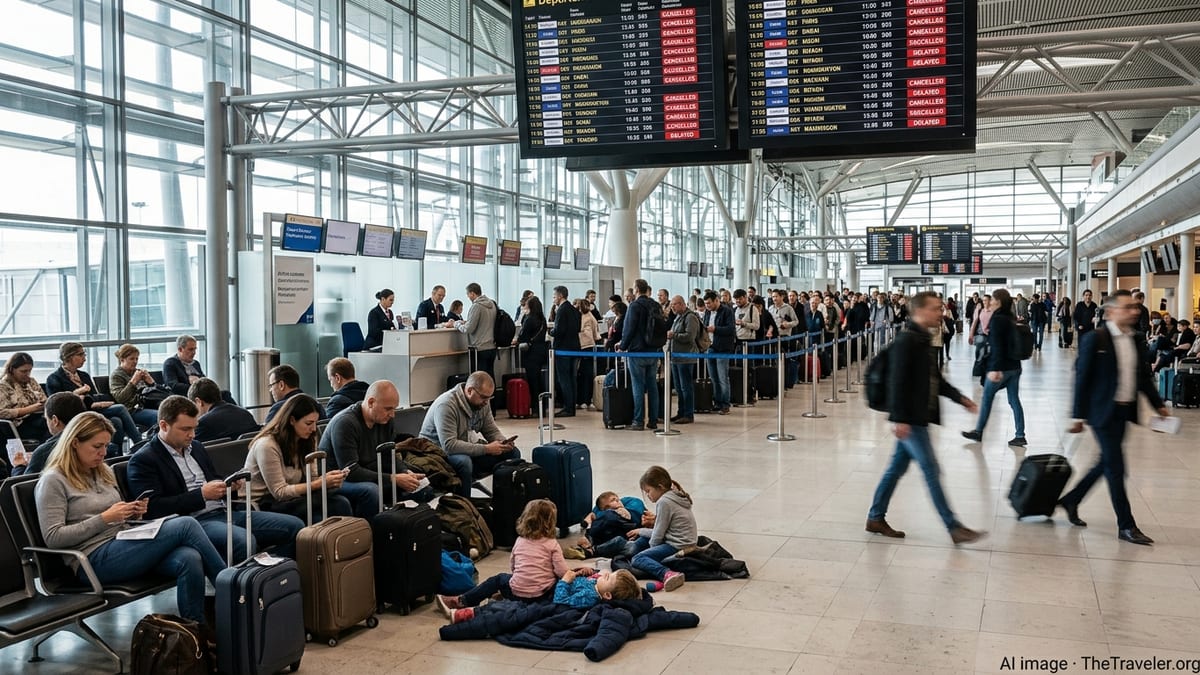
Travelers moving through France’s busiest gateways in Paris and Nice are facing fresh disruption as a cluster of four cancellations and more than 100 flight delays involving Air France and SAS affects major European and international routes at the height of the spring travel period.
Get the latest news straight to your inbox!
Minor Cancellation Count, Major Ripple Effect
Publicly available airport data and industry tracking reports indicate that operations at Paris Charles de Gaulle, Paris Orly and Nice Côte d’Azur were hit by a limited number of outright cancellations but a far larger volume of delays on Saturday, with four flights operated by Air France and SAS canceled and well over 100 services running behind schedule. While the number of cancellations is modest compared with the hundreds of daily departures from these hubs, the pattern of late departures and arrivals has been enough to cause missed connections and extended journey times for passengers across Europe.
Travel-focused publications describe the disruption as part of a broader wave of schedule strain seen across European aviation in recent weeks, with airlines contending with tight aircraft rotations, high load factors and ongoing operational adjustments for the summer season. In this context, even a small cluster of cancellations can trigger knock-on delays as aircraft and crews fall out of position, especially at major connecting hubs like Paris Charles de Gaulle.
Reports from airline and airport performance trackers suggest that delays on affected routes are typically measured in tens of minutes rather than hours, yet the concentration around peak morning and late-afternoon banks in Paris and Nice has amplified the impact on connecting traffic. Travelers transiting through Paris en route to Southern France or onwards to Scandinavia have reported extended waits and, in some cases, rebooking onto later services when minimum connection times could not be met.
Although operations remain broadly stable and the overall cancellation rate at the main French gateways is characterized as low by data providers, the experience for individual travelers on disrupted itineraries has been significant, particularly for those with tight onward connections or same-day business and leisure commitments along the Mediterranean coast.
Key Routes Between Paris, Nice and Scandinavia Disrupted
The delays and cancellations have been most visible on routes linking Paris and Nice with Northern Europe, including services marketed or operated by Air France and SAS between France and Scandinavian hubs. According to published coverage, flights connecting Paris Charles de Gaulle and Nice Côte d’Azur to cities such as Copenhagen and Stockholm have been affected, with some departures scrubbed entirely and others operating late.
These routes hold strategic importance for both carriers. Air France relies on Paris Charles de Gaulle as its primary long-haul hub, feeding Mediterranean leisure destinations like Nice as well as onward intercontinental services. SAS, for its part, positions Scandinavian capitals as gateways between Northern Europe and key markets across the continent, increasingly coordinated with the Air France–KLM network following the decision by Air France–KLM to deepen its investment in SAS.
When irregular operations strike on these corridors, the consequences typically extend beyond point-to-point travelers. Passengers originating in North America or Asia and connecting in Paris to reach Nice or Scandinavian cities may find their journeys extended by several hours if a short delay on one leg causes a missed onward flight. Likewise, travelers from Scandinavia relying on connections through Paris to reach Southern France may be forced to route through alternative hubs or accept later arrivals.
Industry observers note that the spring shoulder season is especially sensitive to such disruptions, as airlines push aircraft utilization higher in preparation for the summer peak while still refining schedules and capacity. This leaves less margin to absorb technical issues, crew constraints or small bursts of congestion without repercussions across the daily network.
Part of a Wider Pattern of European Flight Disruptions
The situation in France mirrors a broader European trend in early 2026, with several reports documenting increased delays and cancellations across major hubs from London and Amsterdam to Copenhagen and Stockholm. Aviation analytics firms have highlighted episodes where thousands of flights in a single day have been affected by schedule disruptions across the continent, citing a mix of weather events, air traffic control constraints and operational resourcing challenges.
Recent travel-industry coverage describes Northern Europe in particular as experiencing a series of uneven days, where airports such as Stockholm Arlanda and Copenhagen have recorded dozens of delayed and canceled services within short time frames. These spikes have periodically implicated SAS and partner carriers, alongside competitors, as they navigate crowded airspace and shifting demand patterns.
For Air France, the France-focused disruption comes on the heels of ongoing network recalibration in response to changing demand, cost pressures and geopolitical considerations. For SAS, the current wave of delays and selected cancellations sits alongside efforts to improve punctuality metrics, with the airline recently cited in on-time performance reports as achieving strong arrival records despite a challenging operating environment globally.
Analysts point out that the combination of constrained air traffic control capacity in parts of Europe and airlines running tighter schedules than in the immediate post-pandemic years has left the system more vulnerable to local shocks. A single technical incident, weather cell or crew rotation issue in France can generate a cascade of late flights that reaches Scandinavian gateways and other European cities within hours.
Passenger Experience and Rights Under EU Rules
For passengers caught up in the latest disruption in Paris and Nice, the immediate concerns have centered on rebooking, missed connections and unexpected expenses. Travelers have shared accounts through public forums of scrambling to adjust plans after delayed departures from French airports jeopardized onward connections within Europe, including to Scandinavian cities served by SAS and partner airlines.
Under European Union air passenger regulations, travelers departing from EU airports or flying with EU-based carriers such as Air France and SAS retain defined rights in cases of significant delay or cancellation. Consumer-facing advisory platforms explain that when cancellations or long delays are within the airline’s control and notified at short notice, passengers may be entitled to compensation in addition to rerouting or refunds, although eligibility depends on factors such as distance, final delay on arrival and the specific cause of disruption.
Publicly available guidance also notes that airlines are generally expected to provide care and assistance in the form of meals, refreshments and, where necessary, accommodation when passengers are stranded because of major delays or missed connections that are tied to the carrier’s operations. In practice, traveler experiences can vary, with some passengers reporting smooth rebooking and support and others describing longer waits at service desks or limited on-the-spot information about their options.
Travel experts frequently recommend that passengers affected by irregular operations retain documentation such as boarding passes, delay notifications and receipts for any additional expenses, as these records can be important when filing subsequent claims with airlines or through third-party services. Given the current volatility in European skies, such precautions are increasingly presented as prudent for anyone relying on tight connections through hub airports like Paris Charles de Gaulle or regional gateways like Nice.
What Spring Travelers Through France Should Expect
Looking ahead to the coming days, aviation analysts do not currently anticipate mass cancellations in France on the scale seen during past strike actions or severe weather events, but they caution that pockets of disruption are likely to persist. With Air France, SAS and other European carriers fine-tuning schedules, managing fuel costs and navigating evolving demand, operational resilience remains under scrutiny.
For travelers planning itineraries via Paris or Nice, publicly available expert commentary suggests building in extra connection time whenever possible, particularly when linking short-haul European flights to long-haul services. Early-morning and late-afternoon peaks may be more susceptible to knock-on delays if aircraft arrive late from prior segments, so some advisers recommend selecting midday services where scheduling allows.
Airports and airlines continue to encourage passengers to monitor flight status closely on day of departure, as last-minute retimings remain a feature of the current environment. Many carriers, including Air France and SAS, enable real-time updates through mobile apps and messaging services, which can provide earlier notice of delays or gate changes than departures boards alone.
While Saturday’s cluster of four cancellations and more than 100 delays does not represent a systemic breakdown in French air travel, it underscores how tightly tuned airline networks can quickly feel the strain of even limited irregularities. For visitors heading to the French capital or the Mediterranean coast this spring, a modest buffer of extra time, flexible planning and close attention to schedule updates may make the difference between a smooth journey and an unexpectedly extended day at the airport.