

More news on this day
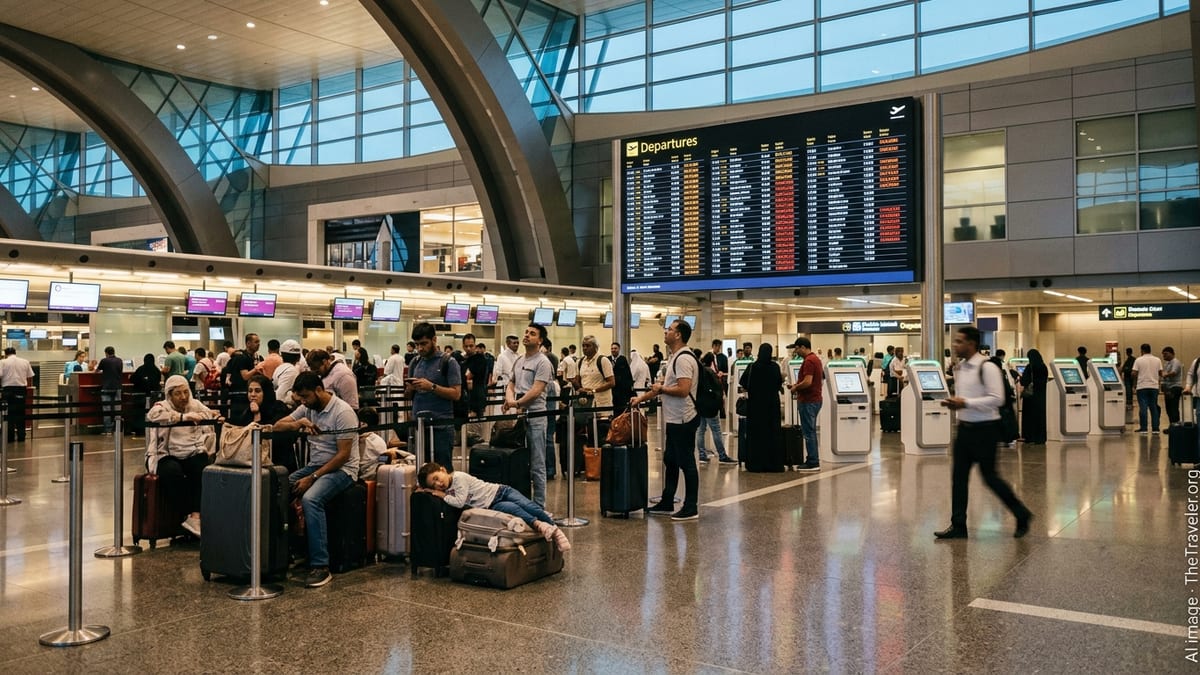
Travelers connecting through Doha’s Hamad International Airport are facing a fresh wave of disruption, as publicly available flight information shows at least 26 services canceled and many more delayed across key routes linking Doha with Cairo, Kuala Lumpur, Bahrain, Warsaw and other major hubs.
Get the latest news straight to your inbox!
Wide-Ranging Disruptions Across Carriers and Routes
Monitoring of live departure and arrival boards, airline schedules and traveler reports indicates that the latest disruption involves a mix of cancellations and extended delays touching multiple carriers that normally rely on Doha as a regional and intercontinental hub. Among the airlines affected are Qatar Airways, Gulf Air, Malaysia Airlines, EgyptAir and Virgin Australia, along with several codeshare and partner services routed through Hamad International Airport.
In total, at least 26 flights have been canceled over a short operating window, with additional services operating significantly behind schedule. The pattern of disruption is particularly visible on high-traffic corridors connecting Doha with Cairo, Kuala Lumpur and Bahrain, as well as longer-haul itineraries that use Doha as a connection point for travel to and from cities such as Warsaw and major European and Asia-Pacific gateways.
Publicly available data suggests that both point-to-point and connecting passengers are affected. Travelers starting or ending their journeys in Doha are seeing flights removed from schedules or retimed, while those relying on tight connections through Hamad International Airport are facing missed onward services and involuntary rerouting through alternative hubs.
The concentration of cancellations within a limited time frame is compounding the impact. With multiple flights removed on overlapping routes, seats on remaining services are becoming harder to secure, especially for travelers needing last-minute alternatives to maintain business or long-haul leisure itineraries.
Impact on Key Gateways: Doha, Cairo, Kuala Lumpur, Bahrain and Warsaw
Doha remains the focal point of the disruption, with Hamad International Airport functioning as the primary transit node affected by the latest schedule changes. The airport serves as the main hub for Qatar Airways and an important connection point for partner airlines, which means even a modest number of cancellations can cascade into missed connections and overnight stays for passengers in transit.
On the regional front, routes linking Doha with Cairo and Bahrain are among those most visibly affected. EgyptAir and Gulf Air, which typically operate regular frequencies to and from Doha, have seen select services canceled or retimed, according to timetable changes and airport operations data. This is placing additional pressure on remaining flights and on alternative routings via other Gulf and North African hubs.
Further east, Kuala Lumpur has also emerged as a key city hit by the latest wave of adjustments, with Malaysia Airlines and Qatar Airways services experiencing interruptions. Kuala Lumpur’s role as a connector between Southeast Asia, the Middle East and Europe means travelers heading to or from the Malaysian capital are having to consider rebooking through different hubs or accepting longer journey times due to extended layovers.
In Europe, Warsaw is among the destinations affected as disrupted services ripple into central and eastern European schedules. Passengers traveling between Poland and destinations in Asia and Australia via Doha are encountering uncertainty around their planned itineraries, with some reports indicating rebookings onto partner carriers through alternative hubs as airlines work within available capacity constraints.
Operational Strain and Network Knock-On Effects
Available operational analyses and recent coverage of flight patterns around Doha point to a combination of factors behind the current disruption, including regional airspace constraints, aircraft and crew positioning challenges, and the lingering effects of earlier schedule reductions. When a hub carrier such as Qatar Airways adjusts its operations at short notice, partner airlines and codeshare services are often required to reshuffle their own networks, contributing to a broader pattern of cancellations and delays.
Public flight-tracking data shows that some aircraft normally scheduled for high-demand routes have been out of rotation or reassigned, which can lead to last-minute cancellations when spare capacity is limited. In parallel, congested connection banks at Hamad International Airport mean that even relatively minor delays on inbound sectors can trigger missed onward departures, forcing airlines to merge services, consolidate loads or reroute passengers via different hubs.
The strain is being felt beyond the immediate list of 26 canceled flights. With seat availability tightening on a number of neighboring routes, passengers affected by one cancellation may find that alternative departures on the same day are already near capacity. This is especially true for flights linking Doha with other major Gulf hubs and European capitals, where demand remains high and turnaround times are closely scheduled.
Reports from recent weeks have already highlighted a challenging environment for carriers operating into and out of Doha, with a mix of weather-related issues, airspace restrictions and broader operational pressures sometimes converging. The latest cluster of cancellations appears to be reinforcing that trend, underscoring the vulnerability of tightly banked hub operations to sudden shifts in conditions.
Passenger Experience: Missed Connections, Rebookings and Extended Layovers
For travelers caught up in the disruption, the most immediate consequences are missed connections and extended waits at airports across the region. Accounts shared on public forums and social platforms in recent days describe passengers delayed for many hours in Doha and other affected hubs as they wait for rebooked itineraries, with some needing to accept overnight stays or multi-stop routings in place of the single-connection journeys originally booked.
In cases where flights are canceled in advance, some passengers are being reprotected onto later departures with the same airline or routed through alternative hubs on partner carriers, depending on ticket conditions and available capacity. However, where cancellations are confirmed closer to departure, options can be more limited, particularly for long-haul routes where only a handful of daily frequencies exist across all carriers combined.
Travelers connecting from secondary cities into the disrupted network can face an added layer of complexity. A delayed or canceled long-haul leg from Doha to a destination such as Warsaw or Kuala Lumpur may require separate adjustments to short-haul feeder flights, accommodation bookings and ground transportation. This multiplies the logistical and financial impact for individuals and families, especially during busy travel periods.
Publicly accessible guidance from airlines and airport operators continues to encourage affected passengers to monitor their booking status frequently, use official mobile apps where available, and arrive early for departures, as airport processes may take longer when large numbers of travelers are seeking rebooking assistance at the same time.
What Travelers Can Expect in the Coming Days
Based on current schedules and recent patterns of disruption around Hamad International Airport, further timetable adjustments in the short term remain possible. Airlines commonly revise their operations in rolling increments as they receive updated information on airspace conditions, aircraft availability and crew resources, which means additional cancellations or timing changes could appear on departure boards with limited advance notice.
Travel industry analysts note that once a hub experiences a concentrated period of cancellations and delays, it can take several days for operations to fully stabilize. Aircraft and crews often need to be repositioned, and backlogs of displaced passengers must be cleared, particularly on long-haul routes where aircraft utilization is tightly planned. During this phase, even flights that operate as scheduled may see higher than usual load factors and reduced flexibility for last-minute changes.
For now, publicly available information suggests that airlines serving Doha, including Qatar Airways, Gulf Air, Malaysia Airlines, EgyptAir and Virgin Australia, are continuing to adjust their operations dynamically. Travelers with imminent departures through Hamad International Airport or on routes touching Cairo, Kuala Lumpur, Bahrain or Warsaw are widely advised, through open-source travel updates and airport notices, to stay alert to schedule changes and to confirm their flight status repeatedly in the 24 hours before departure.
As airlines work through the immediate fallout, the situation at Hamad International Airport is likely to remain fluid. While the total of 26 canceled flights represents only a fraction of daily movements through the Doha hub, the concentration of disruption on key long-haul and regional corridors ensures that its impact on global travel patterns will be felt well beyond Qatar’s borders in the days ahead.