

More news on this day
Spring travelers moving through Louis Armstrong New Orleans International Airport on April 4 are facing a fresh round of disruption, as a mix of weather and operational problems has led American Airlines, Southwest Airlines and Spirit Airlines to ground multiple departures and stack up delays on key domestic routes.
Get the latest news straight to your inbox!
Six Flights Grounded as Networks Strain
Publicly available flight-tracking boards for April 4 indicate that six departures operated by American Airlines, Southwest Airlines and Spirit Airlines out of Louis Armstrong New Orleans International Airport were canceled outright, cutting links to several major hubs. The grounded flights are concentrated on high-demand corridors serving Dallas Fort Worth, Atlanta, Austin and other southeastern and central U.S. cities, reducing options for both origin and connecting passengers.
The cancellations form part of a wider pattern across the U.S. aviation system. Aggregated operational data for early April show roughly 460 cancellations and around 5,500 delays across the country within a single 24 hour window, underscoring how quickly localized issues at a few hubs can ripple through airline networks and strand travelers far from severe weather or maintenance hotspots.
At New Orleans, American, Southwest and Spirit collectively carry a substantial share of domestic traffic, particularly on point to point routes into Texas and the Southeast. With all three carriers trimming departures at the same time, travelers are relying heavily on rebookings via intermediate hubs and remaining seats on competing airlines, putting additional pressure on already busy banked departure waves.
Airport statistics published by the New Orleans aviation authority show that American, Southwest and Spirit have each grown their passenger volumes over recent years, even as total flight movements at the airport have softened slightly. That growth leaves more customers exposed when several carriers experience the same weather band or staffing bottleneck on the same day.
Weather and Network Knock On Effects Across Key Hubs
The latest disruption at New Orleans is closely intertwined with storm systems and congested airspace affecting major hubs in Texas and the eastern United States. Recent bulletins covering April 4 highlight thunderstorms and reduced arrival rates across parts of the Southeast, including the Atlanta area, prompting airlines to implement ground delay programs and slow their schedules into affected airports.
In Texas, recent analyses of flight-status data show that Dallas Fort Worth, George Bush Intercontinental in Houston and San Antonio have collectively recorded close to 400 delayed arrivals and departures during the first days of April as storms and tight turn times challenged operations. With New Orleans relying heavily on links into Dallas Fort Worth and other Texas airports for onward connections, any capacity cut or rolling delay in the region tends to spill back into MSY’s departure banks.
Separate travel industry coverage notes that Dallas Fort Worth has been among the most heavily disrupted hubs in early April, with hundreds of delays and more than one hundred cancellations in a single day affecting American, Southwest, Spirit and other carriers. Those figures reflect both weather constraints and the compounding effect of aircraft and crews running late on earlier segments, a pattern that is now familiar to travelers across the country.
Operational incidents elsewhere in airline networks are adding to the strain. On April 4, for example, an American Airlines flight operating between San Antonio and Dallas Fort Worth diverted back to its origin after an in flight incident, forcing passengers onto later departures and tightening aircraft availability on an already stressed corridor. While isolated events like this are rare, they can further constrain flexibility when carriers are already juggling weather related delays.
Impact on New Orleans Travelers and Regional Routes
For travelers departing from or arriving into New Orleans, the immediate impact of six grounded flights and multiple extended delays is felt most acutely on popular short haul routes to Texas and Georgia. Dallas Fort Worth and Dallas Love Field serve as important gateways for New Orleans based passengers heading to the Mountain West, West Coast and international destinations, while Atlanta’s busy hub connects the region to the East Coast and overseas markets.
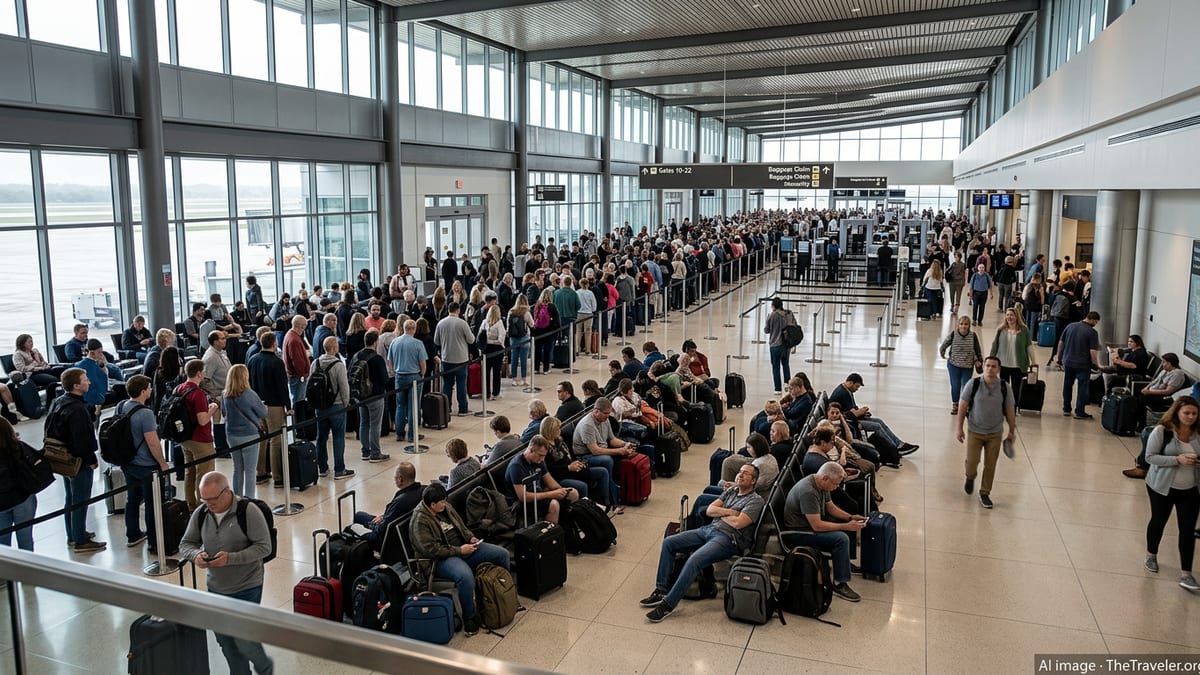
When flights to these hubs are canceled or significantly delayed, passengers may find that rebooking options involve longer routings, additional layovers or overnight stays. Reports from recent days at MSY describe long check in and customer service lines for multiple carriers during busy morning and evening peaks, as travelers seek new itineraries or attempt to retrieve checked baggage after missed connections.
The timing of this disruption amplifies the effect. Early April sits at the intersection of spring break schedules, festival travel into New Orleans and a steady return of business trips, producing higher load factors on many flights. Even a small number of cancellations can therefore leave few empty seats available on same day alternatives, compelling airlines to spread displaced passengers over several subsequent departures.
Published airport data show that New Orleans has recovered and in some cases exceeded pre pandemic passenger totals, while operating with a slightly leaner schedule of total aircraft movements. That combination of fuller flights and tighter schedules reduces slack in the system and can magnify the impact when a cluster of flights is suddenly removed from the board.
American, Southwest and Spirit Under Scrutiny
The latest episode places renewed attention on the operational resilience of American, Southwest and Spirit, each of which has faced elevated levels of delays and cancellations at various points over the past year. Industry commentary this week highlights that Southwest, in particular, has been among the harder hit carriers during recent disruption waves, with notable delay spikes at several of its focus cities.
Low cost carrier Spirit has also featured prominently in nationwide disruption tallies, with performance dashboards showing relatively high average delay times and cancellation rates on some of its busier leisure routes. For price sensitive travelers in and out of New Orleans who rely on Spirit for nonstop links to Florida and select Midwest and Northeast cities, the current round of grounded flights reinforces concerns about how quickly service can be restored when weather or maintenance issues arise.
American Airlines, the largest carrier at Dallas Fort Worth and a key operator at Atlanta and Austin, faces its own pressures as it navigates storms in the Southeast and isolated operational incidents in Texas. The airline plays a central role in feeding New Orleans traffic into domestic and international networks, and any thinning of its schedule at MSY typically has outsized effects on long haul connections.
Publicly available performance data also suggest that no single airline is solely responsible for the current challenges. Instead, disrupted days tend to show elevated delay rates across full service and low cost carriers alike whenever weather bands, air traffic control constraints and tight staffing coincide, as appears to be the case in early April.
What Travelers Can Do as Disruptions Continue
While the grounding of six flights at New Orleans and a wider ring of delays across Dallas Fort Worth, Atlanta, Austin and other airports will inevitably inconvenience many travelers, industry guidance offers several strategies to reduce the impact. Travel compensation specialists and consumer advocates generally recommend that passengers monitor their flight status closely on the day of travel, using both airline apps and independent tracking tools to spot schedule changes as early as possible.
For those with upcoming itineraries that pass through the most affected hubs, rebooking to earlier departures or less congested connection points can provide a buffer if afternoon and evening operations begin to slide. Passengers with flexible plans may also consider shifting travel to off peak days when load factors and disruption risk are typically lower.
Published airline policies outline when customers may be eligible for fee free changes, travel credits or refunds during irregular operations, particularly when carriers issue formal waivers in response to storms or air traffic control programs. Understanding these rules in advance can help travelers make quicker decisions about whether to wait out a delay, request a different routing or cancel a trip altogether.
For now, publicly available data and reports suggest that the disruption at Louis Armstrong New Orleans International Airport is part of a broader, weather influenced pattern across the U.S. aviation system at the start of April. With spring travel volumes remaining strong, travelers heading through New Orleans, Dallas Fort Worth, Atlanta, Austin and other key hubs are likely to face a period of elevated delay risk, even as airlines work to restore regular schedules.