

More news on this day
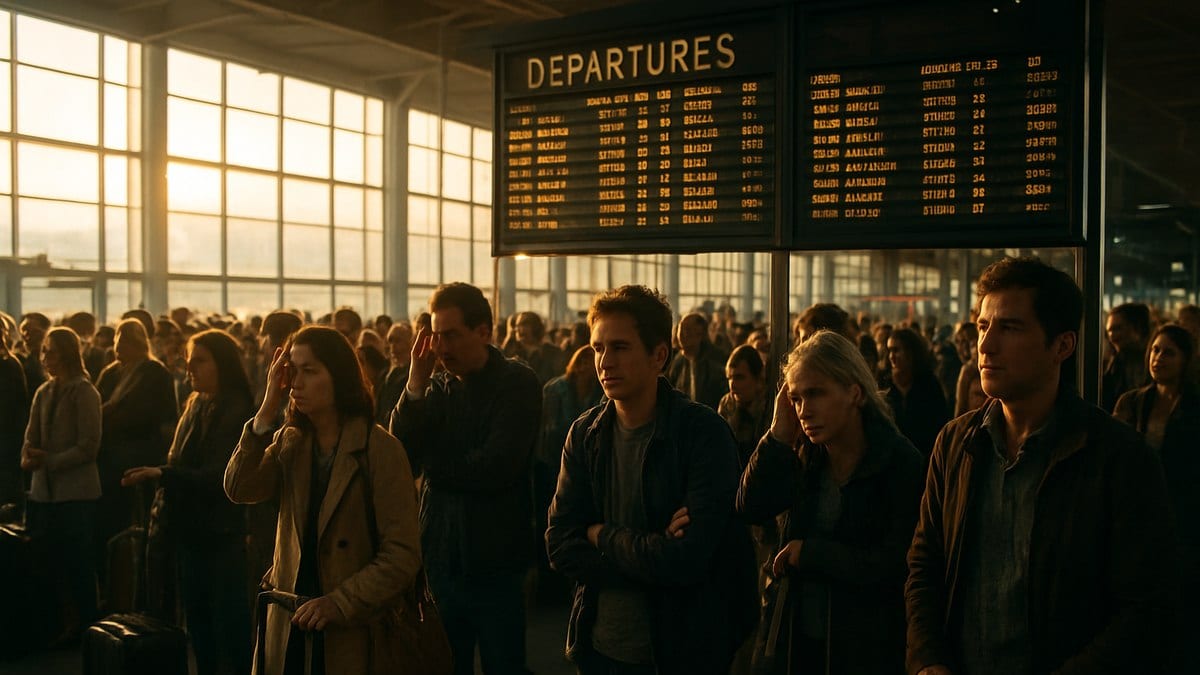
Travelers passing through Atlanta’s Hartsfield–Jackson International Airport faced a difficult day as 129 flight delays and 23 cancellations disrupted operations at the world’s busiest air hub, stranding hundreds of passengers and triggering knock-on impacts across the U.S. aviation network.
Get the latest news straight to your inbox!
Targeted Disruption at a Critical U.S. Gateway
Publicly available operational data compiled on Saturday indicates that Atlanta’s Hartsfield–Jackson International Airport experienced 129 delayed departures and arrivals alongside 23 flight cancellations, affecting services on key domestic and regional routes. The disruption centered on flights operated by major U.S. carriers and their regional partners, with Delta Air Lines, SkyWest, Endeavor Air and Air Canada among those most exposed.
Coverage in aviation-focused outlets notes that while the raw number of cancellations in Atlanta was lower than at some other major hubs on similar disruption days, the concentration of both delays and scrapped flights at a single airport amplified the impact on connecting passengers. As a primary transfer point for journeys across the eastern United States and to Latin America, even a limited schedule imbalance in Atlanta can quickly cascade into missed connections and rebooked itineraries.
Reports from travel industry trackers describe the Atlanta episode as a case of “targeted disruption” rather than a systemwide shutdown. That pattern suggests operational stresses such as local weather cells, aircraft rotation challenges or crew availability issues, rather than a nationwide infrastructure failure. Nonetheless, the immediate result for many travelers was the same: long waits at gates, crowded customer service desks and revised arrival times stretching late into the evening.
World’s Busiest Hub Shows Its Vulnerability
Hartsfield–Jackson’s central role in global aviation helps explain why a disruption involving 129 delays can draw outsized attention. Data from airport rankings and industry reports show that Atlanta has repeatedly held the title of the world’s busiest airport by passenger volume, handling more than 100 million travelers in 2024 alone. Its dense schedule of domestic connections and its status as a mega-hub for Delta make it a pivotal node in both U.S. and international networks.
Recent traffic statistics underscore the scale. Aviation databases tracking aircraft movements list Hartsfield–Jackson among the top global airports for takeoffs and landings, reflecting hundreds of thousands of annual operations. In parallel, local business and travel studies highlight Atlanta’s importance for corporate travelers, with a large share of routes tailored to frequent flyers who rely on tight connections and predictable schedules.
That density can become a liability when disruptions occur. Transportation oversight analyses have previously shown that delays at Atlanta can quickly ripple across multiple regions, as aircraft and crews scheduled to depart the hub become unavailable for later flights elsewhere. The banking of departures and arrivals typical of a hub-and-spoke system means a problem in one bank can push congestion into subsequent waves, even after the original trigger is resolved.
Broader U.S. Patterns: Delays Becoming the New Normal
The turbulence in Atlanta aligns with a broader pattern of flight disruptions across the United States over the past two years. Consumer-rights groups and federal transportation statistics have documented that roughly one in four U.S. flights in the most recent full year analyzed experienced some form of delay or cancellation, underscoring how fragile the system can be during peak periods or adverse weather.
Recent quarters have seen several high-profile disruption episodes, from severe winter storms that forced ground delay programs at Chicago O’Hare, Denver and New York’s major airports, to technology-related outages that temporarily crippled airline operations. Industry reporting on early 2026 performance points to thousands of delays and more than a hundred cancellations on some single days, often concentrated at large hubs such as Atlanta, Dallas Fort Worth and major West Coast gateways.
Regulatory and oversight documents have long highlighted the role of congested airspace and aging infrastructure in amplifying these issues. Studies examining traffic patterns around Atlanta and other megahubs have found that weather-related constraints, combined with tight scheduling, leave limited buffer when demand surges or storms shift unexpectedly. The result is a system where modest disruptions can escalate into widespread travel headaches within hours.
Knock-on Effects for Travelers Across the Network
Saturday’s 129 delays in Atlanta extended far beyond Georgia. According to published operational summaries, the affected flights touched routes to and from destinations including Fort Lauderdale, Aspen, Puerto Rico, Querétaro, Lexington and other U.S. and regional markets. For many travelers, the disruption played out not only as longer waits in Atlanta but as rolling schedule changes at their origin or destination airports.
Travel advisory coverage notes that when a large hub experiences a localized disruption, airlines often prioritize mainline trunk routes and international connections, reassigning scarce aircraft and crews to protect the highest-demand services. Regional and leisure-oriented routes can therefore bear a disproportionate share of cancellations and longer delays, leaving passengers in smaller markets with fewer same-day rebooking options.
The immediate passenger experience in such events typically includes extended gate holds, aircraft swaps and revised boarding times, along with crowded airport concourses as later flights absorb displaced travelers. For connecting passengers, even relatively short delays on inbound services can be enough to miss tight connections, especially in a vast facility like Hartsfield–Jackson where transfers between concourses can add significant transit time.
What Today’s Atlanta Disruption Signals for Summer Travel
Although the latest Atlanta disruption was numerically modest compared with extreme weather episodes that have produced several hundred delays in a single day, aviation analysts see it as an early indicator for the coming peak travel season. Persistent staffing challenges in parts of the industry, combined with high demand and tight turn times on aircraft, suggest that even small operational shocks may continue to reverberate widely.
Observers of airline performance point to recent data showing that while some carriers have improved on-time metrics and resilience, the overall system remains sensitive to hub-specific disruptions. In that context, an event involving 129 delays at the world’s busiest hub is less an anomaly than a reminder that the U.S. network still operates with limited slack.
For travelers planning to pass through Atlanta in the weeks ahead, the episode reinforces standard best practices: monitoring flight status throughout the day of travel, allowing additional time for connections at major hubs, and preparing for the possibility of rebookings when storms or operational bottlenecks emerge. As Hartsfield–Jackson continues to handle more passengers than any other airport worldwide, days like this underline both its centrality to global mobility and the challenges of keeping such a vast operation running on time.