

More news on this day
Air travellers in Nigeria are being urged to prepare for fresh waves of flight delays and cancellations as the country’s aviation regulator highlights rising weather risks at the start of the rainy season.
Get the latest news straight to your inbox!
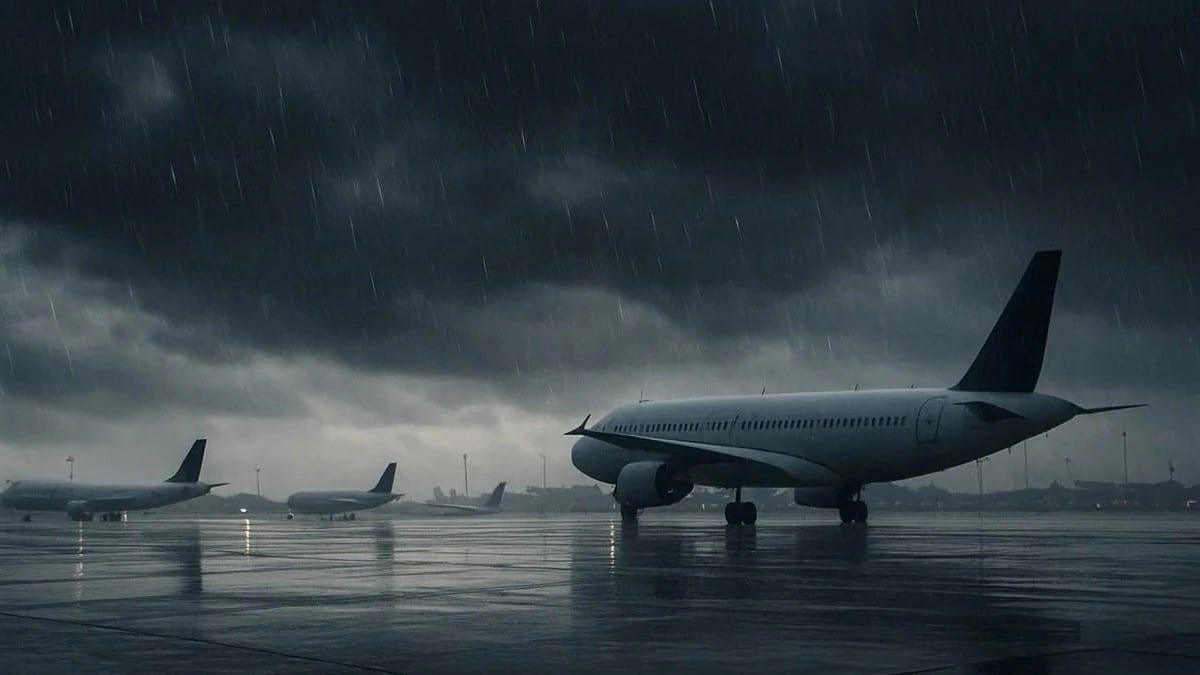
NCAA Signals a Turbulent Rainy Season Ahead
Publicly available information from the Nigeria Civil Aviation Authority indicates that airlines and passengers should expect more operational disruptions as the rainy season sets in across the country. The regulator has raised concerns that lower visibility, thunderstorms and heavier rainfall could affect departures and landings at major airports in the coming weeks.
Recent coverage notes that while disruption levels have eased compared with late 2025, seasonal conditions are likely to reintroduce challenges just as demand for domestic and regional travel remains strong. Industry observers point out that Nigeria’s busiest gateways, including Lagos and Abuja, already operate close to capacity during peak periods, leaving little room to absorb weather-related delays.
The warning aligns with a broader pattern in global aviation, where climate variability and more intense weather systems are complicating flight planning and airport operations. In Nigeria, these pressures intersect with long-standing infrastructure and scheduling constraints, raising the prospect of a difficult few months for both operators and travellers.
By flagging the risks early, the regulator appears to be seeking to temper passenger expectations and push airlines to strengthen contingency plans, from crew rostering to aircraft rotation, before the worst of the rainy season takes hold.
Recent Disruptions Underscore Growing Weather Sensitivity
Several incidents since the start of 2026 have shown how quickly adverse weather can unravel carefully planned schedules. In January, reports from Abuja described international passengers stranded on board an aircraft for hours after poor weather forced a diversion from Kano, leaving the flight waiting on the tarmac while clearance and welfare arrangements were sorted out.
Domestic operations have also been affected. Early April coverage from Nigerian outlets highlighted a delayed Ibadan service that was unable to land as scheduled because of weather conditions, prompting the aircraft to return to Abuja before eventually completing the journey. The episode drew attention to the delicate balance between maintaining schedules and respecting visibility and approach minima at secondary airports.
These events build on earlier data from the regulator showing thousands of delays and hundreds of cancellations across Nigerian domestic routes in late 2024, a period dominated first by harmattan dust haze and later by storms. Analysts say that pattern is unlikely to be a one-off, as seasonal extremes at both ends of the year increasingly shape the reliability of air travel.
For passengers, the recent disruptions serve as a reminder that weather remains one of the main variables beyond airline control, even as technology improves forecasting and navigation. For airlines, they are an indication that operational resilience, communication and ground handling must keep pace with shifting climate realities.
Safety Rules Take Priority Over On-Time Performance
Nigeria’s aviation regulations place strict limits on take-off and landing in poor weather, particularly for flights operating under visual flight rules. Guidance documents available on the regulator’s website emphasize that dispatch and operations staff must not authorise departures where forecast or observed conditions fall below prescribed minima.
This framework reflects lessons drawn from decades of global and local aviation experience, including accidents in which deteriorating weather, limited visibility and poor situational awareness were contributory factors. In practice, it means pilots and operations control centres are required to delay, divert or cancel flights when conditions at departure, en route or destination airports no longer meet safety thresholds.
Industry watchers note that such decisions often place airlines in a difficult position, caught between commercial pressure to maintain on-time performance and the legal obligation to prioritise safety. When weather deteriorates rapidly, knock-on effects can quickly spread across an airline’s network, leaving aircraft and crews out of position and disrupting subsequent rotations.
The renewed emphasis from the regulator on hazardous weather suggests there will be little tolerance for any relaxation of these standards during the rainy season. Instead, operators are being encouraged, through public messaging and technical advisories, to plan conservatively and to build additional buffers into schedules where feasible.
Passenger Rights and Communication Under the Spotlight
As the likelihood of weather-related disruption increases, attention is again turning to how Nigerian airlines handle affected passengers. Consumer protection rules published by the regulator outline when travellers are entitled to care, including refreshments, communication, hotel accommodation and ground transport, particularly when delays extend for several hours.
However, recent experiences reported in local media show that implementation can be uneven. In the Abuja tarmac incident earlier in the year, passengers complained of limited information and welfare support during the extended wait on board. Similar grievances surfaced during past episodes of widespread delay, with travellers citing a lack of timely updates and uncertainty over rebooking options.
Industry analysts argue that clearer, more proactive communication can significantly reduce frustration, even when airlines are unable to control the underlying cause of a disruption. Simple measures such as frequent announcements, realistic timing estimates and straightforward explanations of weather constraints can help set expectations and preserve trust.
With the regulator now publicly signalling a higher probability of disruption, observers expect greater scrutiny of how airlines apply the consumer rules during the rainy season. Travel advocates are encouraging passengers to familiarise themselves with their rights and to retain documentation of delays and cancellations in case they need to pursue complaints later.
What Travellers Can Expect in the Weeks Ahead
For passengers planning trips within or through Nigeria in the coming months, the prevailing guidance suggests building flexibility into itineraries. Public information from airlines and airport operators increasingly encourages travellers to allow extra connection time, especially when linking domestic and international segments, to account for potential weather-induced delays.
Travel planners note that early morning flights may be less exposed to the cascading effects of afternoon thunderstorms, though low morning cloud and visibility can also present challenges at some airports. They add that travellers whose plans are highly time-sensitive, such as attending major events or business meetings, should consider arriving a day early where possible.
Despite the warnings, aviation experts stress that Nigeria’s air transport system remains fundamentally safe, with established protocols for suspending operations when conditions deteriorate. From their perspective, the regulator’s renewed messaging is less a sign of new danger and more an effort to align expectations and promote orderly handling of disruptions that are likely to occur.
As the rainy season progresses, performance data from airports and airlines will show how effectively the sector adapts to the evolving weather patterns. For now, the clearest takeaway for travellers is to stay informed, remain patient when schedules change and recognise that, in aviation, safety considerations must always take precedence over punctuality.