

More news on this day
Los Angeles International Airport experienced a fresh wave of operational disruption on April 10, with publicly available tracking data indicating at least 69 delayed flights affecting major carriers across domestic and international routes.
Get the latest news straight to your inbox!
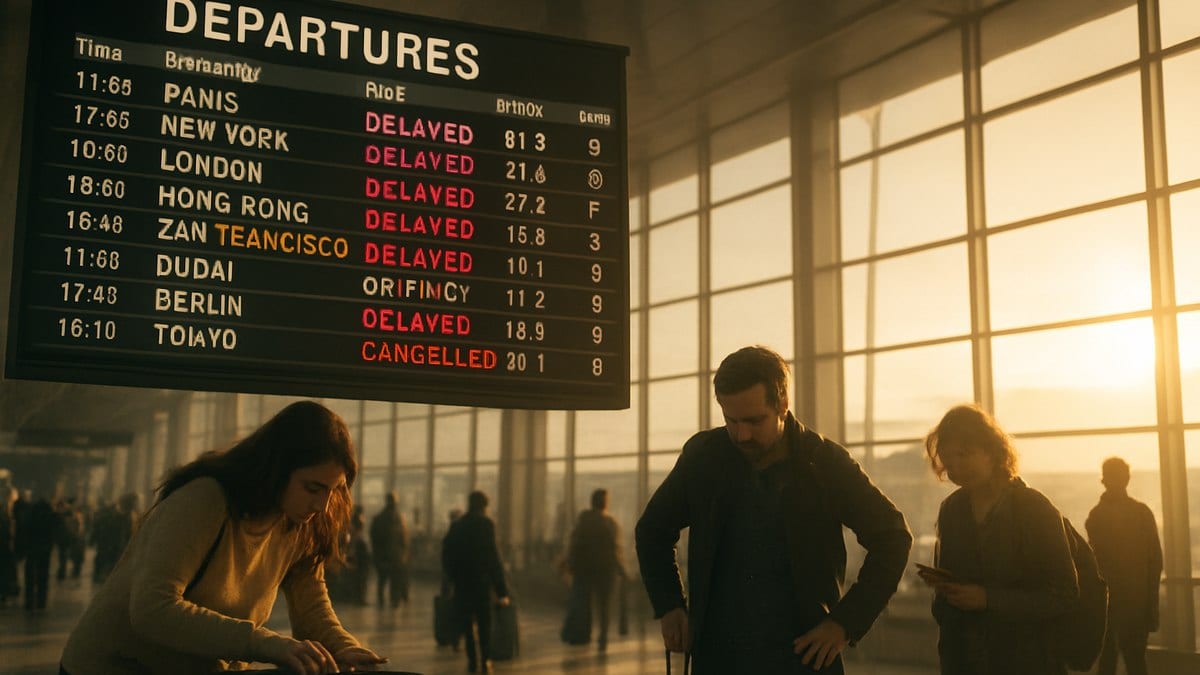
Operational Strain Builds Across Key LAX Terminals
Tracking snapshots for Los Angeles International Airport on April 10 show delays building across several peak travel banks, with disruptions affecting departures and arrivals throughout the morning and early afternoon. The pattern reflects a mix of modest schedule slippages and more significant hold-ups, with delays stretching from around 30 minutes to well over an hour on some routes.
Major U.S. carriers, including American, Delta, United, Southwest and Alaska, feature prominently among the delayed flights, along with several large international airlines operating long haul services from Europe and Asia. The 69 affected flights represent only a fraction of LAX’s daily schedule but are concentrated enough to create visible congestion at gates and around the taxiways.
Available data and recent performance statistics show that LAX remains one of the country’s busiest and most delay‑prone airports during traffic peaks, as tightly packed schedules leave limited margin when even routine issues arise. On April 10, the accumulated delays at a single hub again underscored how quickly strain can spread across multiple airline networks.
Terminals used by the largest domestic carriers appeared to bear much of the brunt, as narrow turnaround windows magnified the impact of late‑arriving aircraft. In several cases, an initial inbound delay was followed by knock‑on disruption to subsequent departures, extending the ripple effects well beyond Los Angeles.
Close Call on the Airfield Adds to Passenger Unease
The fresh wave of delays at LAX comes as attention remains focused on airfield safety following a widely reported near‑collision involving a Frontier Airlines aircraft and two service vehicles on a taxiway this week. According to published coverage, the Federal Aviation Administration has opened an investigation into the incident, which occurred as the Frontier flight was taxiing at low speed.
While no injuries were reported and the incident did not immediately trigger widespread cancellations, the episode has added to a sense of unease among some travelers already contending with schedule disruptions. Audio recordings reported in local media captured the Frontier pilot describing how the aircraft braked sharply to avoid the trucks, highlighting how routine ground movements can quickly become hazardous when spacing breaks down.
Airport operations at LAX have come under periodic scrutiny in recent years as traffic volumes have rebounded and construction work has reshaped parts of the airfield and terminal complex. The close call has renewed questions about how service vehicles, aircraft and ground personnel are coordinated during busy periods, particularly when airlines are also working to recover from rolling delays.
Safety specialists routinely note that disruptive days, when crews and controllers are managing compressed schedules and passenger pressure, can be especially vulnerable to procedural lapses. The combination of mounting delays on April 10 and lingering concern over the recent near‑miss has kept operational practices at LAX in the spotlight.
Weather, Congestion and Network Knock‑On Effects
Many of the delayed flights on April 10 appear tied less to severe weather in Southern California and more to a blend of upstream conditions, air traffic flow constraints and routine congestion across the national network. Industry data and recent analyses of U.S. delay patterns show that even minor weather disturbances at major hubs can trigger rerouting, ground stops or spacing requirements that ultimately cascade into extended taxi and holding times.
For Los Angeles, which handles a large share of transcontinental and transpacific traffic, those effects can arrive indirectly when inbound aircraft are first delayed at other hubs. Disruptions at airports such as Denver, Chicago, New York or San Francisco can leave aircraft and crews out of position for their next legs through LAX, compressing turnarounds and pushing departure times later into the day.
Congestion on the airfield and in terminal gate areas can further magnify relatively small schedule slips. Operational commentary and recent academic work on U.S. air traffic performance point to a feedback loop in which a handful of late flights can cause gate shortages, longer taxi sequences and additional spacing on departure, each adding incremental minutes that ultimately show up as counted delays.
On April 10, publicly visible performance snapshots suggest that pattern played out once again, as clusters of late‑running flights built up during the morning and gradually fed into afternoon banks. The 69 delayed operations recorded among major carriers illustrate how even a modest disruption day can significantly affect passenger itineraries at a hub of LAX’s scale.
Impact on Travelers and What Passengers Are Experiencing
For travelers on the ground in Los Angeles, the operational picture translated into longer waits at gates, tighter connections and a heightened risk of missed onward flights. Passenger accounts shared on social platforms in recent months describe how seemingly small delays at LAX can quickly become hours‑long odysseys when connections at busy hubs are involved, especially on popular coast‑to‑coast and international routes.
On April 10, domestic flyers heading to cities such as New York, Chicago, Dallas and Miami appeared among those most affected, with several major carriers posting revised departure times on short notice. International passengers also faced uncertainty, as some long haul flights were held to accommodate inbound connections or to await aircraft arriving late from overseas.
Extended waits at LAX can strain airport amenities, particularly at peak times when seating, power outlets and food options become crowded. Terminal congestion has been a recurring theme in traveler reports, with some passengers noting that delays at check‑in, security and boarding compound the frustration of schedule changes posted at the last minute.
For those with checked luggage, rolling delays and aircraft swaps increase the odds of baggage arriving late or being misrouted, a risk that becomes more acute on itineraries involving multiple carriers or separate tickets. Travelers already coping with 60‑ or 90‑minute delays may find that baggage recovery adds further time to an unexpectedly long travel day.
Strategies for Navigating Ongoing Disruptions at LAX
Recent travel and aviation coverage has repeatedly emphasized the importance of active trip management on days when disruption levels are elevated at hubs such as LAX. Passengers are generally encouraged to monitor airline apps and flight‑status tools frequently, as schedule changes are often posted in increments and may shift several times before departure.
Building in additional buffer time for connections, especially when routing through other delay‑prone hubs, can provide a margin against missed onward flights. Published advice from travel analysts often recommends minimum connection windows that exceed the bare legal thresholds, particularly when journeys involve separate tickets or a mix of domestic and international segments.
For those yet to depart for the airport, monitoring operational snapshots on the morning of travel can help determine whether to leave earlier, adjust ground transportation plans or contact airlines about rebooking options. Publicly available guidance also notes that some passengers experiencing significant delays caused by controllable factors, such as certain maintenance or crew‑scheduling issues, may be eligible for refunds or alternative arrangements under carrier policies and federal rules.
With 69 delayed flights recorded among major carriers on April 10 and broader questions still circulating about airfield operations, Los Angeles International Airport remains a focal point in the ongoing discussion over reliability and resilience in the U.S. air travel system as the busy spring and summer travel seasons approach.