

More news on this day
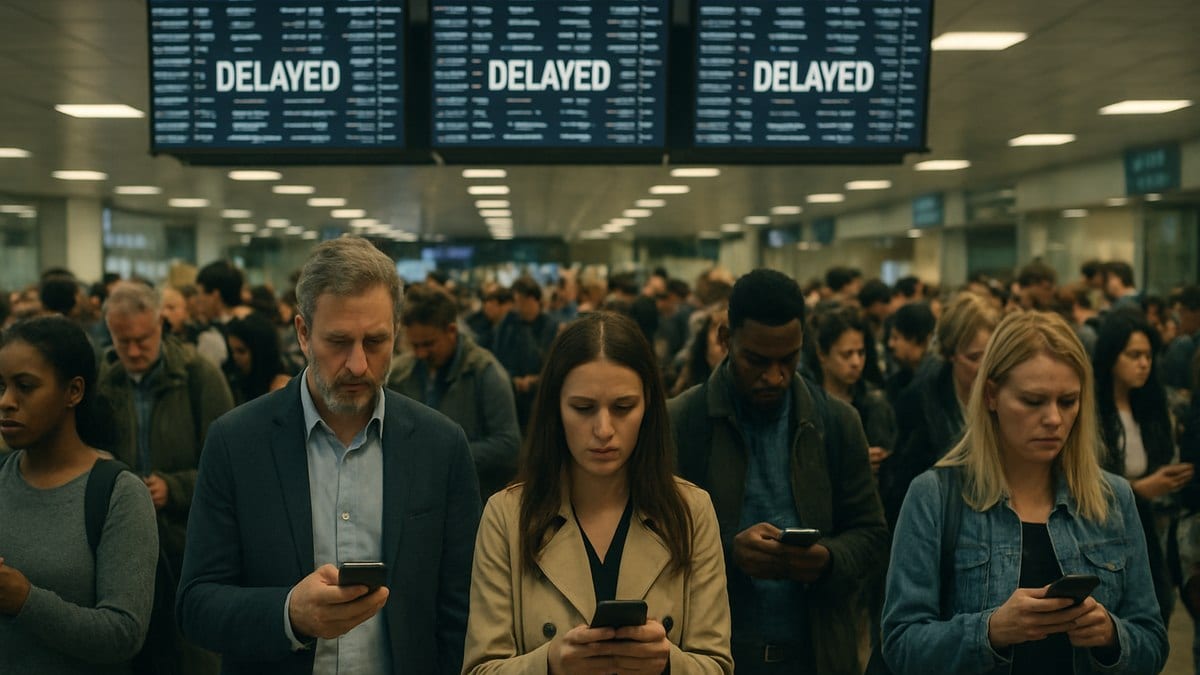
Flight disruptions are imposing an estimated 34 billion dollars in annual costs on the United States aviation system in 2026, as a mix of chronic congestion, extreme weather and high-impact operational failures turns delays and cancellations into a structural burden for airlines, passengers and the wider economy.
Get the latest news straight to your inbox!
Latest Data Puts Disruption Costs in Focus
Recent economic assessments of U.S. air travel indicate that the total cost of delays and cancellations has climbed to roughly 34 billion dollars a year, when airline operating expenses, passenger time losses and knock-on effects across the economy are combined. That figure is broadly in line with earlier analyses for 2022 that placed the annual disruption cost in the 30 to 34 billion dollar range, suggesting that despite post-pandemic recovery in schedules and capacity, the underlying strain on the system has not eased.
Publicly available studies drawing on airline performance data, passenger surveys and macroeconomic modeling show that disruption costs are shared across multiple groups. A substantial share is borne by travelers through lost time, missed connections and added out-of-pocket spending, while airlines absorb higher crew and fuel costs, repositioning of aircraft and customer-care expenses. The remainder shows up indirectly in reduced productivity for businesses and additional costs for tourism and logistics sectors that rely on predictable air service.
Industry analysis also indicates that these losses have become persistent rather than exceptional. Instead of one-off spikes during major storms or system outages, airlines and airports are dealing with a steady pattern of elevated delay minutes, tight connection banks and frequent schedule adjustments, creating what some reports characterize as a new baseline of operational volatility.
Airlines Face Thin Margins as Disruptions Mount
The 34 billion dollar annual disruption bill lands at a time when global airlines are forecast to post record nominal profits in 2026, yet on margins described in trade analysis as modest. Forecasts from aviation bodies expect worldwide net profits in the mid-30 billion dollar range for 2026, on revenues that now exceed one trillion dollars. In that context, large disruption-related costs can quickly erode already thin net margins, particularly for carriers with heavy exposure to congested hubs or volatile weather regions.
Airline cost structures show why delays are so expensive. Estimates commonly used in the industry put the direct cost of a delay at around 100 dollars per minute in high-cost markets, once fuel burn, crew duty limits, aircraft utilization and passenger handling are considered. When disruptions cascade through complex banked schedules, a single incident can generate hundreds of delayed or misaligned connections, magnifying the financial impact well beyond any single flight.
Case studies from recent years underline how quickly these costs scale. Large-scale operational breakdowns linked to information-technology failures, severe storms or mass aircraft groundings have each generated hundreds of millions of dollars in one-off losses for individual carriers, according to published coverage. When layered on top of the day-to-day baseline of minor and moderate delays, these events help push the annual disruption total toward the mid-tens of billions for the U.S. market alone.
Passengers Shoulder Time Losses and Extra Spending
For travelers, the most tangible impact of disruption is time. Analyses of U.S. flight performance have estimated that hundreds of millions of passenger journeys each year are affected by significant delays or cancellations, resulting in hundreds of millions of hours of collective time lost. Economic valuation of that time, based on common transportation-planning benchmarks, accounts for the largest single component of the 34 billion dollar annual impact.
Beyond lost time, passengers incur extra costs for food, accommodation and rebooked transport when flights go wrong. Regulatory filings associated with pending consumer-protection rulemaking in the United States have cited average out-of-pocket losses per disrupted trip in the hundreds of dollars once replacement travel, hotels and incidentals are included. While some of these costs are reimbursed or covered by airlines under their customer-service commitments, a substantial share remains with the traveler, particularly when disruptions are tied to weather, air traffic control constraints or other events categorized as outside the airline’s direct control.
The experience dimension is harder to quantify but increasingly visible. Consumer-complaint data and survey research point to growing frustration with unpredictable operations, long lines at service desks and limited information during severe disruption events. Analysts warn that persistent reliability issues risk undermining traveler confidence, especially among high-yield business passengers and international visitors who have alternatives in rail or competing hubs.
System Pressures: Weather, Infrastructure and Labor
The drivers of disruption are varied, but several structural pressures recur across public reporting. Extreme weather is a leading factor, with hotter summers, more intense storms and heavier precipitation generating frequent schedule interruptions and traffic-flow restrictions. Studies from aviation and climate-research organizations have highlighted how climate-related events can close runways, force long reroutes and reduce airport arrival rates, translating directly into delays and cancellations.
Infrastructure and capacity constraints add another layer. Key U.S. hubs continue to operate near or at peak runway and gate capacity during busy banks, leaving little slack to absorb irregular operations. Air traffic control staffing has also been under sustained pressure, with periodic initiatives to reduce flight volumes in crowded airspace during staffing shortages or government funding disruptions. When traffic levels recover faster than controller headcounts or airport upgrades, even small disturbances can ripple quickly through the network.
Labor availability within airlines remains a factor as well. Despite aggressive hiring after the pandemic downturn, carriers and ground handlers continue to report tight markets for pilots, mechanics and specialized airport roles. Training pipelines and certification processes limit how fast new staff can be brought online, while early retirements and career changes during the crisis have reduced experience levels in some workgroups. These constraints can make recovery from disruption slower, keeping aircraft out of position longer and extending knock-on effects over several days.
Technology, Regulation and the Search for Resilience
To counter rising disruption costs, airlines, airports and technology providers are investing heavily in tools designed to predict, prevent and manage irregular operations. Aviation technology firms report growing demand for artificial intelligence-driven systems that optimize crew and aircraft assignment, forecast weather and congestion impacts earlier, and recommend recovery plans that minimize passenger misconnection and missed crew rotations. Proponents argue that even small reductions in average delay minutes per flight translate to substantial savings when multiplied across tens of thousands of daily operations.
Regulators are also reshaping the incentive landscape. In the United States, the Department of Transportation has advanced rulemaking aimed at strengthening passenger rights during controllable disruptions, building on earlier efforts that pushed major airlines to expand their commitments for rebooking, meal vouchers and hotel coverage. New guidance on what carriers must provide in the event of manufacturer-driven aircraft groundings and other safety-related cancellations continues to be refined, and airlines are adjusting their policies and contingency planning in response.
A growing body of research argues that resilience investments at airports and in air traffic management will be critical if the 34 billion dollar disruption burden is to be reduced. Recommendations in industry and academic reports range from modernizing airspace and investing in more flexible terminal infrastructure to expanding use of collaborative decision-making tools that allow airlines, airports and controllers to share real-time data. With passenger demand projected to keep rising into the late 2020s, analysts suggest that without such changes, the economic toll of flight disruptions could climb even further above the current annual estimate.