

More news on this day
Travelers across the United States faced mounting disruptions after Southwest Florida International Airport in Fort Myers recorded 36 canceled flights and 152 delays, snarling schedules for Southwest Airlines, Spirit Airlines, JetBlue, United Airlines, and other carriers serving key hubs including Detroit, New York, Boston, and Atlanta.
Get the latest news straight to your inbox!
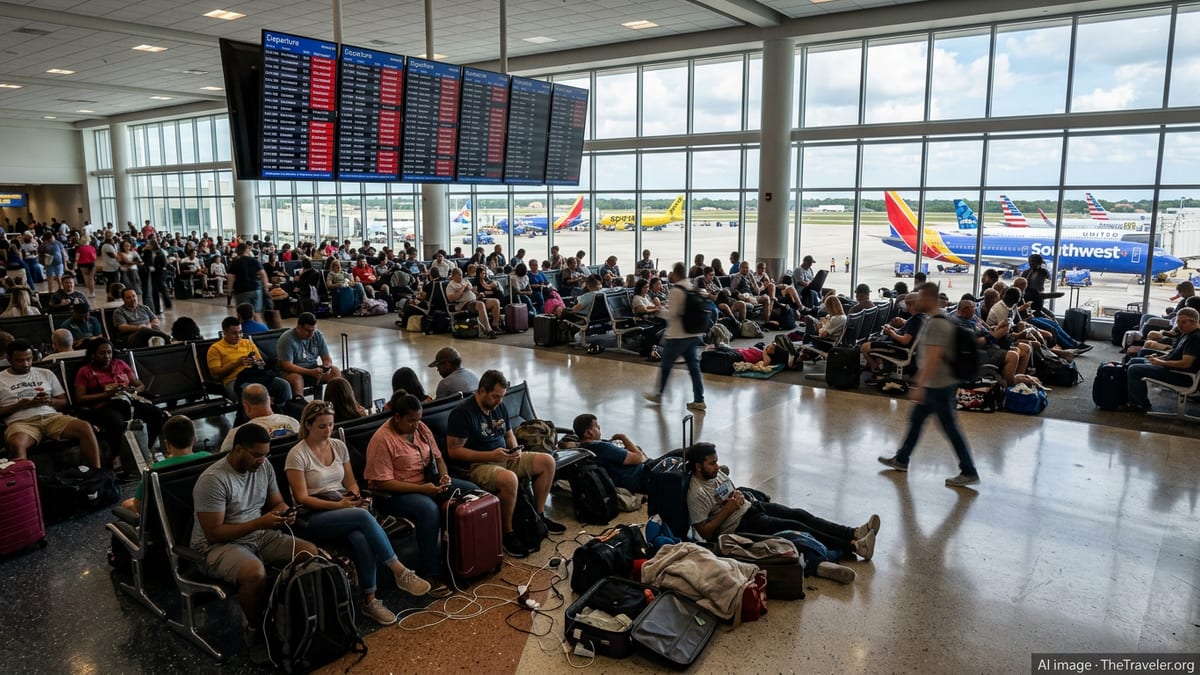
Fort Myers Bottleneck Sends Disruptions Nationwide
Publicly available tracking data on Monday indicated that Southwest Florida International Airport, a major gateway for Southwest Florida’s tourism corridor, became an early focal point for flight irregularities. With 36 cancellations and 152 delays logged in a single day, the airport’s schedule came under significant strain, affecting departures and arrivals across multiple domestic routes.
The pattern of disruption reflects the role of Fort Myers as both an origin and connection point for airlines that link Florida’s Gulf Coast with northern and midwestern cities. Even a comparatively modest number of cancellations can cascade quickly when aircraft and crews are tightly scheduled, amplifying the impact well beyond a single airport.
Reports from flight-tracking services show that the affected operations were not limited to one carrier. While low-cost and leisure-focused airlines dominate many of Fort Myers’ routes, legacy carriers and their regional partners also experienced schedule changes as the day progressed.
Impact on Southwest, Spirit, JetBlue, United and Other Carriers
Southwest Airlines, one of the largest operators at Southwest Florida International Airport, was among the carriers experiencing notable delays. Past operational challenges at the airline, combined with high seasonal demand into Florida, mean that disruptions at an airport like Fort Myers can echo through its broader network when aircraft rotations are interrupted.
Spirit Airlines and JetBlue, which both market Fort Myers heavily to cost-conscious vacationers from the Northeast and Midwest, also appeared in delay and cancellation tallies. Publicly available information shows that their Fort Myers flights are closely tied to major northern hubs, increasing the potential for knock-on effects when departures from Florida are held or scrapped.
United Airlines and other legacy carriers were similarly affected, although often through single daily links or less frequent services. When an aircraft assigned to a Fort Myers rotation fails to depart on time, the disruption can propagate into later segments, leading to rolling delays or equipment changes on routes that do not appear directly connected to Florida at first glance.
Detroit, New York, Boston and Atlanta Feel the Ripple Effect
The disruption in Fort Myers reverberated across some of the country’s busiest air traffic centers. Flight-tracking boards for major airports in Detroit, New York, Boston, and Atlanta showed scattered delays and schedule adjustments on routes tied to Southwest Florida, consistent with the sort of network ripple effect that follows concentrated operational problems at a single origin point.
Detroit, an important connecting point for both legacy and low-cost carriers, was affected as flights to and from Fort Myers encountered timing issues. Late inbound aircraft can quickly compress turnaround windows, leading to further delays for passengers connecting onward to other midwestern or West Coast destinations.
In the Northeast, services connecting Fort Myers with New York and Boston experienced disruptions that added strain to already congested airspace. According to published coverage and aviation data, these corridors are among the most heavily traveled domestic leisure markets, which leaves limited slack when weather, staffing, or air traffic constraints intersect with problems at a Florida gateway.
Atlanta, one of the nation’s primary transfer hubs, also appeared in delay patterns as aircraft repositioning and crew scheduling adjustments rippled across multiple carriers. Even when flights between Atlanta and Fort Myers operate, late departures can push subsequent segments behind schedule, complicating the day’s operations for both leisure and business travelers.
Causes Range From Weather to Congested Airspace
While a single, clear-cut cause for the Fort Myers disruption was not immediately evident, published aviation reports point to a combination of factors that typically drive such irregular operations. Seasonal weather systems over Florida and the Southeast can prompt air traffic control programs that reduce airport capacity, forcing airlines to hold or reroute flights.
Congested airspace along the Eastern Seaboard and over major hubs like Atlanta and New York can also lead to ground stops or flow-control measures that slow the rate of arrivals and departures. When this happens during busy travel periods, even short-lived restrictions can compound into hours of delays, particularly for carriers that operate tight turnarounds on popular leisure routes.
Airlines also continue to navigate staffing and fleet-utilization challenges inherited from recent years of volatile demand. When crew schedules are already stretched, a single protracted delay at an airport such as Fort Myers can push pilots or flight attendants past their duty limits, resulting in further cancellations or equipment swaps later in the day.
Travelers Face Missed Connections and Rebooking Challenges
For passengers, the operational data translated into missed connections, extended airport waits, and an uptick in rebooking activity across airline websites, apps, and customer service centers. Social media posts and traveler forums described long lines at service desks and difficulty securing same-day alternatives from Fort Myers and the affected hubs.
Many travelers with onward connections through Detroit, New York, Boston, and Atlanta reported facing tight transfer windows that became unworkable once their inbound flights from Florida were delayed. In some cases, publicly shared itineraries showed passengers being rebooked onto next-day services, particularly where limited frequencies or full loads left few immediate options.
Consumer advocates frequently advise travelers caught in similar disruption waves to monitor airline apps closely, document delay notifications, and review carrier-specific policies on vouchers, meal credits, and hotel assistance. In an environment where a single airport’s 36 cancellations and 152 delays can send shockwaves through multiple hubs, preparation and flexibility remain crucial for minimizing the personal impact of widespread schedule upsets.