

More news on this day
Travelers moving through Seattle-Tacoma International Airport faced cascading disruptions as a cluster of grounded flights and rolling delays involving Alaska Airlines, Delta Air Lines and Icelandair snarled routes to Anchorage, Kelowna, Dublin, Nashville, Boise and several other destinations.
Get the latest news straight to your inbox!
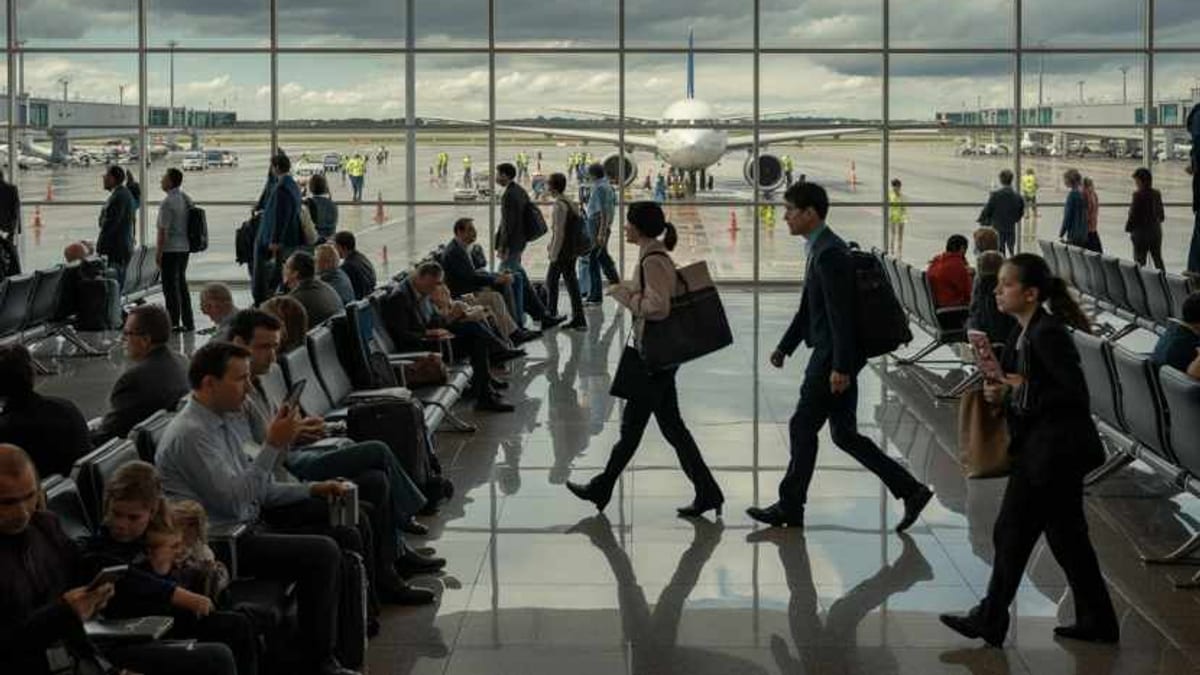
Image by Travel And Tour World
Cluster of Cancellations Amplifies Existing Congestion
The latest setback at Seattle-Tacoma International Airport comes as the hub continues to operate near capacity on many peak travel days, magnifying the impact of even a handful of grounded flights. Publicly available flight-status boards on Sunday showed four mainline departures operated by Alaska Airlines, Delta Air Lines and Icelandair listed as canceled, with additional services posting departure times pushed back by an hour or more.
The affected flights included northbound and regional links to Anchorage and Boise, as well as cross-border and transatlantic services to Kelowna and Dublin. A scheduled departure to Nashville was also listed as canceled, removing a key nonstop connection between the Pacific Northwest and one of the most in-demand leisure and business markets in the central United States.
Operational data indicates that the cancellations occurred against a backdrop of broader delay patterns at the airport, where departures across multiple airlines were showing knock-on effects. Weather in other parts of North America, crew-availability challenges and air-traffic-management initiatives can all funnel disruption into a single hub, concentrating the impact on travelers who may not be directly affected by the originating issue.
The result at Seattle-Tacoma was a noticeably busier-than-usual terminal environment around the canceled departure times, as passengers sought rebooking options or alternative routings through other hubs in the networks of Alaska, Delta and their partner carriers.
Key Domestic and International Links Temporarily Cut
The grounded flights disrupted both domestic and international connectivity from Seattle-Tacoma, underscoring the airport’s role as a critical junction for the Pacific Northwest. Routes to Anchorage and Boise are important for linking smaller or more remote communities to national and global networks, while the Kelowna service supports cross-border traffic between Washington state and British Columbia’s Interior.
The loss of a Dublin departure carried particular weight for long-haul travelers, given the limited number of daily transatlantic options from Seattle compared with larger coastal hubs. Passengers booked on that service were directed by airline notifications and airport displays to pursue alternative routings via other European or East Coast gateways, adding time and complexity to their trips.
Nashville, a growing destination for both tourism and corporate travel, was another notable gap in the day’s schedule. With that nonstop removed, affected passengers were funneled onto connecting itineraries via cities such as Denver, Minneapolis or Salt Lake City, depending on the airline and available seats. This added pressure to already busy connecting banks at those hubs.
Beyond the headline destinations, the ripple effects of the cancellations were also felt on connecting itineraries that rely on Seattle-Tacoma as a transfer point. Travelers bound for smaller cities that feed off the Anchorage, Boise or Kelowna flights faced schedule changes, missed connections and, in some cases, overnight stays when same-day alternatives could not be arranged.
Airlines Lean on Rebooking Tools as Delays Mount
In response to the disruptions, Alaska Airlines, Delta Air Lines and Icelandair emphasized the use of digital channels for rebooking and status updates. Public guidance on airline websites and mobile apps encourages passengers to check flight status frequently, opt in to notifications and process many itinerary changes online instead of waiting in line at airport counters.
On the ground, travelers whose flights were listed as canceled or significantly delayed were directed by airport signage and airline messaging to seek assistance through kiosks, customer-service desks and app-based chat features. Same-day changes onto later departures were possible for some passengers, but limited seat availability at peak times meant others were rebooked for the following day or rerouted through alternate hubs.
Published consumer guidance from aviation agencies notes that options for compensation or accommodation vary depending on the cause of a disruption and the specific airline’s policies. Travelers impacted by the Seattle-Tacoma cancellations were encouraged to retain boarding passes, receipts and any written notices related to delays in case they are eligible for travel credits or expense reimbursement under applicable rules.
For many passengers, the most immediate concern was simply getting to their destination, leading to a surge in calls, messages and rebookings as the situation developed over the course of the day.
Broader Strain on a Busy Pacific Northwest Hub
Seattle-Tacoma International Airport has long served as a primary gateway linking the Pacific Northwest with Alaska, the Mountain West, Canada and overseas markets. Schedules published by airport and airline sources show a dense network of nonstop services to cities such as Anchorage, Boise, Kelowna, Dublin and Nashville, which in turn support tourism, trade and family travel.
That high level of connectivity means disruptions are quickly felt across multiple regions. Business travelers heading to resource and logistics operations in Alaska, leisure travelers en route to music and events in Nashville, and visitors connecting to resort areas beyond Kelowna can all be affected when only a few flights are removed from the schedule.
Recent travel seasons have seen U.S. airports, including Seattle-Tacoma, managing higher passenger volumes alongside staffing and operational adjustments. When irregular operations occur, those factors can contribute to longer lines at security checkpoints, crowded gate areas and limited last-minute options for rebooking, especially on popular routes that already operate near full capacity.
Observers of the aviation sector note that today’s disruption fits into a broader pattern in which weather systems, airspace constraints and tight staffing margins can combine to create localized bottlenecks. For a connecting hub such as Seattle-Tacoma, this can quickly ripple out to travelers far beyond the immediate region.
What Travelers Can Do if Their Seattle Flights Are Affected
For passengers scheduled to travel through Seattle-Tacoma during periods of disruption, publicly available guidance from airlines and consumer advocates highlights a few key strategies. The first is to monitor flight status frequently, beginning the day before departure, and to confirm that the departure and arrival times have not shifted.
If a cancellation or long delay appears, many airlines allow travelers to rebook through mobile apps or websites at no additional cost, particularly when the disruption is categorized as a schedule change or irregular operation. Acting quickly can improve the chances of finding comparable departure times, especially on routes with limited daily frequencies such as those to Dublin or Kelowna.
Some travel experts recommend considering alternative routings through other hubs in the same airline alliance or codeshare network when nonstops from Seattle-Tacoma are not available. For instance, travelers originally booked to Anchorage or Nashville might find reasonable options via Portland, Salt Lake City, Denver or Minneapolis, depending on seat availability and connection times.
Travelers are also advised to keep essential items in carry-on bags in case they are separated from checked luggage during an unplanned overnight stay or rebooking. Keeping hotel and transportation apps handy can help secure last-minute rooms or rides if onward travel is not possible until the following day. While disruptions such as those seen at Seattle-Tacoma are frustrating, proactive planning and awareness of available tools can help minimize the overall impact on a trip.