

More news on this day
Air travel across Europe faced severe disruption as 76 flights were reported canceled and about 1,170 delayed at major hubs including Frankfurt, London Heathrow, Munich, Brussels and Amsterdam Schiphol, leaving thousands of passengers facing missed connections, overnight stays and rapidly changing itineraries.
Get the latest news straight to your inbox!
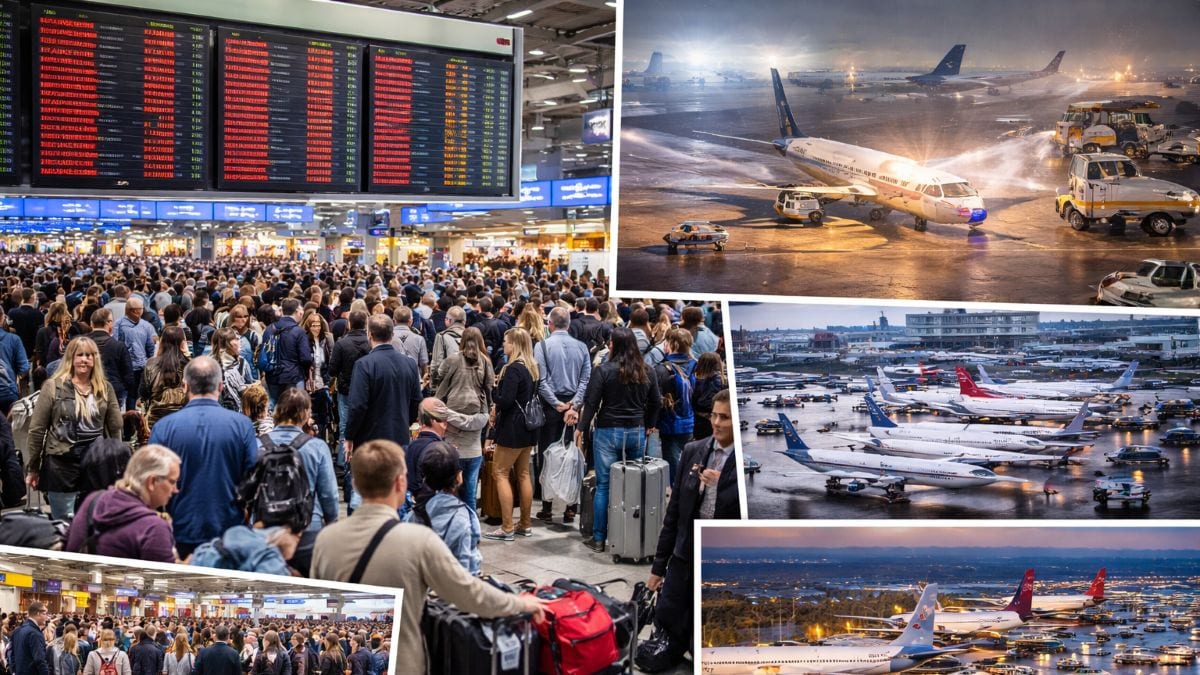
Image by Travel And Tour World
Major Hubs Hit by Wave of Cancellations and Delays
Publicly available flight-tracking and airport information shows that Frankfurt, London Heathrow, Munich, Brussels and Amsterdam Schiphol all experienced significant operational disruption, with dozens of cancellations and more than a thousand delays concentrated within a short time window. The combined impact effectively created a bottleneck across some of Europe’s most critical aviation gateways.
The affected airports serve as primary transfer points between Europe, North America, Asia and the Middle East. Even a relatively limited number of outright cancellations, when paired with extensive delays, can cascade through airline schedules, creating knock-on effects far from the original disruption points. Early data indicated that both short haul intra-European routes and long haul intercontinental services were affected.
While the number of canceled flights remained under one hundred, the volume of delayed departures and arrivals suggests airlines were attempting to preserve as much of the schedule as possible by pushing back departure times rather than grounding entire rotations. For passengers, however, the distinction often meant hours spent in terminals, missed onward connections and uncertainty about when they would reach their destinations.
Because these hubs are heavily interconnected, delays in one location quickly translated into late-arriving aircraft in another, complicating recovery efforts. The result was a rolling disruption pattern that persisted beyond the initial trigger period, as airlines worked aircraft and crew back into position.
Passenger Experience: Long Queues, Missed Connections and Rebookings
According to published coverage and social media posts from travelers, terminals at several of the affected airports saw growing queues at check in, security and transfer desks as the disruption unfolded. Passengers arriving to find their flights canceled or severely delayed sought rebookings, hotel accommodation and updated travel information, often competing for limited remaining seats on alternative services.
Transfer passengers were particularly exposed to the disruption. At hub airports such as Frankfurt, Heathrow and Schiphol, many itineraries rely on tight connections of 60 to 90 minutes. Even modest delays can cause travelers to miss their onward flights, forcing re-routing via different cities or resulting in unexpected overnight stays. With more than a thousand flights operating off schedule, the number of missed connections rose quickly.
Reports indicated that some airlines responded by waiving change fees, opening additional service counters and urging passengers to use mobile apps where possible to manage rebookings. Nevertheless, congestion at customer service points remained a problem, especially for those whose itineraries involved multiple carriers or complex long haul journeys.
In departure halls, information screens showing extensive lists of delayed flights contributed to traveler frustration. Although many services ultimately departed, the repeated revision of estimated departure times made it difficult for passengers to plan meals, rest periods or alternative ground transport arrangements.
Operational Pressures Behind the Disruption
European hub airports have been operating near capacity on many days, and the latest disruption highlighted how vulnerable the system can be when schedules are tightly packed. Publicly available operational data and recent industry analysis point to a combination of factors that typically contribute to such days of intense disruption, including adverse weather systems, airspace congestion, technical issues and crew or aircraft rotation challenges.
At airports such as Heathrow and Schiphol, where runway capacity is closely managed and slots are tightly regulated, even short periods of reduced arrival or departure rates can create backlogs that take many hours to clear. When arrivals are slowed, aircraft may be held on the ground at their origin or placed into holding patterns, both of which feed directly into departure delays at other airports in the network.
Industry observers note that staffing levels in ground handling, security and air traffic control remain a sensitive issue after the sharp pandemic downturn and subsequent rebound in air travel demand. On intense travel days, relatively modest staff shortages or temporary technical problems can translate into longer turnaround times on the ground, affecting the punctuality of departing flights.
Although the specific trigger for this cluster of disruptions varied between airports, the overall pattern fits a familiar scenario for Europe’s aviation system, in which high demand, limited spare capacity and complex cross-border airspace management create limited resilience to sudden operational shocks.
Knock-on Effects Across Europe and Beyond
The problems at Frankfurt, Heathrow, Munich, Brussels and Schiphol did not stay confined to those hubs. Because many flights serve as feeder services into larger networks, delays and cancellations in Europe quickly affected operations on other continents. Publicly available flight data showed late departures on transatlantic and Asia-bound routes, as aircraft and crews arrived behind schedule from the disrupted hubs.
Regional airports that depend heavily on connections through one or two major European hubs were also affected. Travelers flying from secondary cities in Europe, Africa or the Middle East often found that their onward flights were delayed due to late inbound aircraft from the troubled airports. This created pockets of disruption in airports that themselves were not experiencing local operational difficulties.
Air cargo operations, which often share aircraft and slots with passenger services, also felt the impact. Delays in overnight and early morning departures from European hubs can push back time-sensitive shipments, including industrial components and retail goods moving through just in time supply chains. While freight operators typically have more flexibility to reroute than passenger airlines, congested hubs limit those options.
Travel agents and corporate travel managers reported increased demand for itinerary changes and alternative routings, especially for travelers on tight business schedules. Some travelers opted to switch to rail for regional segments where high speed services link major European cities, particularly when short haul flights were subject to repeated departure time changes.
What Travelers Can Do on High-Disruption Days
The latest wave of delays has renewed attention on how passengers can better prepare for days of widespread disruption at major hubs. Travel industry guidance commonly recommends building in longer connection times when transiting through heavily used airports such as Frankfurt, Heathrow or Schiphol, particularly during peak holiday periods or seasons prone to storms and low visibility.
When forecasts or news reports signal potential disruption, passengers who have flexibility are often advised to opt for morning departures, which tend to be less affected by the cumulative impact of delays that build up over the course of the day. Direct flights, even at slightly higher fares, can also reduce exposure to missed connections when network reliability is under strain.
Use of airline and airport mobile applications has become increasingly important in such situations. These tools can provide real time notifications about gate changes, delays and rebooked flights, often faster than information displayed on terminal monitors. They can also allow travelers to change flights themselves without waiting in line at service desks, which may be overwhelmed during major disruption.
For those already at the airport when problems intensify, travel advisers often suggest securing essentials early, such as water, snacks and power outlets for devices, in case of extended waits. Keeping accommodation and insurance details readily available can also help if an unplanned overnight stay becomes necessary due to a canceled or significantly delayed flight.