

More news on this day
Travelers moving through Ted Stevens Anchorage International Airport in recent days have faced mounting delays and scattered cancellations, as a combination of spring weather, federal capacity limits and heavy holiday traffic disrupted flight schedules across Alaska’s busiest hub.
Get the latest news straight to your inbox!
Slush, Deicing and a Backlog of Departures
Operational updates covering the period through April 6 indicate that Anchorage airport issued warnings of delays linked to slush on runways and extended deicing times, with inbound flights reportedly running an average of more than half an hour behind schedule. Those conditions, typical of shoulder-season weather in Southcentral Alaska, have had an outsized impact on tightly timed turnarounds for regional jets and narrowbody aircraft.
When surface conditions deteriorate, aircraft require more time between arrival and departure for inspection, deicing and safe taxi operations. Publicly available guidance from airport and aviation sources shows that even modest increases in average delay can quickly cascade into missed departure slots, leading airlines to re-time flights or hold aircraft at gates. For passengers, that often translates into long stretches in the terminal and shrinking connection windows.
The impact has been felt most acutely on short-haul and intra-Alaska routes that depend on precise scheduling to connect smaller communities with Anchorage. Reports from flight-status trackers over the Easter period describe rolling delays to destinations such as King Salmon and other regional points, even when flights were not formally canceled.
National Network Strain Reaches Alaska
The disruption at Anchorage has unfolded against a broader backdrop of stressed U.S. air travel. Nationwide data from early April highlight hundreds of cancellations and several thousand delays across major hubs, driven by storm systems, congestion and crew availability. Although the largest impacts have been recorded at airports in Atlanta, New York, Boston and Los Angeles, Anchorage has not been spared.
Recent tallies of same-day performance list Anchorage International with several outright cancellations and dozens of delayed departures and arrivals in a single day, placing it among a group of mid-sized airports experiencing elevated disruption. Coverage of nationwide flight performance during the Easter travel window notes that domestic demand remains strong, leaving airlines with limited slack when weather or airspace constraints arise.
Because Anchorage sits at the end of many route chains, schedule shocks elsewhere in the network can ripple north. Aircraft and crews arriving late from lower-48 hubs compress ground times and can run into federally mandated duty limits, forcing further schedule adjustments and, in some cases, last-minute cancellations that leave travelers unexpectedly overnighting in the airport or nearby hotels.
Federal Capacity Limits Add New Pressure
A separate but related challenge has emerged from federal flight capacity restrictions that took effect across parts of the national airspace system in late 2025. A public advisory distributed through the Alaska International Airport System in recent days reminds travelers that these Federal Aviation Administration limits may result in fuller aircraft and fewer available seats from Anchorage.
Those restrictions, designed to manage congestion and staffing constraints in busy airspace sectors, indirectly influence Anchorage by limiting the number of flights that can be scheduled through certain corridors and at some major connecting hubs. Airlines have responded by consolidating frequencies, which can leave fewer options for rebooking when disruptions occur.
For passengers in Anchorage, this means that a single canceled flight can be harder to replace, especially on routes with only one or two daily services. Publicly available guidance from aviation planners suggests that travelers facing irregular operations may have to accept longer layovers, altered routings or departures a day or more later when remaining seats are scarce.
Holiday Traffic Magnifies the Impact
The latest wave of disruption has coincided with peak Easter travel, a period that typically brings elevated passenger volumes through Anchorage as residents connect to family visits, spring vacations and late-season winter sports. Industry coverage of the long holiday weekend describes a sharp jump in passenger traffic nationwide between April 2 and April 4, contributing to crowded terminals and strained airline operations.
Anchorage, a key gateway between Alaska communities and the rest of the United States, has mirrored those trends. Heavier check-in and security lines, combined with the slush-related operational slowdowns on the airfield, have amplified the impact of each delayed or canceled flight. Travel reports indicate that some Anchorage-bound passengers were held at upstream hubs, while others arriving in Alaska encountered missed onward connections and limited same-day alternatives.
Analysts tracking the period note that in this environment airlines often favor delaying flights rather than canceling them outright, in the hope that conditions will improve. While this strategy can keep itineraries technically intact, it also pushes arrival times later into the day, raising the risk of crews timing out and forcing additional schedule changes late in the evening.
What Stranded Travelers Are Facing on the Ground
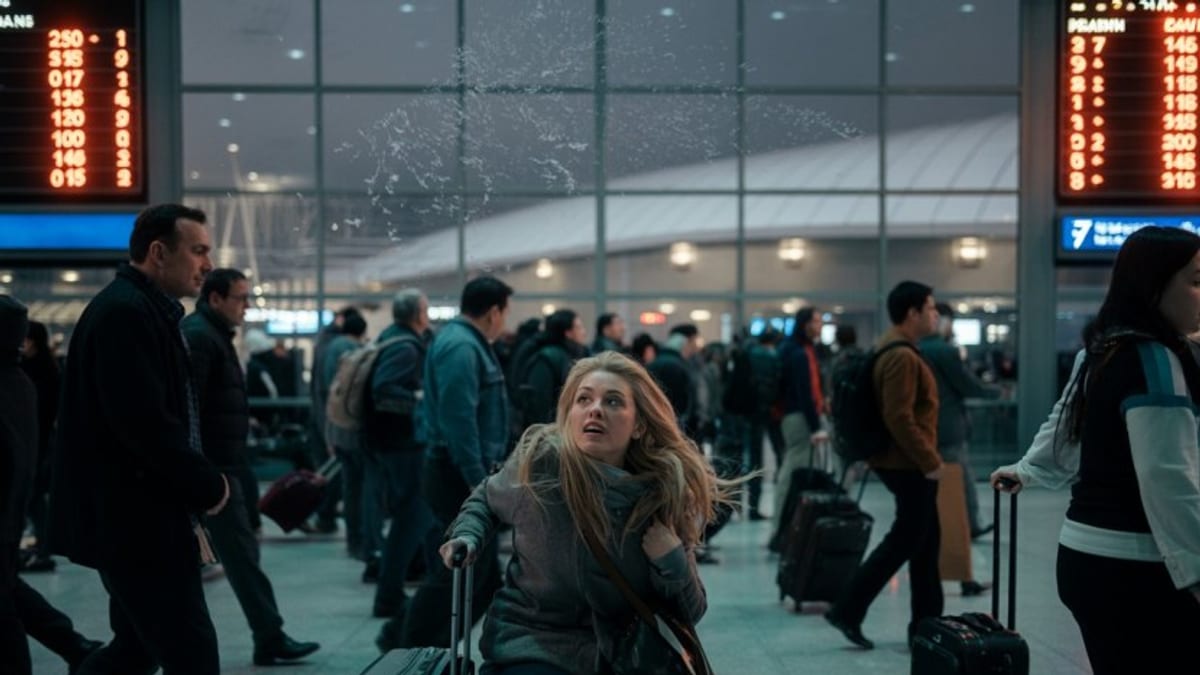
For travelers caught in the resulting gridlock at Anchorage airport, the experience has involved a mix of long waits, rebooked itineraries and uncertainty. Social media posts and traveler forums describe passengers camping out in seating areas as they monitor shifting departure times on information screens and airline apps. Some recount being rebooked through alternative hubs or on indirect routings that add many hours to their original journeys.
Consumer guidance circulating in recent coverage emphasizes that passengers whose flights are canceled by an airline are generally entitled to request a full refund if they choose not to travel, even on nonrefundable tickets. Travelers experiencing long delays are encouraged to document disruption times, keep receipts for hotels and meals, and review each carrier’s written policies on vouchers, meal credits or accommodation during irregular operations.
Airport system advisories also urge passengers to arrive early, stay in close contact with their airline through official digital channels and remain alert to gate changes or rolling delays. With slushy conditions and capacity limits expected to continue influencing schedules in the short term, those passing through Anchorage may need to build in extra time, pack added patience and prepare for itineraries that do not unfold exactly as planned.