

More news on this day
Passengers flying out of Columbia Metropolitan Airport in South Carolina faced unexpected disruptions today as a cluster of seven delays and two cancellations affected services operated by Delta Air Lines, American Airlines, United Airlines and other U.S. carriers, according to publicly available flight-status data.
Get the latest news straight to your inbox!
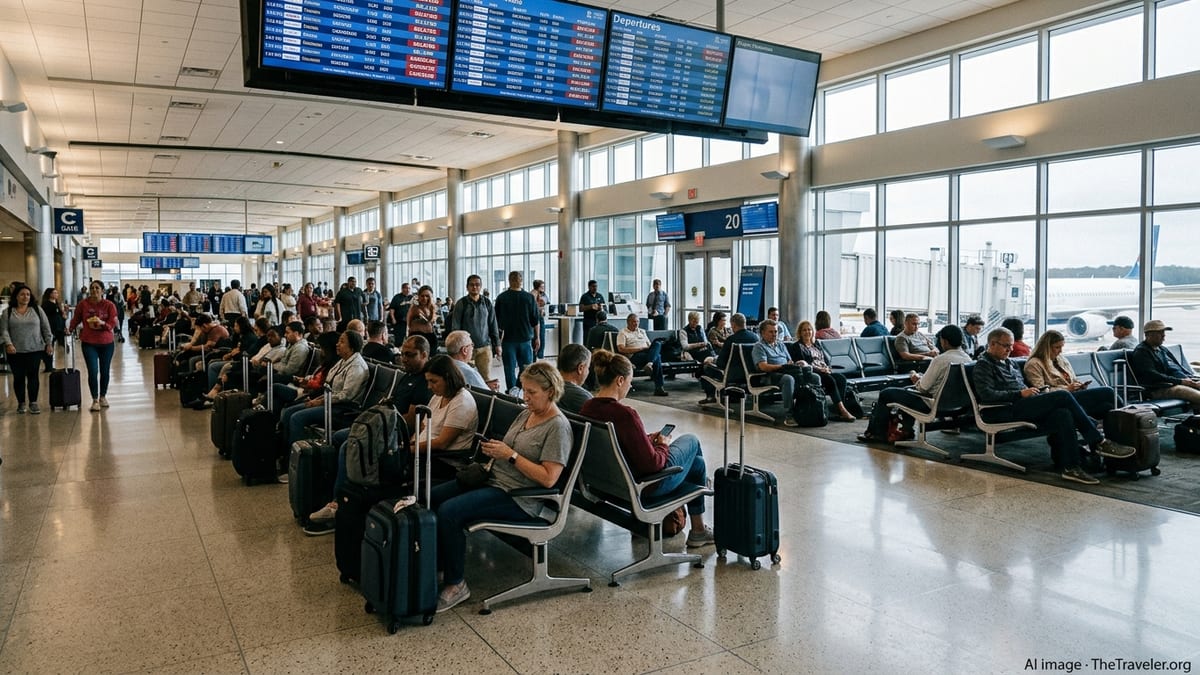
Cluster of Delays and Cancellations Hits Busy Spring Travel Day
Flight tracking boards at Columbia Metropolitan Airport showed a tight grouping of disruptions concentrated across midmorning and early afternoon departures and arrivals, creating bottlenecks for travelers on one of the busier spring travel weekends. Publicly accessible airline and airport feeds indicated that while operations continued, affected flights included regional connections to major hubs as well as at least one inbound service diverted or heavily delayed.
The seven delayed flights appeared to span multiple carriers, with Delta, American and United among those registering schedule changes. Some services posted rolling departure estimates shifting by 30 to 90 minutes, while others remained under review for much of the day, complicating efforts by passengers to rebook onward connections through hub airports such as Atlanta, Charlotte and Washington area facilities.
The two cancellations recorded at Columbia Metro were both domestic services tied to larger connecting networks, reducing options for travelers hoping to reroute on the same day. In several cases, passengers seeking alternatives were funneled toward later departures or advised via airline channels to consider rerouting through larger southeastern airports where capacity remains higher but seats are tight during peak hours.
The disruptions came as airlines across the United States continued to manage elevated demand, staffing constraints and intermittent weather issues in other regions that can ripple through smaller airports with limited daily frequencies.
Ripple Effects from Wider System Strain
Operational data and published aviation coverage suggest that today’s problems at Columbia Metro are part of a broader pattern of strain across parts of the national air travel system in late March. Recent weather events in the eastern United States, along with periodic air traffic control constraints, have contributed to clusters of delays and cancellations at multiple airports, particularly during afternoon peak periods.
Columbia’s role as a primarily regional airport serving key hubs means that even modest disruptions upstream can have an outsized impact on local schedules. When hub airports experience ground holds, thunderstorms or congestion in crowded airspace, feeder flights in and out of Columbia are often adjusted or consolidated to better utilize limited aircraft and crew resources.
Industry analysts note that regional routes can be especially vulnerable during days of heightened disruption, as airlines prioritize keeping long-haul and high-capacity routes operating as close to schedule as possible. That dynamic leaves smaller markets like Columbia with fewer back-up options, especially when only a handful of daily flights serve each destination.
Publicly available commentary from frequent travelers also highlights another factor: tight connection windows at hubs. Even relatively short delays on Columbia departures can cause passengers to miss onward flights at major airports, requiring additional rebooking, overnight stays or long overland journeys home.
Impact on Passengers at a Smaller Regional Airport
For travelers on the ground at Columbia Metro, today’s irregular operations translated into extended terminal waits and scrambling to adjust plans. Passengers booked on early flights faced uncertainty as departure times were revised multiple times on airline apps and departure screens, while some later departures quickly filled with rebooked travelers from the canceled services.
Columbia Metropolitan Airport typically benefits from shorter security lines and a relatively calm passenger experience compared with larger southeastern hubs. On disruption days, however, the limited number of daily flights, fewer alternative routes and smaller gate areas can make it harder for customers to find immediate solutions when cancellations occur.
Travel forums and recent discussions about operations at Columbia Metro point out that travelers there often plan around the convenience of arriving closer to departure time, relying on rapid check-in and screening. When flights are delayed or combined, that pattern can result in gate areas becoming crowded in waves, as multiple groups of passengers converge on a small number of departure times.
For those connecting from Columbia through larger airports, rebooking complexities can extend far beyond the local disruption. A missed connection in Atlanta, Charlotte or another hub may reduce same-day options significantly, particularly on popular leisure routes during spring break season, with many remaining seats sold at higher last-minute fares.
Airlines Advise Monitoring Flight Status and Considering Alternatives
In response to today’s disruptions, airline communication channels have continued to stress the importance of monitoring flight status closely on official apps and notification systems. Publicly available guidance published by major U.S. carriers encourages passengers departing from smaller fields like Columbia to confirm their departure time before leaving for the airport and to allow extra buffer time when making tight same-day connections.
On days when multiple flights experience irregular operations, carriers often adjust change-fee policies or allow same-day standby on alternative routes, though specific options vary by airline and fare category. Travel industry observers recommend that passengers impacted at airports such as Columbia check for open seats on nearby larger airports including Charlotte or Atlanta, particularly when urgent same-day travel is essential.
Some travel experts also suggest that passengers departing from smaller airports build in longer connection windows at hubs than they might during quieter travel periods. By choosing itineraries with at least 90 minutes to two hours between flights, travelers originating in Columbia can increase the chances of making onward connections even when short delays occur on the first leg.
While today’s seven delays and two cancellations at Columbia Metro represent a modest share of nationwide disruptions, they underscore how quickly routine schedules can unravel for passengers in smaller markets when the broader aviation network is under pressure. With spring and summer travel demand expected to remain strong, travelers using Columbia Metropolitan Airport may continue to see an occasional day of heightened disruption and are being encouraged through publicly available guidance to stay flexible and informed.