

More news on this day
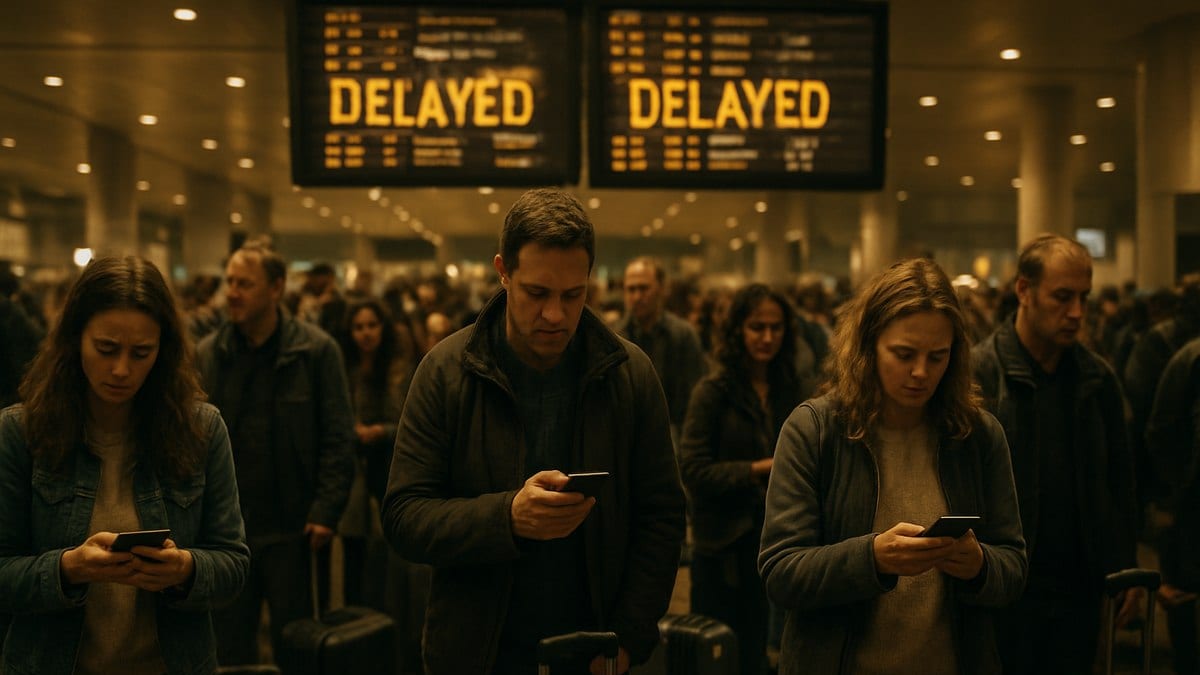
Persistent flight delays and cancellations are draining an estimated $30 billion to $34 billion from the U.S. economy each year, as chronic disruption ripples far beyond airports into lost productivity, higher operating costs and weaker demand across the wider travel sector.
Get the latest news straight to your inbox!
A Growing Economic Drag Behind the Boarding Gate
The latest estimates on the economic impact of flight disruptions draw on a mix of federal research, industry datasets and analysis by aviation and travel specialists. A 2019 assessment by the Federal Aviation Administration’s research partners placed the annual cost of delays to airlines, passengers and the wider economy at roughly $33 billion in a pre-pandemic baseline year. More recent synthesis of disruption data, including research referenced in a 2025 aviation resilience study, indicates that total U.S. disruption costs have remained in the range of about $30 billion to $34 billion annually, even as schedules and demand have rebounded.
Those figures capture far more than the visible inconvenience of missed departures. They reflect added fuel burn from holding patterns, crew and aircraft repositioning, compensation and care for stranded travelers, and the lost value of passengers’ time. When knock-on effects to business activity and tourism spending are included, analysts argue that the ultimate drag on economic output is significantly larger than what appears in airline income statements alone.
Published coverage of the sector shows that delays also intersect with already thin airline profit margins. Industry forecasts compiled by international airline groups point to net margins of just a few percentage points worldwide, meaning that disruption-related costs in the tens of billions of dollars can quickly erase expected gains, constrain investment and leave carriers more exposed to external shocks such as fuel-price spikes or geopolitical events.
For the broader economy, the scale of aviation’s role magnifies the stakes. Federal data on civil air transportation highlight its contribution of trillions of dollars in economic activity and millions of jobs. Within that context, recurring disruption on the scale of tens of billions of dollars acts as an ongoing tax on mobility, hindering the efficient movement of people and goods that underpins modern commerce.
Business Travel, Productivity and Hidden Corporate Costs
Corporate travel accounts for a substantial share of the disruption bill. A 2025 business travel disruption survey by an AI-enabled travel management platform estimated that U.S. companies alone spend more than $17 billion each year coping with the fallout from flight cancellations and severe delays. Publicly available details from that analysis suggest that these costs include last-minute rebooking, overnight accommodation, ground transport, overtime and the indirect burden of staff time diverted from core work.
Surveyed business travelers reported that disruptions extended trips by an average of about six hours in the United States, significantly above the global average cited in the same research. Respondents also linked frequent irregular operations to higher stress, work-life imbalance and a greater risk of burnout, factors that can translate into lower productivity and higher turnover over time.
Industry commentary indicates that corporate travel managers are responding by embedding disruption risk into their planning. Some companies are favoring non-stop routes, morning departures and airlines with stronger on-time records, even when base fares are higher, treating reliability as a form of informal insurance. Others are investing in tools that provide real-time rebooking and support when schedules unravel, reflecting a recognition that unmanaged disruption can quickly erase the savings from aggressive fare negotiations.
These business responses may blunt the immediate impact on corporate travelers but do not remove the cost from the system. Instead, they shift it across budgets and time, reinforcing the picture of flight disruption as a structural drag on productivity and competitiveness rather than a series of isolated inconveniences.
Ripple Effects on Hotels, Tourism and Local Economies
The costs of disrupted air service are also showing up in the hospitality sector. During the prolonged federal government shutdown in late 2025, nationwide flight cuts linked to air traffic control staffing shortfalls reduced traffic to major hubs and tourist destinations. Analysis by a leading hotel industry association, cited in specialist lodging media, estimated that the shutdown period was costing the U.S. economy tens of millions of dollars per day in lost hotel business alone, as travelers postponed or abandoned trips amid mounting cancellations.
Local tourism-dependent economies feel these effects quickly. Fewer arrivals mean empty rooms, quieter restaurants, reduced spending on attractions and transportation, and thinner tax receipts for state and local governments. For destinations that rely heavily on air access, such as resort communities and smaller cities without extensive rail or road alternatives, sustained periods of unreliable flight service can dampen demand well beyond the disruption window as potential visitors lose confidence.
Industry earnings calls in recent quarters have reflected this sensitivity. Hotel executives have publicly acknowledged that reductions in air capacity or spikes in cancellations tend to show up in booking patterns, even if properties attempt to pivot to drive-to guests or regional markets. While some operators can partially offset lost air travelers, the broader tourism economy has fewer such levers, particularly for long-haul international visitors whose trips are tightly bound to air connectivity.
These patterns suggest that the $30 billion to $34 billion annual disruption estimate likely understates long-term consequences. Repeated episodes of large-scale cancellations or chronic delays can damage destination brands and alter traveler behavior, prompting some would-be visitors to choose alternative locations that are perceived as easier to reach reliably.
Infrastructure Strain, Weather Extremes and Systemic Vulnerabilities
Behind the headline numbers are structural pressures on the U.S. air transportation system. Government outlook reports on the national airspace have long warned that congestion and aging infrastructure contribute to billions of dollars in yearly costs tied to delays. Modernization programs such as the Next Generation Air Transportation System are intended to improve efficiency through upgraded air traffic control technology, more precise routing and better use of airspace capacity.
At the same time, more frequent and intense weather events are emerging as a significant driver of irregular operations. Analyses by weather and aviation data firms, widely discussed in economic and travel forums, point to sharp increases in weather-related delay minutes at major hubs, from severe thunderstorms in the summer to atmospheric river events and polar outbreaks in the winter. These conditions not only disrupt individual flights but also trigger cascading schedule breakdowns as aircraft and crews end up out of position.
High-profile operational meltdowns in recent years have illustrated how quickly such vulnerabilities translate into economic losses. One large U.S. airline reported hundreds of millions of dollars in revenue and expense impacts following a multi-day disruption tied to an external technology failure in 2024, showing how tightly coupled airline operations are to broader digital infrastructure. That single event represented a sizable fraction of the annual disruption cost estimates on its own.
Capacity constraints also play a role. Published industry and regulatory analyses note that several key airports routinely operate near their practical limits at peak times, leaving little buffer when storms, staffing issues or equipment problems emerge. While new runways and terminal expansions can help, long permitting timelines and local opposition often delay such projects, perpetuating a cycle in which demand grows faster than the system’s ability to absorb shocks.
Policy Responses and the Push for Greater Resilience
Policy efforts in Washington have increasingly focused on transparency and consumer protection as disruption has become more visible to the public. The U.S. Department of Transportation has strengthened refund rules for significant delays and cancellations and launched online dashboards that compare what airlines voluntarily commit to providing when problems are within their control. These moves aim to give travelers clearer expectations and to encourage carriers to invest in reliability.
Economic research cited in regulatory filings and advisory reports argues that improving on-time performance can generate outsized benefits relative to the cost of technology and infrastructure upgrades. Time savings for passengers, reduced fuel burn, lower airline operating expenses and fewer missed connections collectively contribute to higher effective capacity in the system, which in turn supports economic growth.
Industry groups, meanwhile, continue to advocate for accelerated investment in air traffic control modernization and for policies that address staffing pipelines for controllers, pilots and maintenance technicians. Without such measures, analysts warn that underlying constraints could keep disruption costs elevated in the $30 billion to $34 billion range or higher, particularly as climate-related weather volatility and geopolitical risks add further uncertainty.
For now, the available data paints a picture of a vital transportation network that is indispensable to the U.S. economy yet increasingly burdened by instability. The growing recognition of flight disruption as a macroeconomic issue, rather than a series of isolated travel headaches, is likely to keep pressure on both policymakers and the aviation industry to find solutions that can restore resilience and protect the billions of dollars currently lost each year.