

More news on this day
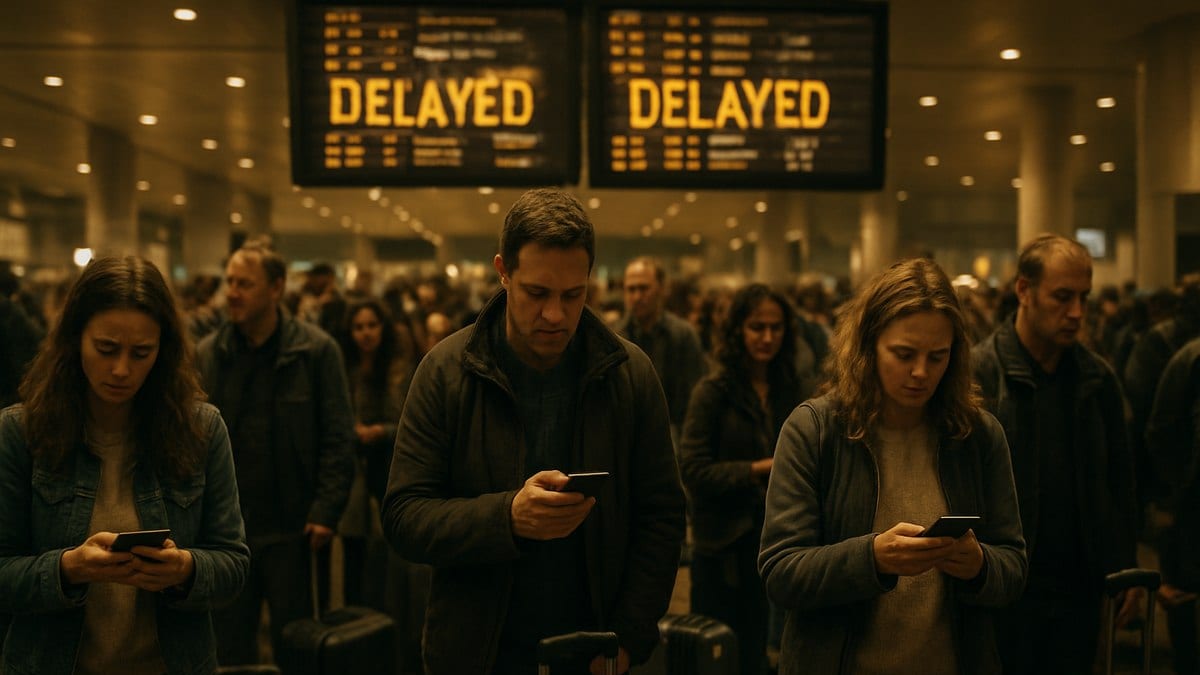
Chronic flight delays and cancellations are taking a far heavier toll on the United States than frustrated travelers alone, with recent analyses indicating that disruptions now strip an estimated $30 billion to $34 billion from the U.S. economy every year.
Get the latest news straight to your inbox!
New Estimates Put a Price Tag on Chaos in the Skies
The latest range, highlighted in recent economic submissions to federal regulators and based on work by flight-compensation firm AirHelp, quantifies the 2022 impact of delayed and cancelled flights on the wider U.S. economy at between $30 billion and $34 billion. The figures draw on detailed modeling of airline operations, passenger time, knock-on effects for other industries, and the direct costs of cancellations.
According to publicly available documentation, analysts attribute the surge in disruption costs in part to post-pandemic strains on the air travel system, including staffing shortages, aging technology and a rebound in demand that has outpaced improvements in infrastructure. Despite traffic volumes that in some cases remain below 2019 levels, the total economic cost of disruptions in 2022 was higher than before the pandemic, underscoring how each delayed or cancelled flight is becoming more expensive for the economy.
The new estimates are broadly consistent with longer-running research. A well-cited academic study supported by the Federal Aviation Administration found that flight delays cost the U.S. economy about $32.9 billion annually, a benchmark that has often been used to describe the persistent burden of unreliable air travel. More recent industry analyses suggest that, if anything, the annual impact has edged higher as schedules have grown denser and passengers’ time has become more valuable.
Industry groups have increasingly framed the problem as an economic competitiveness issue. The trade association Airlines for America has argued in recent public statements that unnecessary travel delays cost the economy and passengers more than $30 billion each year, reflecting both direct airline costs and the ripple effects felt far beyond airport terminals.
How Flight Disruptions Ripple Through the Economy
The headline figure of $30 billion to $34 billion hides a complex web of costs. Economic breakdowns of recent years’ disruptions indicate that roughly one third of the total impact is borne directly by airlines, including extra fuel burned while aircraft wait on tarmacs or fly less efficient routings, additional crew and maintenance expenses, and the cost of repositioning aircraft after cascading delays.
A larger share is tied to passengers’ lost time and productivity. Analysts use value-of-time estimates derived from transportation agencies to calculate how each hour of delay translates into foregone work, missed meetings, or leisure time that could have generated spending elsewhere in the economy. With hundreds of millions of passengers affected by delays and cancellations in a single year, even modest assumptions about the value of time produce multibillion-dollar totals.
Spillover effects into other sectors add another meaningful slice. Travel insurers, tourism researchers and economic consultancies note that when trips are disrupted, travelers often cancel hotel stays, rental cars, restaurant bookings and event tickets. Retail spending inside airports may dip as passengers spend more time queueing or scrambling to rebook rather than shopping. These indirect effects were estimated to account for roughly one sixth of the total disruption cost in 2022.
There are also specific expenses linked to cancellations, such as hotels and meal vouchers that airlines cover for stranded passengers, overtime for airport staff, and additional customer-service resources. While these items represent a smaller share of the overall economic hit, analysts point out that they tend to spike during major meltdown events, magnifying the financial damage in already stressed periods.
Major Meltdowns Expose Systemic Vulnerabilities
Several high-profile breakdowns over the past few years have illustrated how fragile the system can be and how quickly economic losses can mount. The 2023 outage of a key Federal Aviation Administration system led to a nationwide ground stop and thousands of delayed flights in a single morning, drawing attention to the dependence of air travel on aging technology.
In late 2022, Southwest Airlines experienced a days-long scheduling crisis that forced the carrier to cancel more than half of its flights on some days. Public filings and news coverage reported that the episode ultimately cost the airline more than $1 billion in direct financial impact, plus hundreds of millions of dollars in reimbursements and customer care. Analysts note that such airline-specific crises contribute materially to the broader national disruption totals in a given year.
More recently, the CrowdStrike-related IT outage in July 2024 triggered thousands of cancellations at Delta Air Lines over several days. Delta’s own disclosures put the financial hit from that single incident at around $550 million in lost revenue and additional expenses. While these sums accrue to individual companies, they also ripple outward through missed trips, disrupted business activity and lost confidence in air travel reliability.
Government disruptions have played a role as well. During the 2025 federal government shutdown, research from the Federal Reserve Bank of Richmond estimated that additional flight delays linked to air traffic control staffing issues cost tens of millions of dollars in lost time at just six major airports over a 43-day span. Industry groups argue that repeated episodes of this kind increase the perceived risk of flying, prompting some travelers to stay home or shift trips to other modes, with lasting effects on tourism and business travel.
Calls Grow for Modernization and Consumer Protections
The mounting economic cost of disruptions has fueled renewed debate over how to strengthen the aviation system. Airlines have pressed for accelerated investment in the FAA’s NextGen air traffic control modernization program and targeted funding to address chronic controller shortages, particularly in congested airspace around major hubs such as New York and New Jersey, where disruption rates are among the nation’s highest.
Consumer advocates, meanwhile, have argued that stronger passenger-rights rules could both protect travelers and create clearer financial incentives for airlines to avoid preventable disruptions. The Biden administration previously advanced a proposal that would have required carriers to provide mandatory cash compensation, meals and lodging in certain controllable delay and cancellation scenarios, more closely aligning U.S. practice with European standards. That proposal has since been abandoned, according to recent coverage, but the broader debate over compensation and accountability continues.
Insurers and travel-industry analysts point out that more travelers are turning to comprehensive trip-protection policies to cushion the financial blow of delays and cancellations. Products that reimburse for hotels, rebooked flights and missed connections have gained popularity as high-profile disruptions make headlines, though experts caution that insurance alone cannot address the systemic causes of the problem.
Policy discussions increasingly emphasize that every hour of delay carries both a financial cost and a reputational one. Persistent bottlenecks and headline-grabbing meltdowns risk undermining confidence in U.S. aviation at a time when international competitors are investing heavily in modern infrastructure and digital systems.
Environmental and Long-Term Competitiveness Concerns
Beyond immediate financial losses, analysts warn that the pattern of chronic disruption carries environmental and strategic consequences. Studies of 2022 disruptions estimate that extra fuel burned during holding patterns, diversions and circuitous routings added millions of tons of carbon emissions worldwide, with the United States accounting for a large share. Industry and environmental groups have framed this as an avoidable climate cost that could be reduced through more efficient airspace management and resilient scheduling.
Longer term, business organizations and tourism bodies caution that the perception of unreliable air travel may erode the United States’ attractiveness as a destination for meetings, conventions and leisure trips. Surveys cited by the U.S. Travel Association in past years indicate that significant numbers of potential travelers choose to postpone or forgo trips because of concerns about delays, cancellations and airport hassles, implying additional lost spending that is not fully captured in headline disruption-cost estimates.
Economists observing the sector argue that the $30 billion to $34 billion annual range likely understates the total drag on growth, as it does not fully capture second-order effects such as reduced investment in travel-dependent industries or diminished productivity from workers who build additional buffer time into schedules to hedge against delays. As demand for air travel continues to rise, they say, the economic stakes of addressing disruption grow larger.
For now, the latest figures serve as a stark reminder that every disrupted flight is not only a personal inconvenience, but also a small subtraction from national output. Whether policymakers and industry leaders can translate that price tag into sustained investment and reform will help determine how long flight disruptions continue to siphon tens of billions of dollars a year from the U.S. economy.