

More news on this day
Thousands of U.S. airline passengers are facing extended travel disruptions after more than 3,200 flights were delayed and at least 145 were cancelled across major hubs including Las Vegas, Atlanta, Denver, Houston, Phoenix and Washington, affecting operations at American Airlines, SkyWest, Spirit, Frontier, Delta and other carriers.
Get the latest news straight to your inbox!
Ripple Effects Hit Major U.S. Hubs Simultaneously
Operational data from multiple flight-tracking platforms on Thursday indicates that delays have mounted across several of the country’s busiest airports, with approximately 3,281 flights reported late and 145 cancelled by midday. The disruption is concentrated at large connecting hubs, including Atlanta’s Hartsfield-Jackson, Denver International, Phoenix Sky Harbor, Las Vegas Harry Reid, Houston’s major airports and the Washington-area facilities that handle domestic and regional traffic.
These airports serve as critical transfer points in the national network, meaning local issues quickly spill over into nationwide delays. Late departures from Denver and Phoenix are feeding into knock-on schedule changes in Las Vegas and Houston, while congestion in Atlanta and the Washington area is slowing aircraft and crew rotations for flights scheduled later in the day.
Publicly available airport performance dashboards show that delay rates at some of these hubs have been elevated compared with typical weekday patterns, with a high proportion of flights arriving or departing more than 15 minutes behind schedule. Travel analysts note that once a certain threshold of late operations is reached at a hub, it becomes increasingly difficult for airlines to recover on the same operating day.
The broader pattern reflects trends seen in recent months, in which large connecting airports experience short periods of concentrated disruption that reverberate through evening schedules. Even when total cancellations remain relatively modest, widespread delays can produce missed connections, out-of-position aircraft and rolling timetable changes that are felt across the domestic network.
American, Delta, SkyWest, Spirit and Frontier Bear the Brunt
Among the carriers most affected by the latest wave of disruption are major network airlines American and Delta, as well as regional operator SkyWest and ultra-low-cost competitors Spirit and Frontier. Real-time metrics from aviation analytics providers show these airlines carrying a significant share of the late and cancelled services at the impacted hubs, reflecting both their market share and their concentration of flights at these airports.
American and Delta, which rely heavily on Atlanta, Dallas-Fort Worth, Charlotte, Denver and the Washington region for domestic connections, are experiencing schedule pressures as late-arriving aircraft and crews ripple through subsequent departures. For passengers, this often translates into relatively short initial delays that gradually extend as the day progresses, particularly on multi-leg itineraries that rely on tight connection windows.
SkyWest, operating regional flights on behalf of larger brands, is also heavily exposed to disruption when mainline hubs struggle. When ground congestion, air-traffic flow programs or weather-related restrictions limit capacity at major airports, regional services are frequently among the first to be retimed or cancelled because of their shorter distances and smaller aircraft.
Spirit and Frontier, which maintain sizable presences in Las Vegas, Denver, Houston and Phoenix, are encountering compounding challenges when a single delayed leg disrupts an aircraft’s entire daily routing. Industry data published over recent years indicates that ultra-low-cost carriers typically operate tighter aircraft utilization patterns, leaving less slack in the system to recover when delays accumulate at multiple airports on the same day.
Weather, Congestion and Tight Schedules Combine
While a single clear cause is difficult to isolate in real time, available information points to a familiar mix of contributing factors behind the latest disruption: periods of unsettled weather around key hubs, airspace and runway congestion at peak times, and heavily utilized aircraft and crew schedules across several carriers.
Federal aviation statistics and prior consumer reports have highlighted how even short bouts of reduced arrival or departure capacity can lead to cascading delays when airports are already operating near their limits. When combined with seasonal thunderstorms, low clouds or shifting winds, air-traffic managers frequently impose temporary flow restrictions that slow the rate at which flights can land and take off.
In such conditions, carriers must choose between holding flights on the ground and risking extended airborne holding patterns. Both options result in delays that can push pilots and cabin crew up against regulatory duty-time limits, at which point flights may require last-minute crew changes or, in some cases, cancellation if no rested crew is available.
Industry research on previous disruption events shows that extreme weather is often the initial trigger, but structural factors such as tight turn times, packed schedules and limited spare aircraft amplify the impact on travelers. The current pattern across Las Vegas, Atlanta, Denver, Houston, Phoenix and Washington appears consistent with this interplay of environmental and systemic pressures.
Travelers Face Long Lines, Missed Connections and Limited Options
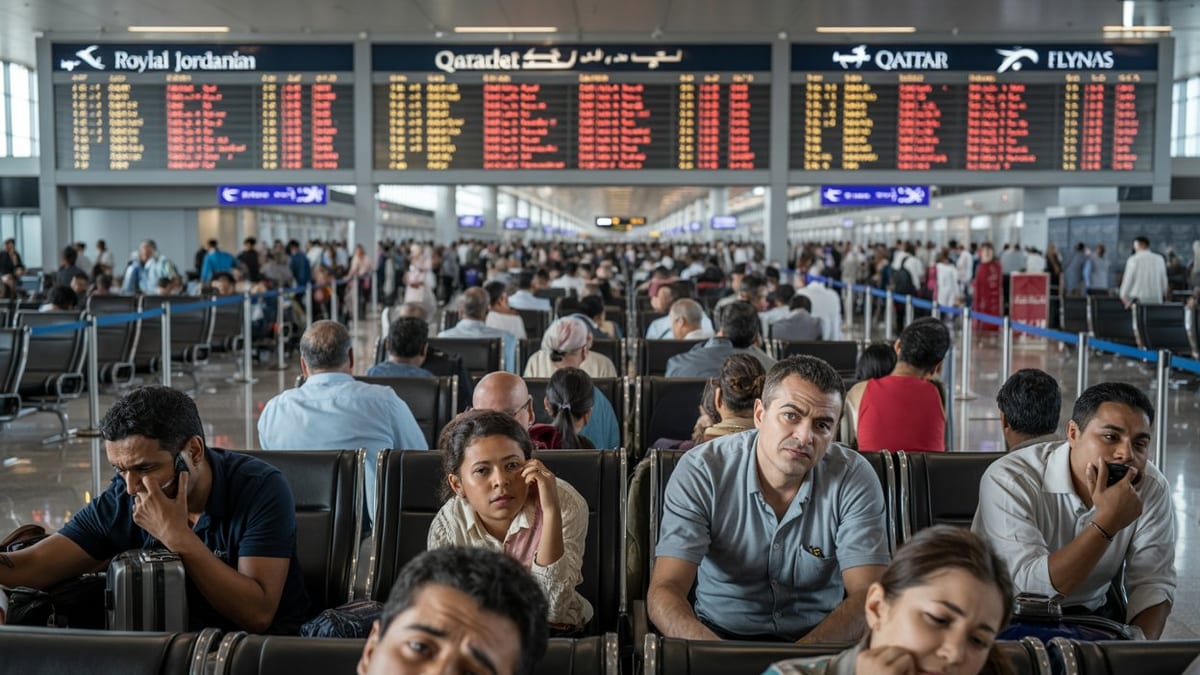
For passengers, the statistics translate into long check-in and security queues, crowded gate areas and extended waits on the tarmac or in terminal seating. At major hubs like Atlanta and Denver, reports indicate that travelers with tight connections are particularly vulnerable when inbound flights arrive behind schedule and gate changes occur at short notice.
Those booked on ultra-low-cost carriers such as Spirit and Frontier may face additional challenges, since many of these airlines operate limited daily frequencies on certain routes. When a flight is cancelled or significantly delayed, the next available departure can be later the same day or, in some instances, the following day, leaving affected travelers to choose between rebooking on another airline or waiting for the carrier’s next operating slot.
Even for passengers on large network airlines, high load factors on many routes can limit the number of spare seats available for same-day rebooking. As a result, some travelers whose flights are cancelled from airports like Las Vegas or Phoenix may be re-accommodated via alternate hubs, adding extra connections and hours of travel time.
Consumer advocates frequently advise travelers to monitor their flight status closely on high-disruption days, allow additional time for connections where possible and keep essential items in carry-on bags in case of missed flights or unexpected overnight stays. Recent government guidance and public-facing airline policies also encourage passengers to review their rights to refunds or alternative transport when significant schedule changes occur.
Strains Underscore Fragility of U.S. Air Travel Network
The latest surge of 3,281 delayed and 145 cancelled flights underscores ongoing concerns about the resilience of the U.S. air travel system, particularly during periods of heightened demand or unsettled weather. While overall cancellation rates have improved compared with some past peak disruption seasons, data from transportation authorities and aviation analytics firms shows that delay levels at large hubs remain persistently high on some busy days.
Aviation experts point out that the network’s structure leaves little room for error when several major hubs are affected at once. If Las Vegas, Denver and Phoenix encounter operational constraints at the same time Atlanta, Houston and Washington-area airports are managing flow restrictions, airlines can quickly run out of spare aircraft, crews and gate space to absorb the shock.
Ongoing federal and industry discussions continue to focus on measures such as infrastructure improvements, modernization of air-traffic control systems, revised scheduling practices and clearer passenger-protection standards. Publicly available policy documents and consumer reports suggest that, while some progress has been made, the combination of high demand, aging infrastructure and complex airline networks means that days like this remain a recurring feature of U.S. air travel.
For now, travelers passing through the affected cities are being urged by public advisories and airline communications to stay flexible, confirm their flight status frequently and be prepared for changes, as carriers work through backlogs and attempt to restore schedules across the evening and into the next operating day.