

More news on this day
Hundreds of air travelers across Europe are facing significant disruption as fresh data points to 143 flight cancellations and 1,273 delays affecting services in and out of the United Kingdom, Denmark, France, Germany, Italy and several neighboring countries, with major carriers such as Lufthansa, Swiss, Virgin Atlantic and British Airways among those impacted at hubs including Paris, Frankfurt, Oslo and Helsinki.
Get the latest news straight to your inbox!
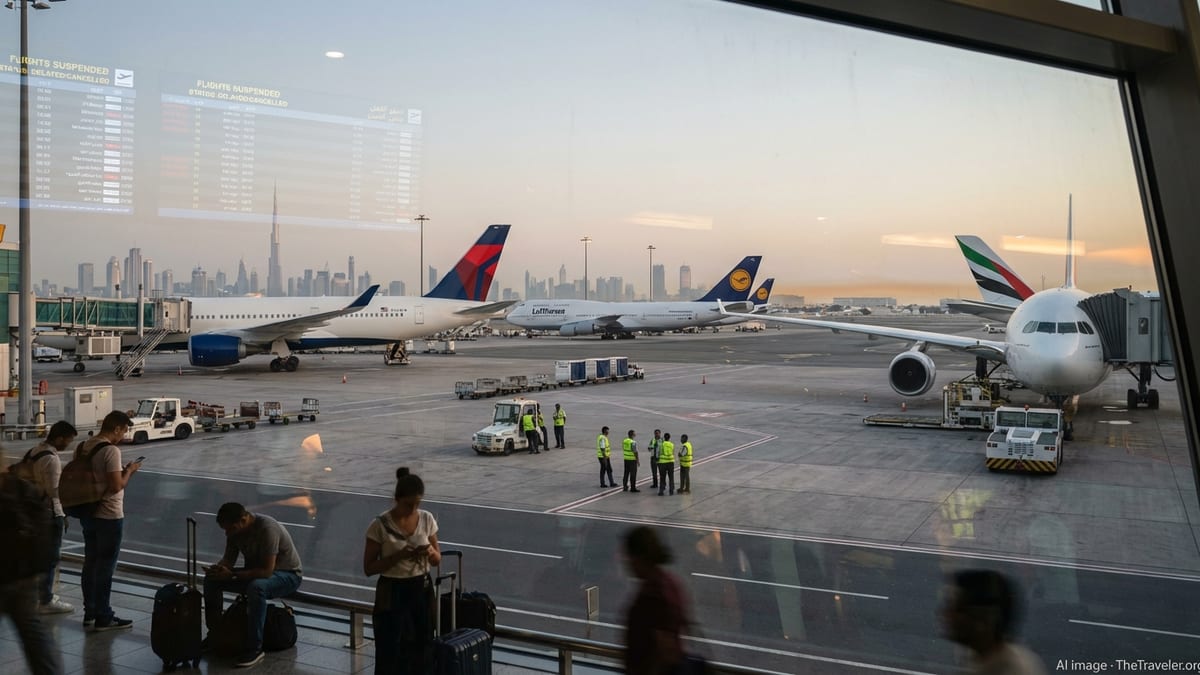
Ripple Effects Across Key European Hubs
Recent operational data compiled from airport and industry trackers indicates that the latest wave of disruption has spread across multiple European hubs, with cancellations and delays building through the weekend into Monday. Paris, Frankfurt and other major connecting airports have reported clusters of grounded or late-running flights, creating knock-on effects for onward connections throughout the continent.
In Germany, Frankfurt’s position as a primary hub for Lufthansa means that even a relatively modest number of cancellations can cascade through the schedule. Analysis of previous disruption patterns shows that short suspensions of movements or congested departure banks at Frankfurt frequently lead to late departures and missed rotations across Europe, amplifying the impact far beyond the airport’s immediate catchment.
Paris Charles de Gaulle and Orly have also seen elevated delay rates, with publicly available reports pointing to a combination of adverse weather systems and heavy airspace demand over France contributing to congestion. Since a large share of UK, Spanish and Italian traffic overflies French airspace, even flights not originating or terminating in France have been caught in the operational bottleneck.
In the Nordic region, airports serving Oslo and Helsinki have faced disruption linked both to local conditions and to the wider European network. With Scandinavian and transatlantic services interwoven through these hubs, delays there have added to the growing tally of flights arriving late into the evening wave of operations.
Lufthansa, Swiss, Virgin Atlantic and British Airways Among Hardest Hit
Publicly available performance data for major European airlines shows that network carriers such as Lufthansa, Swiss, Virgin Atlantic and British Airways are particularly vulnerable when widespread delays build across several hubs at once. Their schedules rely heavily on precise timing for connecting banks at primary airports including Frankfurt, Munich, Zurich, London Heathrow and Paris.
Recent operational reporting on Lufthansa highlights how even a short weather or air traffic control restriction at Frankfurt can disrupt large portions of its timetable, with reactionary delays forming a significant share of its incident totals. When those reactionary delays coincide with cancellations in other countries, passengers can experience missed connections on both European and long haul sectors in a single journey.
Swiss and British Airways have also featured prominently in punctuality and disruption rankings over the past two seasons, reflecting the pressure on their main hubs in Zurich, Geneva and London. Travel-industry analysis notes that higher flight frequencies, tight turnaround times and congested airspace increase the risk that seemingly isolated issues in one country will translate into cancellations or multi-hour delays elsewhere.
Virgin Atlantic, with a smaller but long haul focused network, sees its operations particularly exposed when transatlantic departures from London and other European gateways are affected. A delay or grounding at a European hub can easily spill over into overnight rotations, leaving aircraft and crews out of position and adding complexity to the following day’s schedule.
Weather, Airspace Constraints and Staffing Challenges Fuel Disruption
Reports from multiple European countries in recent weeks point to a familiar combination of triggers behind the latest disruption: unsettled spring weather, structural airspace constraints and lingering staffing challenges in parts of the aviation system. Strong winds, heavy rain and residual winter conditions have periodically reduced runway capacity or forced temporary suspensions of operations at key airports, particularly in northern and western Europe.
At the same time, air traffic control capacity over core corridors in France, Germany and surrounding states remains under pressure. Industry analysis notes that when flow restrictions are imposed to manage congestion or weather-related rerouting, airlines are required to accept extended ground holds or airborne delays, which quickly consume schedule buffers built into shorter European sectors.
In Scandinavia and parts of central Europe, recent coverage has highlighted how stretched staffing levels among ground handlers, airport service providers and some airline units can lengthen turnaround times during peak disruption. Longer aircraft servicing and boarding periods in turn reduce the ability of carriers to recover from earlier delays, increasing the likelihood that late evening flights will be cancelled altogether to reset the following day’s schedule.
These systemic pressures mean that a single day’s tally of 143 cancellations and more than 1,200 delays across multiple countries is often the visible expression of deeper capacity constraints in Europe’s aviation system, rather than the result of a single, isolated incident.
Knock-On Impact for Passengers From Copenhagen to Rome
The practical effects for passengers have been especially visible at connecting hubs such as Copenhagen, Paris, Frankfurt and London, where travelers heading to or from smaller European cities rely on carefully timed onward flights. Recent updates from Denmark, for example, describe long queues at Copenhagen Airport as dozens of departures to regional cities such as Aalborg, Kristiansand and Stavanger were delayed or cancelled, leaving passengers attempting to rebook on already busy later services.
Travel-industry reporting from other hubs paints a similar picture: limited spare seat capacity on alternative flights, longer rebooking windows and crowded customer-service points. In some cases, passengers arriving late into Europe from long haul destinations have found that their onward legs to cities such as Oslo, Helsinki or secondary Italian airports have already departed, forcing unexpected overnight stays.
Disruption in northern Europe has also affected leisure and business travelers heading south to Mediterranean destinations and major Italian gateways. When early morning feeder flights are cancelled or depart late, same-day connections to Rome, Milan and other Italian cities can become unviable, particularly when airlines are juggling aircraft availability across several disrupted routes.
Because many of these airports serve as shared hubs for multiple alliance partners, one cancelled rotation on a European carrier can also affect passengers booked on codeshare tickets with non-European airlines, further widening the circle of those affected by the day’s operational problems.
What Travelers Can Do as Delays and Cancellations Mount
Consumer guidance emerging from aviation-rights organizations and travel advisory services stresses that affected passengers across the UK and Europe should closely monitor flight status through airline apps and airport information channels when disruption levels climb. Same-day schedule changes have become common when cancellations are used to stabilize the network, meaning that departure times may shift repeatedly before boarding begins.
Publicly available information on European and UK passenger-rights frameworks underscores that, for many flights departing from or arriving at airports in the region, travelers may be entitled to meals, accommodation or financial compensation depending on the length of the delay, the distance flown and the underlying cause of the disruption. However, compensation rules typically exclude incidents attributed to extraordinary circumstances such as severe weather or certain categories of air traffic control restrictions.
Travel analysts also recommend allowing longer connection times when planning multi-sector itineraries through congested hubs, especially during seasons prone to storms or heavy traffic. Booking slightly earlier departures, avoiding the final flight of the day on critical connections where possible and keeping essential items in hand luggage can all help reduce the impact if schedules unravel unexpectedly.
With operational data suggesting that elevated rates of delays and cancellations are likely to persist intermittently across Europe, travelers booking routes through Paris, Frankfurt, Oslo, Helsinki and other key hubs over the coming weeks may benefit from building additional flexibility into their plans and reviewing airline policies on rebooking and disruption support before departure.