

More news on this day
Travelers heading to and within Argentina are facing fresh disruption as a wave of cancellations by low cost carrier FlyBondi and U.S. giant American Airlines affects at least 25 flights linked to Buenos Aires, Cordoba, Bariloche and other key destinations, according to recent operational data and local media coverage through March 31, 2026.
Get the latest news straight to your inbox!
What Is Happening on Argentina’s Busiest Routes
Recent reports from Argentine and regional outlets indicate that FlyBondi has canceled a growing number of domestic and regional services during March, including flights connecting Buenos Aires with Bariloche, Mendoza, Cordoba and Salta. Coverage describes a pattern of last minute schedule changes and day‑of‑departure cancellations that have stranded or delayed passengers at airports such as Aeroparque Jorge Newbery and Ezeiza in Buenos Aires, as well as provincial hubs.
Separate operational information and travel industry reporting show that American Airlines has also withdrawn or scrubbed several rotations between the United States and Buenos Aires in recent days, primarily on long haul services linking Ezeiza with Miami, Dallas Fort Worth and New York area airports. While not all cancellations are occurring on the same day, the combined impact of FlyBondi’s domestic cuts and American’s long haul adjustments amounts to at least 25 affected flights across late March.
The timing is particularly sensitive. Argentina is in the shoulder season between the busy southern summer and the upcoming winter holidays centered on ski destinations like Bariloche. Many travelers booked complex itineraries that rely on American’s long haul links to connect into FlyBondi domestic services, or vice versa, meaning disruptions on one side of the network can quickly cascade across multiple tickets and routes.
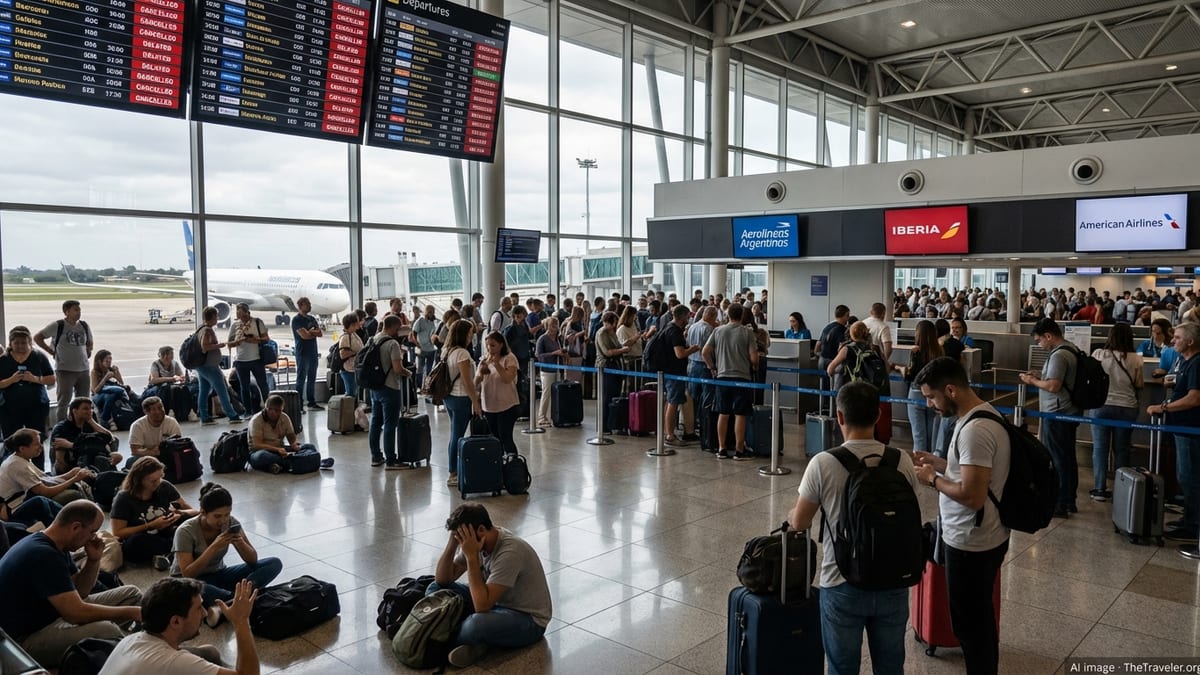
Publicly available flight tracking data and local coverage suggest that while most airports remain operational, day‑specific cancellations on key routes are creating pockets of congestion, with long lines at check‑in counters and rebooking desks, and reports of travelers sleeping overnight in terminals while waiting for alternative flights.
FlyBondi’s Operational Strain Spreads Across the Network
FlyBondi, which markets itself as an ultra low cost option for domestic and regional travel, has already been under scrutiny for reliability. Historical records and earlier coverage highlighted elevated cancellation rates and aircraft availability issues in previous seasons. That backdrop is feeding frustration among passengers hit by the latest wave of disruptions.
Over the course of March 2026, regional newspapers and digital outlets have documented multiple instances of FlyBondi passengers left in limbo after cancellations from Buenos Aires to interior cities such as Salta and Mendoza, and on leisure routes like Buenos Aires to Bariloche. Accounts describe same day emails or app notifications advising that flights have been canceled or significantly rescheduled, often with limited immediate alternatives.
The airline is also restructuring its operations. Local business and labor reporting note a voluntary redundancy program aimed at hundreds of employees and reference a reduced active fleet compared with prior seasons. This combination of staffing adjustments and aircraft downtime appears to be constraining FlyBondi’s ability to maintain its published schedule, particularly on high frequency trunk routes from Buenos Aires.
For travelers, the practical effect is a higher risk that a domestic segment may not operate as planned, even when booked weeks in advance. In many cases, passengers are being offered rebooking on later dates, vouchers, or refunds, which may be of limited use to those with fixed hotel reservations or onward international flights on a separate ticket.
American Airlines Adjusts Argentina Service Amid Wider Pressures
American Airlines, historically one of the main foreign carriers serving Argentina, has also made short term changes that contribute to the current disruption picture. Publicly accessible schedule tools and aviation tracking services show selected cancellations or aircraft swaps on routes between Buenos Aires Ezeiza and U.S. hubs, especially Miami and Dallas Fort Worth, during March.
These adjustments come shortly after American increased capacity on Argentina routes in early 2026, as reported by local tourism and aviation media. The recent cancellations therefore represent a pullback from what had been billed as a stronger North America link in the run up to major regional events and the 2026 World Cup period.
Industry analysts quoted in open publications have pointed to a mix of factors shaping long haul reliability to South America this year, including global aircraft maintenance bottlenecks, crew scheduling constraints and lingering supply chain issues for spare parts. When combined with local operational challenges at crowded hubs and seasonal weather in North America, the result can be targeted cancellations on select days or rotations.
For passengers flying between North America and Argentina, even a relatively small number of canceled long haul flights has an outsized impact. Alternatives are limited on certain days, and seats on competitors can sell out quickly once disruptions are public, pushing some travelers into complex reroutings or extended layovers in third countries.
Who Is Most Affected and Which Cities Are Hit Hardest
The current wave of cancellations is most disruptive for travelers whose itineraries link domestic Argentine destinations with international arrivals or departures on separate tickets. A common pattern is a long haul overnight flight into Buenos Aires, followed by a morning FlyBondi connection to cities such as Bariloche, Cordoba or Mendoza. When the domestic leg is canceled, travelers can find themselves stuck in Buenos Aires without a straightforward way to reach their final destination the same day.
Bariloche appears particularly exposed, given its role as a major leisure gateway for both domestic and international tourists heading to Patagonia and the nearby ski areas. Any reduction in capacity on Buenos Aires to Bariloche routes, whether due to FlyBondi cuts or wider network adjustments, can lead to quickly rising fares on remaining seats and fewer same day alternatives.
Cordoba and Mendoza, both important business and tourism centers, are also feeling the impact of reduced reliability. Local news reports from central and western Argentina in recent days describe groups of travelers facing last minute changes, including rebookings onto flights several days later or rerouting through different Buenos Aires airports. For residents who rely on affordable low cost services for work and family visits, these disruptions can carry significant economic and personal costs.
International passengers transiting through Buenos Aires on American Airlines and then continuing on domestic flights are among the most affected. Those who booked legs on separate reservations, rather than a single through ticket, have less contractual protection and may need to negotiate independently with each carrier for changes or compensation.
What Travelers Can Do Right Now
Given the present instability, travel advisories from consumer groups and industry commentators are emphasizing proactive planning for anyone flying to or within Argentina in the coming weeks. Travelers are being encouraged to monitor their bookings daily through airline apps or online tools, rather than relying solely on email notifications, which can arrive late or be missed.
For itineraries involving connections between American Airlines and FlyBondi, especially where tickets are on separate reservations, experts recommend building in longer layovers in Buenos Aires or considering backup options such as alternative domestic carriers or overnight stays near the airport. While this may increase costs, it can reduce the risk of missed onward travel due to a same day cancellation.
Passengers are also reviewing the fine print of their travel insurance policies. Some policies provide coverage for airline‑caused cancellations and significant delays, including reimbursement for additional accommodation, meals and replacement flights, but only when documentation such as cancellation notices and receipts is retained.
Looking ahead, publicly available commentary from aviation analysts suggests that operational challenges at FlyBondi could persist into the coming weeks while the carrier adjusts its fleet and staffing, and that long haul reliability between Argentina and North America may fluctuate as airlines manage aircraft and crew resources. Travelers planning trips that involve Buenos Aires, Cordoba, Bariloche or other key Argentine cities are being advised to factor greater flexibility into their plans and to keep a close watch for further schedule changes.