

More news on this day
Passengers at San Diego International Airport faced significant disruption today as 89 flights were delayed and 3 were canceled, stranding travelers and creating knock-on effects for American Airlines, Delta Air Lines, Southwest Airlines, United Airlines, Alaska Airlines, and other carriers serving major hubs including Los Angeles, New York, Chicago, and Seattle.
Get the latest news straight to your inbox!
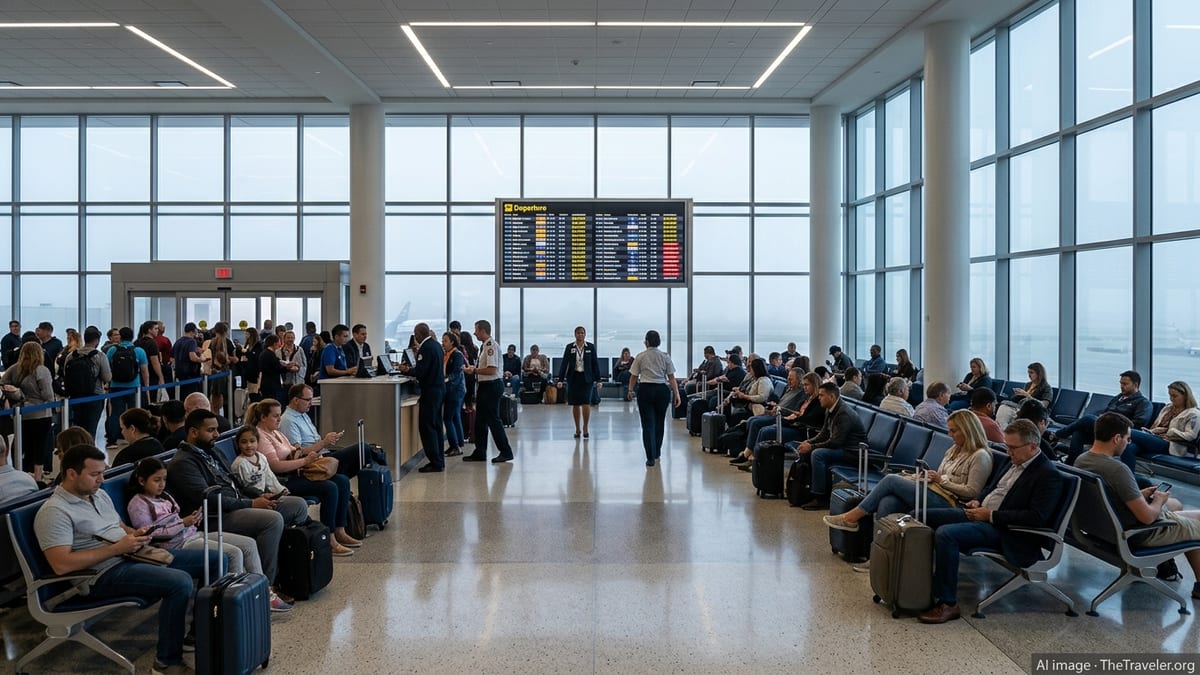
Fog and Congestion Stall Operations at San Diego International
Publicly available flight-tracking data for March 20, 2026, show San Diego International operating under heavy strain, with a large share of departures and arrivals running behind schedule. The single-runway layout and dense urban surroundings leave little slack in the system when weather or traffic conditions deteriorate, and today’s pattern of delays illustrates how quickly the schedule can unravel.
Morning marine layer and low visibility along the San Diego coast appear to have triggered initial disruptions, forcing aircraft to hold, reroute, or divert and compressing operations into fewer usable time windows. When the airport must adjust its arrival and departure flows in these conditions, ground movements slow, and aircraft waiting for access to the runway can rapidly stack up at gates and taxiways.
Once the first wave of departures fell behind, subsequent flights were pushed further out of their scheduled slots. That created a cascading effect for both domestic and connecting passengers, with some travelers missing onward flights in other cities while others remained in San Diego as aircraft and crews arrived late or were reassigned.
Major U.S. Carriers See Knock-On Delays Across Key Hubs
Today’s problems in San Diego reached far beyond Southern California. Flight-status boards for American Airlines, Delta Air Lines, Southwest Airlines, United Airlines, Alaska Airlines, and additional domestic carriers showed a cluster of delayed services linking San Diego with Los Angeles, New York, Chicago, Seattle, and other large markets.
Because many of these cities function as central connecting hubs, even a modest number of late departures from San Diego can ripple through tightly timed national networks. A delayed morning or midday departure from San Diego to Los Angeles, Chicago, or Seattle reduces the margin for on-time connections later in the day and increases the likelihood of missed flights and rolling disruptions.
Published airline and airport performance data in recent seasons have already highlighted how dense schedules at coastal airports, particularly those with limited runway capacity such as San Diego, are vulnerable when bad weather elsewhere in the country constricts available airspace. Today’s pattern of late departures and missed arrival windows closely reflects those broader trends.
Weather and a Recently Active Storm Pattern Add Pressure
Today’s disruptions in San Diego follow closely on the heels of a powerful storm system that swept across large parts of the United States earlier in the week. That system, which affected the Midwest, Great Plains, and portions of the East, forced reroutes, airport ground delays, and large blocks of airspace restrictions that are still working their way through airline schedules.
As carriers reposition aircraft and crews after days of weather-related disruption, coastal gateways such as San Diego and Los Angeles are often used to rebalance fleets and restore regular frequencies. When that recovery phase overlaps with local weather issues or low cloud ceilings along the Pacific coast, the result can be a fresh wave of delays even after the main storm has dissipated.
Reports from recent winter and early spring travel periods indicate that this pattern has become increasingly familiar to frequent flyers, with periods of generally good local weather still producing lengthy hold times and last-minute gate changes as airlines work through network-wide backlogs.
Stranded Passengers Face Long Waits and Limited Options
For travelers on the ground in San Diego today, the statistics translated into long queues at ticket counters and customer service desks, limited same-day rebooking options, and crowded seating areas in both terminals. With evening and late-night departures constrained by San Diego’s longstanding noise curfew and airfield layout, some passengers confronted the prospect of overnight stays after missed connections or cancelled legs.
Publicly available traveler accounts from recent disruption events at San Diego International describe similar scenes: passengers waiting hours for updated departure times, flights repeatedly pushed back in 30- to 60-minute increments, and, in some cases, aircraft returning to gates after extended taxi or tarmac holds when operating conditions changed again.
For those attempting to reach or depart larger hubs like Los Angeles, Chicago, or New York, the lack of spare seats later in the day often meant flying on different routings than originally booked or being rebooked for flights scheduled for the following day. That, in turn, increased demand for nearby hotel rooms and ground transportation late in the evening.
What Today’s Disruption Signals for Spring Travel
Today’s situation at San Diego International serves as an early reminder of the fragility of tightly packed flight schedules ahead of the busy spring and summer travel periods. With airlines operating near pre-pandemic capacity at many U.S. airports, relatively small weather events or air-traffic constraints can quickly translate into dozens of delayed or cancelled flights.
Historical performance data for San Diego and other slot-constrained or space-limited airports show that early-morning fog, marine layer conditions, or traffic-flow changes can have outsized impacts on the rest of the day’s operations. When combined with ongoing staffing, maintenance, or aircraft-positioning challenges across major domestic carriers, the result is often a multi-city disruption rather than an isolated local issue.
Travel industry observers note that passengers connecting through hubs in Los Angeles, New York, Chicago, and Seattle are likely to feel the effects of today’s delays out of San Diego into the evening and potentially into tomorrow’s early departures. As airlines work to reset their schedules, the experience in San Diego today underscores how interconnected the nation’s air-travel network has become and how quickly a localized problem can strand travelers across multiple time zones.