


More news on this day
A former United Airlines executive has highlighted how a single outage or disrupted flight in a key region can rapidly cascade into hours of delays for travelers across the United States, underscoring how tightly wound and interdependent modern airline networks have become.
Get the latest news straight to your inbox!
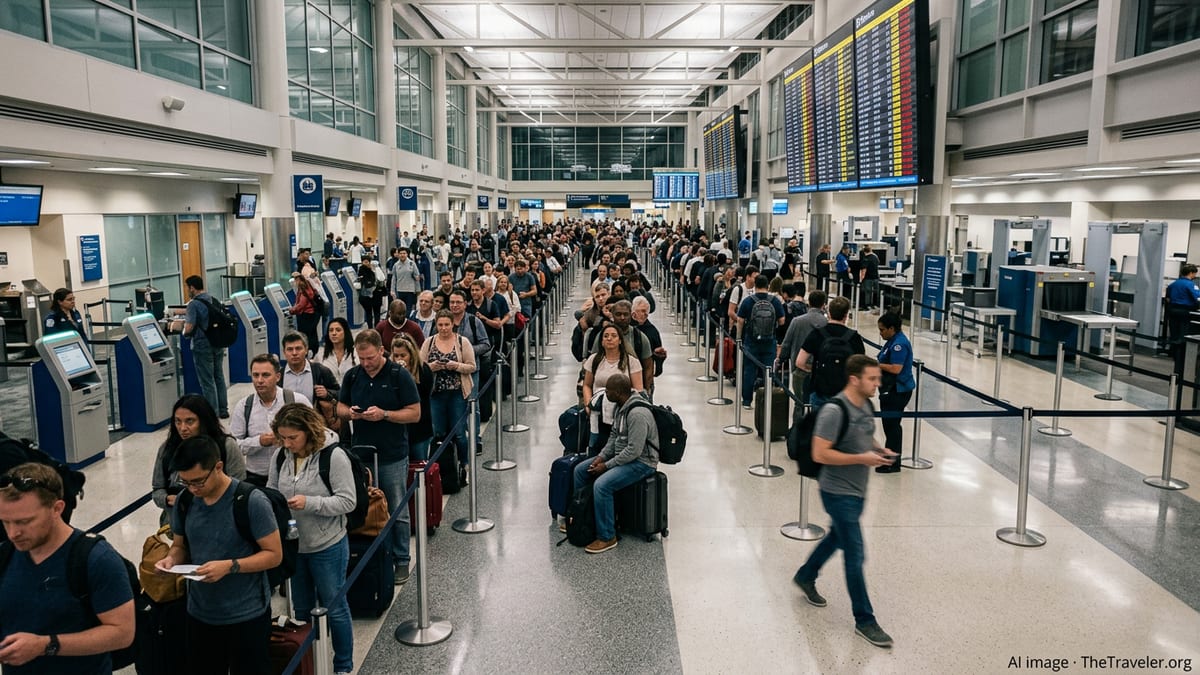
From One Outage to a Nationwide Logjam
In a recent television appearance, Rich Davis, a senior security advisor at International SOS and former chief security officer at United Airlines, described how a telecommunications outage in the northeastern United States briefly severed critical links used to manage flights. Publicly available coverage indicates that the disruption affected the flow of information airlines rely on to coordinate aircraft, crews and airport operations, forcing carriers to slow or halt departures while systems were restored.
Although the outage was localized and temporary, Davis explained that the pause in departures and arrivals quickly translated into hundreds of delayed flights. Aircraft that were supposed to depart major hubs were held at gates, while inbound flights circled or diverted, creating an immediate imbalance between scheduled and actual positions of planes and crews. Once planes and staff are out of position, restoring the intended schedule becomes a complex logistical puzzle rather than a simple matter of resuming normal operations.
Coverage of the incident shows that airlines classified many of the late departures as controllable delays, meaning they accepted responsibility for certain customer expenses such as hotel stays where applicable. That designation reflects how the root cause lay in systems under airline or partner control, not in federal air traffic restrictions or severe weather. Even so, once the network slipped out of sync, the resulting problems looked similar to travelers, with crowded departure boards and missed connections across the country.
Davis’s breakdown highlights a central reality of modern air travel: even when the original issue is resolved within hours, the resulting misalignment of aircraft and crews can continue to affect passengers well into the following day, especially during peak travel periods.
Hub and Spoke Networks Amplify Disruptions
United Airlines, like other large U.S. carriers, operates a hub and spoke network built around major connecting airports such as Chicago O’Hare, Denver, Houston Intercontinental, Newark, Washington Dulles, San Francisco and others. According to industry analyses, these hubs concentrate large numbers of arriving and departing flights into short time windows to maximize connections between smaller “spoke” cities and long haul routes.
Aviation planning references note that this banked hub strategy is efficient when operations run on time, enabling passengers from numerous origins to connect quickly to multiple destinations. However, the same concentration of flights at each hub creates sensitivity to disruption. When arrivals in a bank are delayed by a storm, ground congestion or a system outage, the outbound flights that depend on those inbound aircraft and connecting passengers cannot depart as scheduled.
Testimony and research presented to U.S. lawmakers over the past two decades have repeatedly described a cascading effect from major hub airports. If a hub such as O’Hare or Newark experiences extended arrival delays, the impact radiates out across the carrier’s network as aircraft arrive late to downline cities and crews reach the limit of duty-time regulations before completing their planned sequences. The end result can be widespread delays or cancellations in cities that have clear skies and no local operational problems.
Because United and its peers operate multiple hubs, a significant disruption in one region can ripple between them during the same day. An aircraft delayed leaving Newark might miss a scheduled rotation through Chicago or Denver, reducing flexibility to recover later in the schedule and leaving fewer spare planes available when subsequent issues arise.
Aircraft and Crew Positioning Drive the Snowball Effect
Operational data and academic studies of U.S. flight delays show that once an aircraft’s first departure of the day is late, that delay often carries through the rest of its rotations. Each arrival later than planned shortens the scheduled ground time for cleaning, catering, fueling and boarding, making it harder for the airline to recover without further disruption. Unless an aircraft is switched or extra reserve capacity is available, the original delay can propagate through multiple cities.
Aircrews are an equally important constraint. Airline scheduling systems build complex pairings of flights that keep pilots and flight attendants in position while respecting federal duty and rest rules. When an early flight is held for weather or a systems issue, the crew may reach their daily or weekly legal limit before operating the final leg of their itinerary. In such cases, the airline must either find replacement crew members at short notice or cancel the affected flight, adding further strain to an already stressed network.
Court records and regulatory documents describing airline operations note that even minor maintenance discrepancies can contribute to these challenges. Certain issues, such as a broken reading light, may be deferred under minimum equipment rules, but more significant problems require taking an aircraft out of service. If a replacement aircraft is not immediately available, a localized maintenance event can displace hundreds of passengers and remove one more tool airlines might have used to absorb earlier delays.
The combination of tight schedules, full planes and limited slack means that once a disruption takes hold, each subsequent decision has trade-offs. Holding a departing flight to accommodate a large group of misconnecting passengers might prevent dozens of people from being stranded overnight, but it also risks making the plane late for its next assignment and pushing another set of travelers into missed connections later in the day.
Weather, Demand Surges and Infrastructure Limits
While the recent telecommunications issue highlighted the vulnerability of technology systems, publicly available statistics from the Bureau of Transportation Statistics and the Federal Aviation Administration show that weather and airspace volume still account for a large share of U.S. flight delays. Thunderstorms along the East Coast, low visibility at major hubs or high winds in key corridors can force traffic management programs that reduce the rate of departures and arrivals.
These restrictions, even when modest, compound the inherent pressures of peak travel days. During summer holidays, long weekends and school breaks, federal forecasts have cited days with more than 50,000 scheduled flights across U.S. airspace. When most of those departures are heavily booked, airlines have fewer opportunities to rebook disrupted travelers on later flights without bumping others, leaving more people waiting in terminals for extended periods.
Airport infrastructure adds yet another layer. Several major hubs operate near or at their designed capacity during busy periods, which leaves limited margin to absorb extended ground stops or runway closures. Reports on hub development over the years have emphasized how gate shortages, ramp congestion and taxi delays can turn what might have been a short disruption into a prolonged recovery effort as aircraft wait for space to park or depart.
The interplay of these factors means that a seemingly routine summer thunderstorm over a hub, combined with a technology glitch or ground staffing shortage, can produce the same kind of nationwide ripple described by the former United executive after the Northeast outage. Travelers may see only the local symptoms, but the underlying cause is a system operating with very little slack.
What Travelers Can Expect When Schedules Unravel
For passengers, the snowball effect of delays often appears first on departure boards, with a growing list of flights pushed back in 15 or 30 minute increments before some are ultimately canceled. Public dashboards that track airline operations show how quickly on-time performance can deteriorate once the first wave of disruptions sets in, particularly at hubs with large banks of connecting flights.
When airlines classify delays as controllable, coverage of recent incidents indicates that major carriers sometimes provide meal vouchers, hotel accommodation and reimbursement for certain out of pocket costs, subject to their individual customer service commitments. In cases attributed to factors outside airline control, such as severe weather or air traffic control restrictions, compensation is more limited and support may focus on rebooking and basic assistance.
Experts who study airline operations suggest that recovery can extend beyond the calendar day of the original disruption. Even after the immediate cause has been resolved, aircraft and crews may not return to their planned positions until overnight or the following afternoon. Early morning departures the next day can still be affected if planes did not reach the correct cities in time or if crews require mandatory rest.
The analysis offered by the former United executive reinforces a message frequent travelers have long understood: the U.S. air travel system functions efficiently when conditions allow, but it remains highly susceptible to chain reactions. Understanding that a delay in one region may be caused by events hundreds of miles away offers little comfort in the moment, yet it explains why even brief outages or local storms can reshape flight plans across the entire country.