


More news on this day
Recent equipment failures across key air traffic control centers in the United States and United Kingdom have triggered thousands of flight delays and cancellations, underscoring persistent vulnerabilities in the technology that keeps global aviation moving.
Get the latest news straight to your inbox!
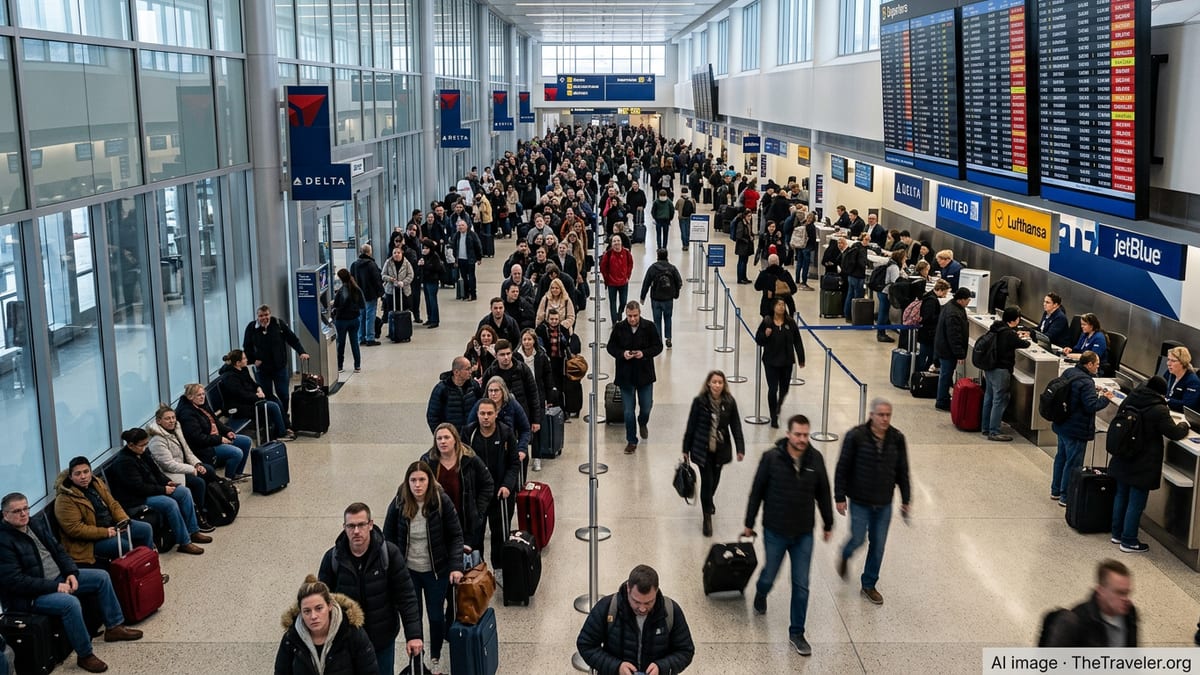
East Coast outages ripple through U.S. air travel
In the latest disruption, technical problems at a Federal Aviation Administration air traffic facility serving the busy Northeast corridor slowed or halted flights across major hubs including Newark Liberty International Airport, New York and Boston. Publicly available tracking data showed ground stops and widespread delays on Monday, September 21, as controllers temporarily lost radar and communications links for parts of the day.
Coverage from national outlets and aviation data providers indicates that operations at Newark were reduced to a near standstill for several hours, with no commercial arrivals for much of the day and knock-on delays that continued into Tuesday. Reports from Boston Logan International Airport described long queues and gate holds as airlines worked through a backlog created by the outage at the upstream facility in New Jersey.
Federal summaries of recent incidents point to recurring vulnerabilities in telecommunications infrastructure around the Philadelphia Terminal Radar Approach Control center, which manages traffic in and out of Newark’s airspace. In earlier events in 2025, a burnt copper wire and failures in both primary and backup communication systems produced short but serious blackouts in radar and radio contact, leading to hundreds of delayed or canceled flights and a formal delay-reduction effort for Newark.
According to recent oversight reports, these outages have unfolded just as the federal government pursues a multibillion-dollar modernization of air traffic control systems, including new fiber links, radios and radar equipment. While new tools are being tested to help manage congestion, the disruptions demonstrate how single points of failure in key nodes can still stall traffic along some of the nation’s busiest air corridors.
Software defects and cut lines expose fragile infrastructure
Separate reporting on Monday’s delays across the Northeast indicates that a construction-related mishap in New Jersey damaged critical fiber lines, disrupting data and voice connections used by both air traffic control and rail services. The incident illustrates how aviation infrastructure often depends on third-party telecommunications networks, where an error far from any airport can cascade into systemwide delays.
Across the Atlantic, the United Kingdom’s air navigation service provider has documented its own recent technology failures. A preliminary report released in mid-September attributes a major disruption on September 8 to a software defect within a flight data system that manages the national airspace. Although the affected code represented only a small part of the wider system, restrictions had to be imposed across the country while data were reloaded, leading to widespread cancellations and delays that took more than two days to clear.
Published accounts of a separate incident at a Scottish control center on September 21 describe another technical fault that temporarily limited operations in and out of Scotland, Northern Ireland and northern England. National media coverage indicates that, although the issue was resolved within hours, the backlog again stretched through the day, affecting leisure and business travelers at major airports.
Industry filings and regulator statements show that both the U.S. and U.K. are investing heavily in new systems designed to be more resilient, but also confirm that key components, from copper wiring to radio units, are approaching or past their original support dates. Oversight bodies have warned that, without accelerated replacement of aging hardware and software, even a minor coding error or cut line can still freeze highly automated networks that depend on constant data flow.
Historic outages highlight recurring technology risks
The current wave of disruptions follows several high-profile equipment and systems failures in recent years. In January 2023, a problem with the Federal Aviation Administration’s Notice to Air Missions system led to a nationwide ground stop of departing flights for the first time in decades. Official summaries and subsequent analyses report that more than 1,300 flights were canceled and nearly 10,000 delayed that day while technicians worked to resolve a damaged database file.
Government audits released in 2026 draw a direct line from that outage to ongoing modernization efforts. According to these reviews, the incident accelerated plans for redundant databases and backup systems, some of which have already been deployed. Even so, the same documents identify multiple programs where cost overruns and schedule slips have reduced the number of sites slated for upgrades, leaving pockets of older infrastructure in place for longer than originally planned.
Additional technical issues at facilities serving Newark in April and May 2025 demonstrate how these vulnerabilities can recur. Public records and news coverage describe instances when radar scopes went dark and controllers briefly lost contact with all aircraft in the area. While each blackout lasted around 90 seconds, the resulting congestion required the FAA to cut the number of arrivals and departures per hour for safety reasons, contributing to longer delays throughout the day.
In Europe, the recent U.K. software defect joins earlier episodes linked to air traffic control technology, including a radar problem in 2025 and an earlier outage that affected thousands of flights. Together, these incidents have raised questions among lawmakers and passenger groups about whether investment in modernization has kept pace with rising traffic and growing reliance on digital systems.
Impact on travelers and airlines
For passengers, the practical effect of these equipment failures has been a familiar mix of missed connections, overnight stays and disrupted itineraries. On days when air traffic control centers impose flow restrictions, airlines must quickly rework schedules and crew assignments, often leading to rolling delays even on routes far from the original problem.
Publicly available on-time performance statistics from the U.S. Bureau of Transportation Statistics show that air carrier delays, including those linked to maintenance and equipment issues, consistently account for a significant share of late arrivals each year. While weather remains a leading cause of disruption, federal data highlight that technology and infrastructure problems, whether at airlines or at the air navigation system level, are a persistent factor in operational reliability.
Airlines have limited flexibility when air traffic facilities slow or suspend operations. Carriers may proactively cancel flights into constrained airports to avoid aircraft and crews being stranded, which can concentrate cancellations at already busy hubs. Travelers in the Northeast and across the Atlantic have reported crowded terminals and long rebooking lines following the most recent outages, as aircraft and crews were repositioned to restore schedules.
Industry analyses suggest that the financial impact for airlines from these equipment-driven disruptions includes additional fuel costs, crew overtime, compensation for stranded passengers and lost revenue from canceled flights. For travelers, the costs take the form of extra hotel nights, missed events and short-notice itinerary changes that can be particularly disruptive for international connections.
Modernization efforts and what travelers can expect
Government reports and public statements outline a range of modernization measures now under way to reduce the risk that equipment failures will trigger mass delays. In the United States, these steps include installing new fiber and wireless communication links, expanding backup systems at key facilities and deploying decision-support tools that use artificial intelligence to help controllers manage congestion during irregular operations.
In the United Kingdom, the air navigation service provider has emphasized its ongoing investment program, citing more than a decade of spending on upgraded systems and plans to commit substantial additional funds by 2033. The agency’s recent preliminary report on the September software incident describes mitigation measures now in place while a permanent fix is tested and deployed, along with an independent review commissioned by the government’s aviation regulator.
Oversight bodies on both sides of the Atlantic continue to flag air traffic control modernization as a top management challenge. Recent audits stress that replacing or hardening legacy communications equipment is essential to maintain safety and reliability as flight volumes grow. They also note that staffing shortages in some facilities can compound the operational effects of equipment failures when outages occur during peak periods.
For travelers, the practical takeaway is that equipment-related disruptions are likely to remain an occasional feature of air travel in the near term, particularly in regions served by older infrastructure. Experts advising consumer groups recommend building extra time into connections through major hubs, especially during busy seasons, and monitoring airline and airport alerts for signs of emerging system issues that could affect departure and arrival windows.