

More news on this day
Thousands of travelers across France are facing severe disruption as at least 75 flights are reportedly grounded and around 186 delayed, affecting major routes and hubs in Paris, Nice, Lyon, Marseille and Bordeaux and involving leading carriers such as Air France, Lufthansa, easyJet, Vueling Airlines and Ryanair.
Get the latest news straight to your inbox!
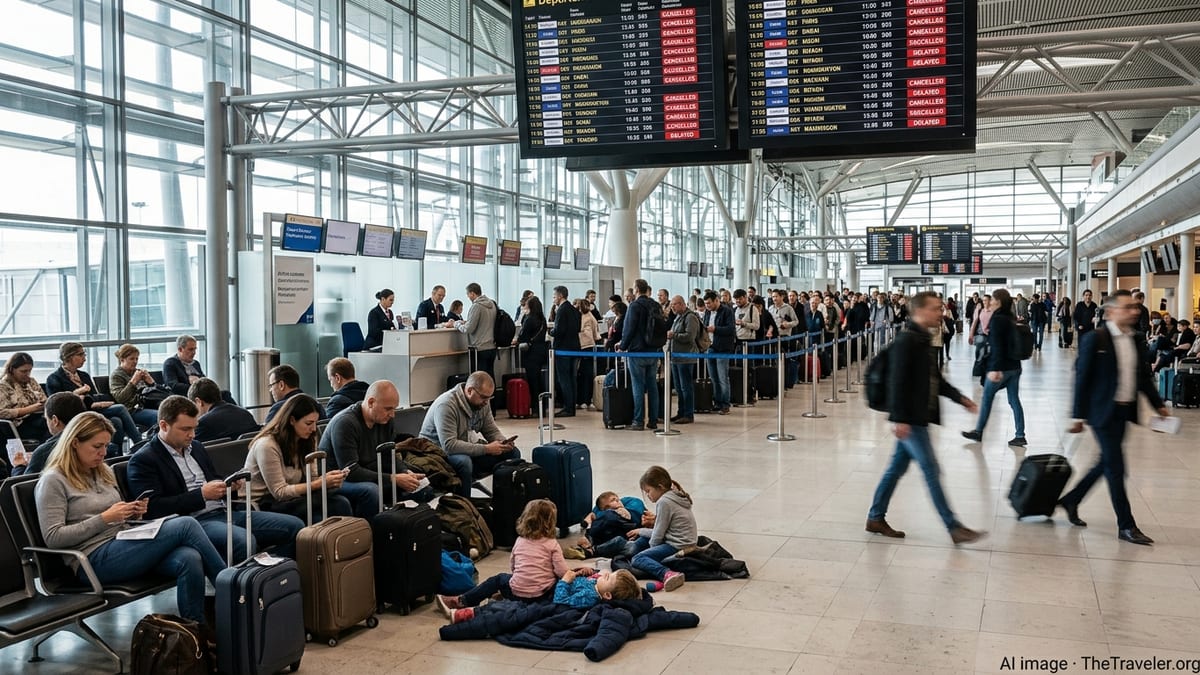
French Hubs See Wave of Cancellations and Delays
Publicly available flight-tracking data and regional media reports indicate that French airports have become focal points in the latest bout of air travel disruption across Europe. The current episode is part of a wider pattern of operational strain seen since early April 2026, when similar figures of large-scale delays and cancellations were recorded at major hubs across the continent.
At the heart of the disruption are at least 75 cancellations and around 186 delays affecting services into and out of Paris, Nice, Lyon, Marseille and Bordeaux. These airports serve as key gateways for both domestic and international traffic, meaning relatively small schedule changes can quickly spread across airline networks.
Traffic data compiled in recent days by aviation analytics platforms and summarized in European travel coverage shows that the number of delayed flights in the region has repeatedly climbed into the high hundreds and beyond. France’s busiest airports, particularly Paris Charles de Gaulle and Orly, are again featuring prominently in delay tallies as airlines struggle to maintain normal operations.
Major Carriers Affected Across Short and Medium Haul Networks
Flag carrier Air France and Germany’s Lufthansa are among the traditional network airlines most visibly affected, with numerous flights on intra-European routes experiencing long waits for departure slots or being cancelled outright. Their operations at Paris, Lyon and Marseille, as well as onward connections through other European hubs, appear especially exposed when disruption flares in the French airspace system.
Low cost carriers are also heavily impacted. According to recent European travel reporting and open-source flight data, easyJet and Vueling have faced repeated schedule challenges since late winter, while Ryanair has recently confirmed route adjustments and selective cancellations across several European countries, including France, in response to cost pressures and operational constraints. When French airports or air traffic capacity are reduced, these point-to-point networks can see a cascade of delays as aircraft rotate through multiple countries in a single day.
Because many of these airlines operate dense schedules on popular city pairs, the immediate effect of cancelling even dozens of flights is magnified. Affected services include key business and leisure routes linking Paris with other major European capitals, as well as domestic links connecting regional cities such as Nice, Lyon, Bordeaux and Marseille with the Paris area.
Knock-on Effects Across Europe’s Interconnected Aviation Network
The disruption in France is not occurring in isolation. Recent analyses of European operations compiled by travel advisory outlets and aviation data providers highlight a broader pattern of instability across the region’s air traffic system in early April. Episodes in which more than one thousand flights are delayed and well over one hundred cancelled in a single day have already been recorded this month, affecting hubs from London and Amsterdam to Lisbon and Frankfurt.
France’s airspace sits at the crossroads of many of these flows, making French airports vulnerable to so-called reactionary delays. When an aircraft or crew arrives late from another affected country, even a flight scheduled during clear local conditions can depart behind schedule. This phenomenon has been cited in recent European aviation trend reports as a growing driver of overall delay minutes, often exceeding the impact of isolated technical issues or localized weather alone.
As airlines attempt to recover their schedules, they may prioritize certain long-haul or high-demand flights, which can lead to further cuts or extended delays on shorter intra-European segments. Passengers booked on domestic or regional services to and from French cities are therefore among those most likely to experience missed connections, overnight stays and rebookings.
Passenger Rights and Practical Steps for Affected Travelers
For travelers caught up in the cancellations and delays now affecting French airports, protections are shaped by European Union rules on air passenger rights. Regulation EC 261/2004 sets out common standards for care and compensation in cases of significant delay, cancellation or denied boarding on flights departing from EU airports or operated by EU-based carriers.
Under this framework, travelers on flights that are cancelled or that arrive at their final destination with a substantial delay may in some circumstances be eligible for fixed-sum compensation, as well as assistance such as meals, refreshments and accommodation. Eligibility depends on factors including the length of the delay, the distance of the route and the underlying cause of the disruption, with extraordinary circumstances assessed differently from airline-controlled issues.
Consumer advocacy organizations and travel law specialists consistently advise passengers to retain boarding passes and booking confirmations, monitor airline notifications closely and document any additional expenses arising while waiting for rebooking. In the current situation across France, that guidance remains relevant for those experiencing long waits in terminals or last-minute flight changes.
What Travelers Should Expect in the Coming Days
While the immediate tally of 75 grounded flights and 186 delays in France captures a single phase of disruption, the pattern seen so far in April suggests that operational volatility may continue in the short term. Recent trend reports on European aviation punctuality point to sustained pressure on capacity, recurring local bottlenecks and a higher sensitivity to weather, industrial action and technical outages than before the pandemic era.
For travelers with imminent plans to fly through Paris, Nice, Lyon, Marseille or Bordeaux on airlines such as Air France, Lufthansa, easyJet, Vueling or Ryanair, publicly available guidance from travel experts emphasizes advance preparation. Checking flight status frequently on the day of departure, arriving early at the airport and having alternative routings in mind can help reduce stress if schedules shift at short notice.
As airlines work to restore normal schedules and clear backlogs, passengers may continue to encounter residual delays and aircraft swaps even after the most acute phase of cancellations has passed. The situation underscores how quickly localized disruption in France can ripple across Europe’s interconnected aviation network, affecting travelers far beyond the country’s borders.