

Planning a first trip to France can feel both thrilling and overwhelming. This is a country of grand boulevards and quiet village squares, Michelin-starred restaurants and simple café terraces, glittering Mediterranean bays and misty Atlantic ports. With some practical preparation and a basic understanding of how France works day to day, first-time visitors can move beyond the clichés and experience a country that is welcoming, efficient, and deeply proud of its heritage.
Understanding Entry Requirements and When to Go
France is part of the Schengen area, so most non-EU travelers, including visitors from the United States, Canada, the United Kingdom, Australia and many Asian countries, enter under Schengen short-stay rules. This generally allows you to visit for up to 90 days within any 180-day period for tourism or business, but you must check specific visa requirements for your nationality with official government sources before you book. Citizens of countries that require a Schengen visa need to apply in advance and travel with proof of accommodation, onward travel and travel insurance.
From late 2025 and into 2026, France and other Schengen countries are introducing the Entry/Exit System, which replaces manual passport stamps with a digital record that includes biometric data like fingerprints and a facial image. A separate authorization system called ETIAS will apply to visitors from visa-exempt countries, who will need to complete a quick online application before departure and receive approval linked to their passport. These changes are designed to modernize border controls, but they may add a few minutes at airports and major train stations as you register the first time.
In terms of timing, France is genuinely a year-round destination, but the experience varies dramatically by season. Late spring, from roughly May to June, and early autumn, from September into early October, offer mild temperatures, longer daylight and relatively lighter crowds compared with peak summer holidays. July and August bring school vacations, beach weather and major festivals, but also higher prices, crowded trains and fully booked hotels in popular regions. Winter can be atmospheric in cities and ideal for Christmas markets and Alpine skiing, though days are shorter and some coastal resorts scale back operations.
For a first visit that balances sightseeing and comfort, many travelers aim for shoulder season dates, pack layers for variable weather and build some flexibility into their daily plans. Regional climates differ: Paris and the north can be cool and damp, the Atlantic coast is breezy and changeable, and the Mediterranean south is sunnier and drier, particularly from late spring through early autumn. Checking long-range forecasts and historic averages for your specific destinations will help you pack appropriately.
Planning Your Itinerary: Beyond Paris
Most first-time visitors start in Paris, and with good reason. The French capital concentrates world-famous museums, grand monuments and intimate neighborhoods within a compact area. Yet France’s appeal extends far beyond the périphérique ring road, and even a short trip becomes richer if you combine the city with at least one contrasting region, such as the Loire Valley for chateaux, Normandy for history and coastlines, Provence for hilltop villages, or the French Riviera for sea views and elegant promenades.
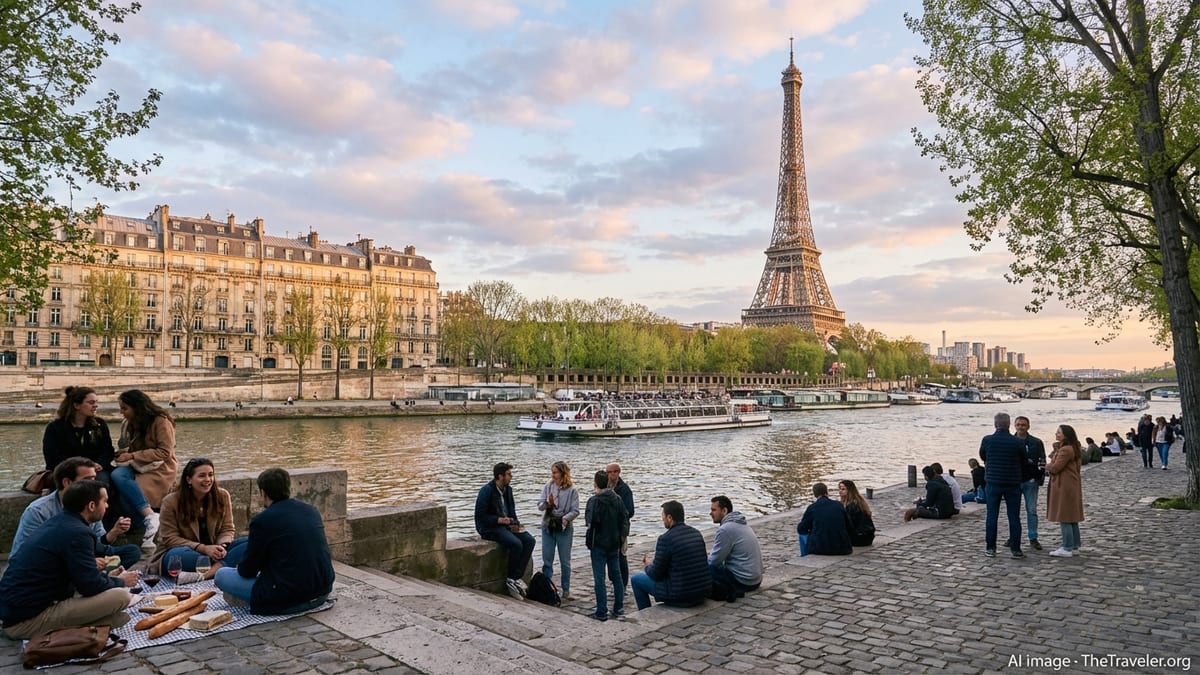
In Paris, classic first-time highlights include the Eiffel Tower, the Louvre, the Musée d’Orsay, Notre-Dame’s surroundings, Montmartre, and walks along the Seine. Major museums like the Louvre and Musée d’Orsay are among the most visited in the world, so pre-booked timed tickets and early arrival can save hours of queuing. Many travelers find that one major museum per day is enough, leaving time to explore neighborhoods like the Marais, Saint-Germain-des-Prés or Canal Saint-Martin at a slower pace.
High-speed trains make it relatively easy to add another city or region to a first trip. From Paris, you can reach Lyon in roughly two hours, Bordeaux in about two, Marseille in around three, and Strasbourg in less than two, depending on the specific service. These TGV routes are frequent, comfortable and generally more convenient than flying for domestic journeys. Booking in advance on official rail channels typically secures lower fares, especially for peak travel days and weekends.
When choosing where else to go, think in themes rather than trying to “see everything.” Food-focused travelers might combine Paris with Lyon, regarded as a French culinary capital, or with Burgundy’s wine villages. Those interested in history could pair the capital with Normandy’s D-Day beaches or the medieval cities of Carcassonne and Avignon. Sunseekers might plan a loop that starts in Paris and ends on the Mediterranean coast near Nice or Marseille. Two or three bases with day trips from each is usually more enjoyable than packing and unpacking every day.
Getting Around: Trains, Metros and Everyday Logistics
France has one of Europe’s most extensive rail networks, and for most first-time visitors, trains are the backbone of intercity travel. High-speed TGV services connect major cities at up to 300 kilometers per hour, while regional TER trains reach smaller towns and scenic areas. For short to medium distances, trains are usually more time-efficient than domestic flights when you factor in airport transfers and security checks. Seats on popular routes and peak-time trains can sell out or become expensive, so booking ahead is wise, particularly in summer and around public holidays.
Within cities, public transport is usually the fastest and most cost-effective option. The Paris Metro, RER suburban lines, buses and modern tram networks in cities such as Bordeaux, Lyon and Strasbourg are generally safe and reliable. As of 2025, single tickets in Paris cost more than in previous years, so many visitors now opt for day passes or rechargeable cards that can provide better value if you plan several journeys per day. Always keep your ticket or pass until you exit the system, as inspectors conduct spot checks and fines for fare evasion are substantial.
Taxis and ride-hailing services exist in larger cities, but traffic and one-way systems can make them slower than the metro at busy times. Official taxi ranks at train stations and airports clearly mark licensed vehicles, and it is safer to use these or reputable apps than to accept rides from unmarked cars. In rural areas and smaller towns, public transport may be less frequent, so renting a car can make sense if you are comfortable driving on narrow roads and navigating roundabouts. Basic parking rules and low-emission zones apply in many urban centers, and large underground or multi-storey car parks are common near historic centers.
On an everyday level, simple habits will make getting around smoother. Validate any paper tickets where required before boarding regional trains or trams. Allow extra time at major stations such as Paris Gare du Nord, Gare de Lyon or Marseille Saint-Charles, which are large and busy. Keep valuables zipped inside a day bag close to your body on crowded metro lines and platforms. Learning to read basic signage, like sortie for exit and correspondance for transfer, quickly increases your confidence.
Money, Budgeting and Practical Costs
France uses the euro as its currency, and card payments are widely accepted in cities, including contactless transactions for small amounts. Many ticket machines, motorway tolls and automated fuel pumps expect a card with a chip and PIN. It is still wise to carry some cash for markets, bakeries in smaller towns and rural cafés. ATMs are common in urban areas and at larger supermarkets, though they may be less frequent in remote villages.
Daily costs vary significantly between Paris and smaller destinations, and between low season and peak holiday periods. Travelers on a careful budget can often keep daily expenses moderate by staying in simple hotels or hostels, choosing set-price lunch menus, using public transport and focusing on a few paid attractions alongside many free experiences, such as parks, riverside walks and neighborhood exploration. Mid-range travelers staying in three-star hotels, relying on trains for intercity moves and eating at bistros and cafés can expect higher but still manageable daily expenses, especially outside the most famous districts of Paris and the Riviera.
Food is a major part of the French experience, and you do not need to dine at luxury restaurants to eat well. Fixed-price lunch menus, known as formule or menu du jour, can offer good value. Bakeries sell fresh baguettes, pastries and sandwiches that make easy picnic lunches in a park. Supermarkets and covered markets stock cheeses, charcuterie, fruit and wine at prices lower than in bars and restaurants. In many areas, tap water is safe to drink, and you can ask for a free carafe of water, carafe d’eau, in restaurants instead of ordering bottled water.
Service charges in restaurants are typically included in menu prices, and your bill may note service compris. Rounding up the bill or leaving a small additional tip for good service is appreciated but not mandatory. In cafés, locals often leave small change. For taxis, rounding up to the nearest euro or adding a modest amount for helpful service is customary. Planning a realistic budget, with a buffer for unexpected expenses like last-minute taxis or attraction surcharges, helps keep first trips relaxed.
Culture, Etiquette and Language Basics
French social interactions place a strong emphasis on courtesy, and observing a few simple customs can transform your experience as a visitor. One of the most important habits is greeting people properly. When you enter a shop, a bakery, an elevator or a small office, it is considered polite to say Bonjour, or Bonsoir in the evening, often followed by Monsieur or Madame. Failing to greet can be interpreted as rude, while even beginners who attempt a simple Bonjour usually find staff more welcoming.
In restaurants and cafés, service may feel more formal or reserved than in some other countries. Waiting staff generally will not introduce themselves by name or check on you constantly. Instead, they give you time to read the menu and talk. If you need something, simple phrases like Excusez-moi or S’il vous plaît, followed by your request, are enough. It is uncommon to split bills into many separate checks, so groups often pay together and settle up among themselves afterward. Dining is seen as a social event, and lingering at your table after dessert is not frowned upon unless the restaurant clearly needs to turn the table for a second seating.
Dress codes in France are typically smart casual in cities, especially in the evening. Locals tend to favor neutral colors and simple, well-fitted clothing. Sportswear, beachwear and very casual outfits are best reserved for appropriate contexts, such as hiking trails or seaside promenades. When visiting churches and religious sites, covering shoulders and avoiding very short shorts is respectful. In rural areas, loud behavior, especially late at night, may be poorly received, and quiet hours are often observed in residential neighborhoods and apartment buildings.
Knowing a handful of French phrases goes a long way, even though many people working in tourism, particularly in Paris and larger cities, can speak some English. Useful basics include Bonjour, Bonsoir, Merci, S’il vous plaît, Pardon for excuse me, and Parlez-vous anglais for asking if someone speaks English. Even if the conversation switches into English, the attempt shows respect. If you are invited into a French home, it is customary to bring a small gift like flowers or quality chocolates, to arrive close to the agreed time and to wait for the host to say Bon appétit before starting to eat.
Safety, Scams and Health Considerations
France is generally a safe country for tourists, with well-organized emergency services and healthcare. As in any major destination, the main risks in busy areas are petty theft and minor scams rather than violent crime. Crowded metro lines in big cities, popular landmarks like the Eiffel Tower, Sacré-Cœur and the Louvre, and major train stations tend to attract pickpockets. Keeping your phone and wallet in zipped interior pockets, using a cross-body bag that stays in front of you and avoiding leaving bags unattended in cafés significantly reduces your risk.
Common scams include people approaching you with fake petitions, offering to tie a bracelet on your wrist and then demanding payment, or pretending to find a ring on the ground and insisting you keep it before asking for money. Around some attractions, unofficial ticket sellers may claim to have cheaper or skip-the-line admissions that are in fact invalid. The simplest defense is to decline any unsolicited offers, keep walking and purchase tickets only from official counters or authorized machines.
Emergency services are easily reached: the European emergency number 112 works across the country, while other direct numbers exist for police, medical assistance and fire services. Pharmacies are widespread and can advise on minor health issues and over-the-counter medications. Travelers should ensure they have adequate travel insurance that covers medical care, repatriation and trip interruptions. Tap water is generally safe to drink, and food hygiene standards are high, although travelers with allergies should learn how to explain their needs in French or carry them written down.
Demonstrations, transport strikes and occasional disruptions are part of life in France, particularly in large cities. They are usually announced in advance and follow predictable patterns, such as reduced train frequencies or rerouted buses. Checking local news and transit notices, and allowing extra time on strike days, prevents most headaches. When protests occur, it is prudent to keep some distance and follow instructions from authorities.
Food, Wine and Eating Like a Local
Eating and drinking well is one of the great pleasures of visiting France, and first-time travelers quickly discover that regional cuisines vary widely. In Paris and the north, you might find hearty dishes with butter and cream, while along the Mediterranean coast, menus lean towards olive oil, vegetables, seafood and aromatic herbs. Inland regions celebrate specialties such as cassoulet in the southwest, coq au vin in Burgundy and alpine cheese dishes in the mountains.
French dining follows a relatively structured rhythm. Breakfast is typically light, often coffee with bread or a pastry. Lunch remains an important meal, and many businesses offer fixed-price mid-day menus that represent good value. Dinner is usually later than in some countries, with many restaurants opening for evening service around 7 or 7:30 p.m. Reservations are strongly recommended for popular places, especially on weekends. Turning up early and asking politely without a booking sometimes works in less busy neighborhoods, but relying solely on walk-ins can be risky during peak seasons.
Wine is integrated into French food culture, and you will find regional varieties everywhere, from crisp Loire whites to full-bodied Bordeaux reds and Provençal rosés. You are not expected to be an expert; house wines by the glass or carafe are often of good quality. It is acceptable to decline alcohol and request soft drinks, mineral water or a non-alcoholic aperitif. Tap water is freely available on request, and asking for a carafe d’eau is completely normal.
Markets are ideal places to observe daily life and assemble casual meals. Stalls selling cheeses, cured meats, olives, fruit, vegetables and fresh bread create endless picnic possibilities. As a visitor, it is polite to let vendors choose and hand you produce rather than touching items yourself, unless it is clearly self-service. Simple phrases like Bonjour, Je voudrais followed by what you want, and Merci, bonne journée help interactions go smoothly. Many food markets pack up by early afternoon, so going in the morning gives you the best selection and atmosphere.
The Takeaway
For first-time visitors, France rewards curiosity, patience and a willingness to adapt slightly to local rhythms. Planning around a few key destinations, understanding how transport, money and entry requirements work, and learning basic etiquette will make the country feel more accessible. Paris offers a dense concentration of culture and history, while other cities and regions provide their own distinct landscapes, cuisines and traditions, from harborfront museums in Marseille to canal-side neighborhoods in Strasbourg and the lavender-scented fields of Provence.
You do not need to master the language or see every landmark to have a meaningful trip. Instead, focus on a small number of places, allow extra time for wandering and savoring meals, and use France’s efficient rail system to connect them. A simple Bonjour, a respectful attitude and an open mind will go as far as any checklist of sights. With thoughtful preparation, your first journey to France can feel less like a hurried tour and more like the beginning of an ongoing relationship with one of the world’s most visited countries.
FAQ
Q1. Do I need a visa to visit France for a short vacation?
For many nationalities, including the United States, Canada, the United Kingdom and Australia, short tourist stays of up to 90 days within a 180-day period fall under Schengen rules without a traditional visa, but some travelers do need a Schengen visa. Always confirm current entry requirements for your nationality with official government sources before booking, as rules and systems such as ETIAS are evolving.
Q2. What is the best time of year to visit France for a first trip?
Late spring, roughly May to June, and early autumn, around September to early October, are often ideal. These shoulder seasons usually combine pleasant temperatures and longer daylight with somewhat lighter crowds and more moderate prices than peak summer, while still offering lively café terraces and open attractions.
Q3. Is France safe for solo travelers and families?
France is generally safe for solo travelers and families, especially if you follow standard urban precautions. Petty theft can occur in crowded areas, particularly in big-city metros, busy squares and near major monuments, so it is wise to secure your belongings, stay aware of your surroundings and avoid displaying valuables.
Q4. How many days should I plan for a first visit to France?
Many first-time visitors find that 7 to 10 days allows enough time to experience Paris and add one additional region or city. With about two weeks, you can comfortably include Paris plus two or three distinct areas, such as Normandy, the Loire Valley, Provence or the Riviera, without rushing constantly.
Q5. Do people in France speak English, or do I need to know French?
In Paris and other major cities, many people working in tourism, hotels and larger shops speak some English, though fluency varies. Learning a few basic French phrases and always beginning interactions with Bonjour or Bonsoir shows respect and usually leads to friendlier encounters, even if the conversation quickly switches into English.
Q6. What is the best way to get around France without a car?
For most itineraries that focus on cities and larger towns, trains are the most efficient choice. High-speed TGV services link major hubs quickly, and regional trains connect smaller destinations. Within cities, metros, buses and trams are reliable and widely used. A car becomes most useful in rural regions where public transport is limited.
Q7. How expensive is France compared with other European countries?
France, and particularly Paris, can be relatively expensive compared with some neighboring countries, but costs depend heavily on where and how you travel. Choosing smaller cities, traveling in shoulder seasons, using public transport, eating set-price lunch menus and shopping in markets can keep daily expenses reasonable, while luxury hotels and fine dining raise the budget significantly.
Q8. Is tap water safe to drink in France?
Tap water is generally considered safe to drink throughout most of France, including in major cities. In restaurants, you can request a free carafe of tap water, known as a carafe d’eau, instead of ordering bottled water. If you are in a very rural area or have a sensitive stomach, you may prefer bottled water, but visitors rarely encounter problems.
Q9. How should I tip in French restaurants and cafés?
Service is usually included in menu prices and indicated by service compris on the bill, so tipping is not mandatory in the same way as in some other countries. Many locals simply round up the amount or leave small change for good service. In cafés, a modest coin or two is common, and in taxis, rounding up to the nearest euro is typical.
Q10. What should I wear to blend in and feel comfortable in France?
Smart casual clothing works well in most situations. People in French cities tend to favor simple, well-fitted outfits in neutral colors rather than very sporty or beachwear styles, which are best saved for hikes, beaches or resort towns. Comfortable walking shoes that look reasonably polished will serve you better than athletic sneakers in many urban settings, and covering shoulders in churches is respectful.