

More news on this day
France’s high-speed rail network is entering a new era, blending faster journeys with upgraded comfort and digital services that aim to make train travel the default choice for crossing the country in style.
Get the latest news straight to your inbox!
A New Generation of High-Speed Trains
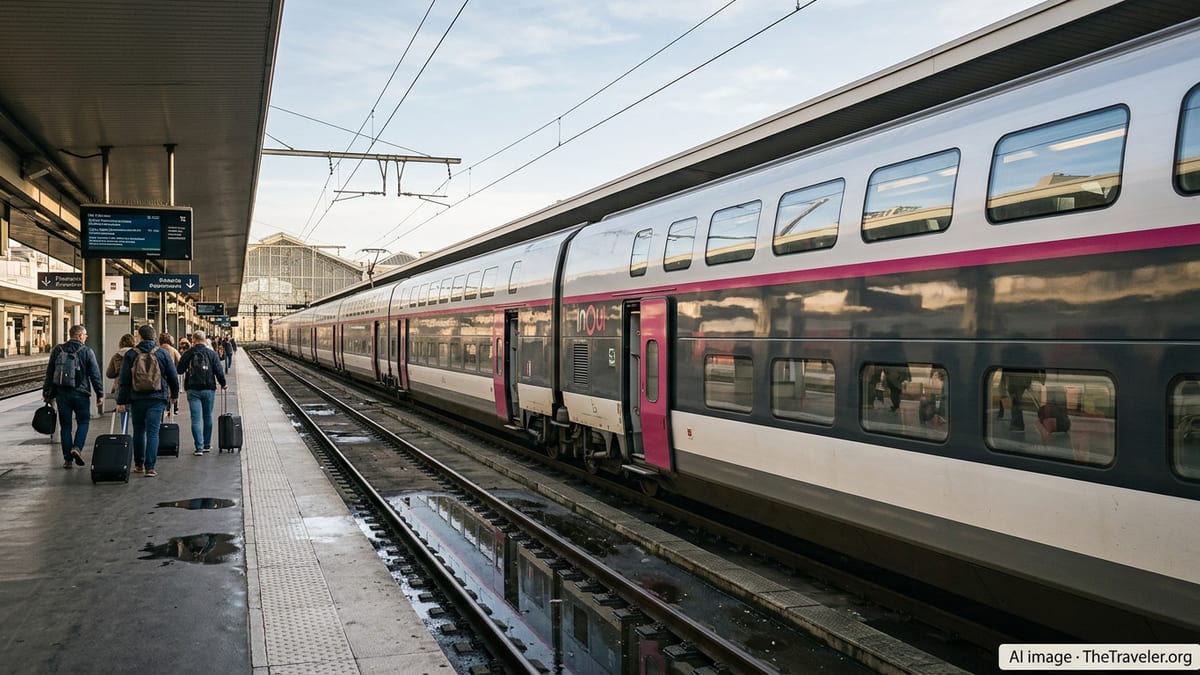
France’s national rail operator SNCF is banking on a new generation of high-speed trains to keep the country at the forefront of rail travel. Central to this shift is the Avelia Horizon fleet, known to passengers as the new TGV Inoui trains, which are scheduled to start carrying travelers from 2026. Developed with manufacturer Alstom, these double-decker sets are designed to run at more than 300 km/h while offering a quieter, more energy-efficient ride than previous generations.
The latest order, approved in January 2026, adds 15 additional trainsets to the program, bringing the total fleet under construction to well over one hundred units. The trains are conceived as a long-term backbone for France’s high-speed network, with an expected service life measured in decades and the flexibility to operate on international routes as demand grows.
Inside, the focus is on creating a more spacious and connected environment. Wider first-class seats with improved headrests, redesigned lighting and larger windows are being paired with better luggage storage and more power outlets. The interior layout has been engineered to improve passenger flow through the carriages, reducing bottlenecks at doors and staircases and making it easier to move between decks during busy periods.
SNCF and Alstom have also built maintainability into the platform from the outset. Remote diagnostics and predictive maintenance tools are intended to keep more trains in service, reducing delays and cancellations. For passengers, the result is expected to be a more reliable, high-frequency service on key routes such as Paris to Lyon, Bordeaux, Lille and Marseille, where high-speed rail already competes directly with domestic air travel.
Comfort Upgrades for Every Budget
As new trains arrive, SNCF is reshaping the way comfort is offered on board. In late 2025 the company unveiled “Optimum” class on TGV Inoui services to and from Paris on weekdays, a product designed for travelers who value flexibility and quiet over added frills. Optimum tickets are fully flexible and refundable, even after departure, and come with access to dedicated seating areas and premium station lounges.
The move underscores a broader effort to segment high-speed travel without abandoning the core promise of comfort. Traditional first and second class options remain, but Optimum is aimed at business and frequent travelers looking for peace, workspace and service guarantees without the highest price tag. On board, these sections are set up as calmer zones, with attention paid to noise levels, seat ergonomics and reliable connectivity.
At the other end of the spectrum, SNCF is continuing to expand Ouigo, its low-cost high-speed brand, which offers no-frills tickets on the same 300 km/h infrastructure. Ouigo trains use higher-density seating and pared-back services, but benefit from the same fast journey times. The company’s latest plans add new destinations across France through 2027, supported by refurbished “Ouigo Tango” trainsets that squeeze in extra capacity without sacrificing basic comfort standards.
The parallel development of Inoui, Optimum and Ouigo tiers is gradually giving travelers more control over how they balance comfort and price. Whether passengers prioritize legroom and lounge access or simply want the cheapest way to cross the country at high speed, the structure of fares and onboard products is being recalibrated to meet a wider range of expectations.
Speed and Connectivity Across the Network
France’s high-speed network already links Paris with dozens of major cities in a matter of hours, and new investments are set to deepen that reach. Existing lines such as the Atlantic, Mediterranean and eastern corridors continue to carry intense traffic, while future projects like the Bordeaux to Toulouse high-speed line and the Montpellier to Perpignan corridor promise to extend fast services deeper into the southwest in the 2030s.
These new links are about more than point-to-point speed. By shortening journey times between regional hubs, they create more viable itineraries for both domestic and international travelers who want to visit multiple French cities on a single trip. A traveler could, for example, fly into Paris, take a high-speed train to Bordeaux, continue on to Toulouse and then connect to Spain once the planned line to the border is operational.
Intermodality is another pillar of the evolving system. The long-running “Train + Air” partnership between Air France and SNCF was expanded in late 2025 to include Ouigo services alongside TGV Inoui on key routes feeding Paris Charles de Gaulle Airport. Passengers can now book a single combined ticket that covers both flight and high-speed rail, with protections in place if one leg of the journey is disrupted.
For international visitors, this integrated approach simplifies trip planning. Instead of relying on short-haul flights within France, travelers can land in Paris and connect seamlessly to high-speed trains serving cities such as Lyon, Nantes or Strasbourg. As more airlines and rail operators coordinate timetables and reservation systems, the boundary between air and rail networks is blurring, with high-speed trains increasingly positioned as the default onward connection.
Digital Services and Sustainability on Board
The passenger experience in France’s newest high-speed trains is being shaped as much by software as by hardware. Onboard connectivity is central, with upgraded Wi-Fi equipment, more power sockets and better integration with SNCF’s mobile platforms. Travelers are increasingly able to manage seat reservations, receive real-time updates and access digital entertainment from their own devices throughout the journey.
Behind the scenes, data collected from trains and infrastructure is feeding into real-time traffic management systems. These tools allow SNCF to adjust operations in response to congestion, weather or technical issues, helping to keep services running smoothly and preserve tight connections at major hubs. Combined with predictive maintenance, the aim is to deliver a more punctual, less stressful travel experience.
Environmental performance is also a defining feature of the new high-speed generation. Avelia Horizon trainsets have been designed to consume less energy per seat than their predecessors, in part by improving aerodynamics and reducing weight. They are also built to be highly recyclable at the end of their life, addressing growing expectations from travelers and regulators around the lifecycle impact of major transport assets.
In the broader policy context, high-speed rail in France is being promoted as a key alternative to short-haul flying, particularly on routes where journey times by train are under four hours. Government-backed investment in infrastructure and rolling stock is intended to shift more passenger traffic onto rails, supporting national climate goals while preserving the convenience and speed that modern travelers expect.
What It Means for Future Trips to France
For visitors planning a journey to France over the coming years, the transformation of high-speed rail means more options and more consistent quality on the ground. New trains with upgraded interiors, Wi-Fi and better luggage solutions are set to appear first on flagship routes radiating from Paris, before spreading to a wider range of destinations.
As additional Ouigo services and refurbished low-cost trainsets enter operation, budget-conscious travelers will find it easier to crisscross the country at top speeds without relying on buses or internal flights. At the same time, premium tiers such as Optimum class will give business passengers and frequent travelers new ways to secure flexibility, quiet spaces and higher-touch service.
Longer term, the expansion of the high-speed network towards Toulouse, the Spanish border and new regional hubs is expected to redraw the mental map of French travel. It will become increasingly feasible to build multi-city itineraries around fast, frequent trains, using Paris as just one of several gateways rather than the unavoidable center of every trip.
Taken together, these developments suggest that France’s high-speed rail system is moving beyond its pioneering image to become an everyday utility for both residents and international visitors. With faster trains, smarter services and a deeper network, the country is positioning rail as the ultimate way to experience its cities and landscapes at modern speed.