

More news on this day
Hundreds of travelers were left isolated at New York’s LaGuardia Airport as freezing showers sweeping across parts of the United States and Canada triggered at least 129 flight cancellations and 523 delays on Saturday, disrupting operations for American, Delta, Southwest, Republic Airways and other carriers while also affecting major hubs in Chicago, Boston, Detroit and Toronto.
Get the latest news straight to your inbox!
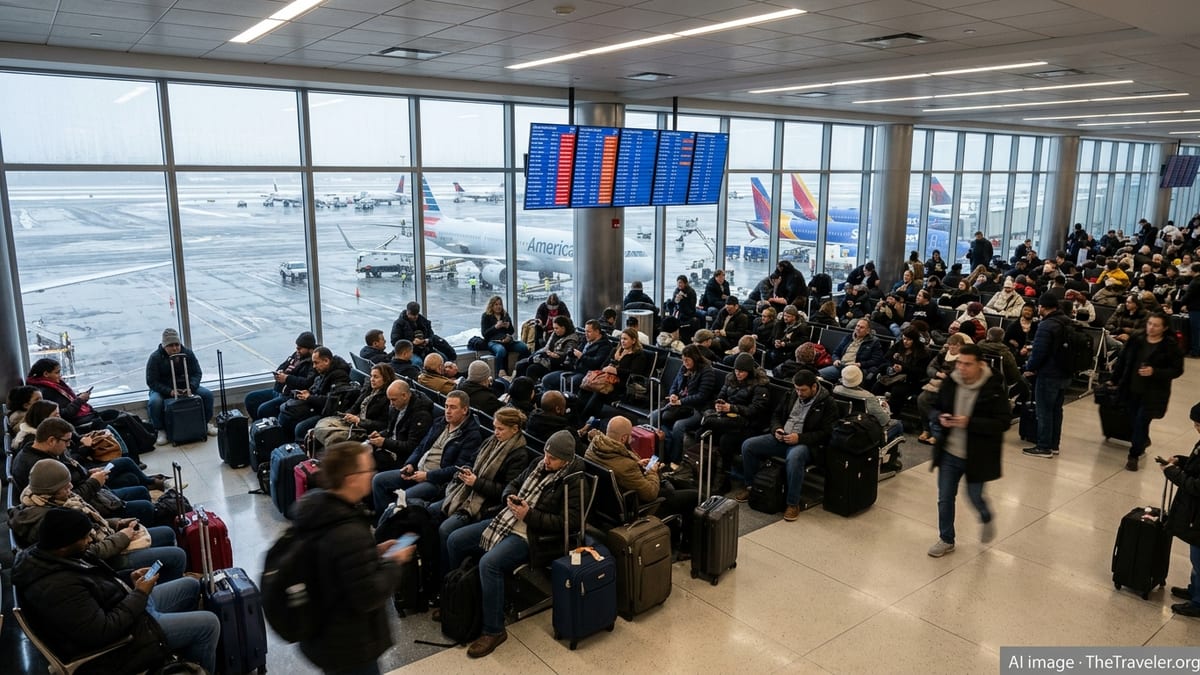
Freezing Showers Turn LaGuardia into a Logistical Bottleneck
LaGuardia emerged as one of the hardest-hit airports as bands of freezing rain and icy showers pushed through the New York metropolitan area. Publicly available flight-tracking data showed a sharp spike in scrapped and late-running departures, leaving passengers clustered around crowded gates and in extended check-in lines as airlines struggled to reposition aircraft and crew.
Terminal concourses saw growing numbers of travelers waiting on rolling delay estimates, with some departures repeatedly pushed back before ultimately being cancelled. Ground-handling operations slowed as ramp areas were treated for ice and aircraft required additional safety checks before pushback, compounding congestion on already tight schedules.
Weather summaries from aviation and meteorological services described a mix of freezing rain and low clouds reducing visibility around New York City airports, conditions that typically force tighter spacing between arrivals and departures. At LaGuardia, where runway capacity is limited and approach procedures are more restrictive than at some neighboring airports, modest deteriorations in weather can quickly ripple into large-scale schedule disruptions.
Network Impact Spreads Across U.S. and Canadian Hubs
The disruption was not confined to New York. According to published operational data, airports in Chicago, Boston, Detroit and Toronto also experienced notable interruptions as the same winter system spread northeast. These hubs serve as critical connection points, and delays in one region quickly cascaded into missed connections and extended layovers elsewhere.
In Chicago and Detroit, carriers adjusted schedules as mixed precipitation and marginal temperatures complicated runway and taxiway conditions, prompting additional deicing cycles and slower ground movements. In Boston and Toronto, reports indicated intermittent periods of freezing rain and sleet that required crews to periodically pause operations while surfaces were treated and aircraft re-cleared for departure.
Because many itineraries route through one or more of these hubs, even travelers departing from airports with relatively mild conditions encountered disruptions when their inbound aircraft or onward connections were delayed upstream in the network. This interdependence amplified the overall impact of the 129 cancellations and more than 500 delays recorded across the system.
Major Airlines Face Operational Strain
American Airlines, Delta Air Lines, Southwest Airlines, regional operator Republic Airways and several other carriers all reported elevated levels of disruption linked to the freezing conditions. Publicly available tracking platforms showed each of these airlines with a cluster of affected flights into and out of LaGuardia and the other impacted hubs, reflecting how widely the weather system intersected their route networks.
For network carriers such as American and Delta, a wave of cancellations at a key coastal hub can displace crews and aircraft throughout the country, leading to follow-on delays even after weather conditions begin to improve. Reports indicate that some routes were proactively trimmed to prevent aircraft from becoming stranded at airports facing the longest ground holds or most persistent icing issues.
Southwest and Republic, which rely heavily on fast, high-frequency turnarounds, appeared to experience particular strain where repeated deicing and ramp slowdowns eroded schedule buffers. Each extended turnaround cascaded into later departures across the day, adding to the total number of flights arriving well behind schedule.
Travelers Confront Long Waits and Limited Alternatives
For passengers already at LaGuardia when the freezing showers intensified, the rapid sequence of schedule changes left many with few immediate options. As cancellation counts rose, rebooking inventories tightened on remaining flights to Chicago, Boston, Detroit and Toronto, and alternative departures from nearby airports filled quickly.
Reports from travelers described long waits at service counters and customer support kiosks as they sought new itineraries, overnight accommodation or meal support. With the disruption spread across multiple airlines and major hubs, available seats on later flights were limited, especially for those traveling in groups or aiming to preserve tight international connections.
Some passengers opted to shift to rail or long-distance bus services where feasible, particularly between New York and Boston, while others chose to stay in the city and travel a day or more later once operations stabilized. However, for many long-haul and cross-border itineraries involving Toronto and other Canadian destinations, same-day alternatives were scarce.
Ongoing Weather and Operational Outlook
Meteorological outlooks issued during the day suggested that the band of freezing precipitation would gradually move out of the most densely trafficked air corridors, but that lingering patches of mixed precipitation and low ceilings could continue to affect evening and overnight operations. As a result, airlines were expected to keep reduced schedules and extended connection times in place until aircraft and crews could be realigned.
Industry data and recent historical patterns show that even a relatively short window of freezing showers can produce outsized disruption at capacity-constrained airports. Once large numbers of flights are cancelled or heavily delayed, it can take carriers several scheduling cycles to clear backlogs, reposition equipment and restore normal frequencies.
Travelers with upcoming departures through LaGuardia, Chicago, Boston, Detroit or Toronto were widely advised, through airline alerts and airport bulletins, to monitor their flight status closely and allow additional time at the airport. With hundreds still contending with the immediate effects of the current disruption, operational recovery efforts across the affected networks were expected to remain in focus into the next travel day.