

More news on this day
Spring travelers across the United States are facing fresh turbulence in early April 2026, as weather systems and air traffic constraints trigger a new wave of flight disruptions at several of the country’s busiest hubs.
Get the latest news straight to your inbox!
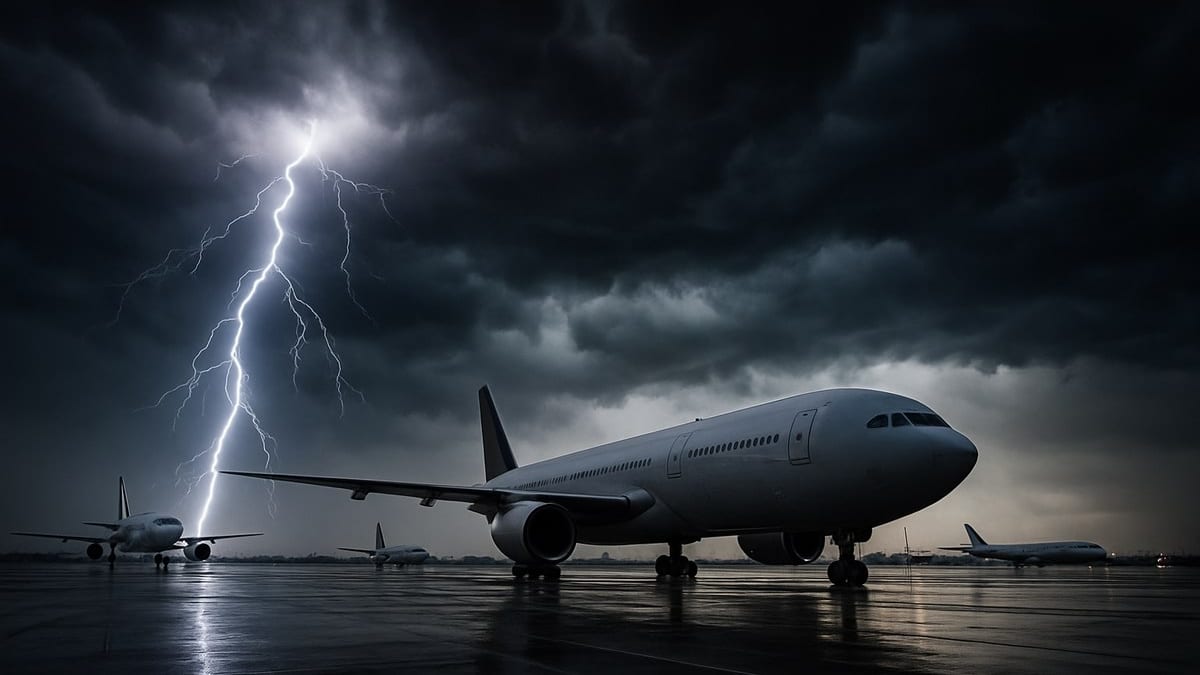
Stormy Start to April Compounds Easter Travel Backlogs
Publicly available flight tracking data and recent aviation coverage indicate that the latest disruptions build on an already strained network following the Easter holiday period. Severe thunderstorms, late season snow and strong winds disrupted thousands of flights between April 2 and April 4, with delays and cancellations concentrated at major hubs in the Midwest, Northeast and South. Reports point to more than 15,000 delays and several thousand cancellations over that long weekend, creating rolling backlogs that have spilled into the second week of April.
Industry analyses describe a now familiar pattern. When storms reduce capacity at one or two core hubs, aircraft and crews frequently end up in the wrong place, and federally mandated rest rules limit how quickly staff can be reassigned. Even as weather conditions improve, this mismatch continues to ripple through schedules for days. Observers note that the April disruptions are following this same trajectory, but are now intersecting with spring break traffic and steadily rising passenger volumes.
Travel data providers and trade publications highlight that U.S. airlines are carrying several million passengers per day across March and April, leaving limited slack to absorb shock events. Any loss of runway capacity, ground stop or flow restriction at a key airport can therefore have an outsized effect on domestic and transborder routes, especially where multiple carriers share congested airspace.
Chicago and Detroit See Repeated Weather-Driven Disruptions
In the Upper Midwest, Chicago O’Hare and Detroit Metropolitan Wayne County Airport have emerged as focal points of the current episode. Chicago has already faced multiple rounds of severe weather in recent weeks, including thunderstorms that prompted airlines to issue travel waivers for early April. Local news reports describe temporary ground stops and extended arrival holds as storms crossed northern Illinois, slowing operations and triggering long lines at security and rebooking counters.
In Detroit, regional travel publications report that April 11 brought major disruption at Detroit Metropolitan Wayne County Airport, with both domestic and international flights affected. Earlier in the month, on April 5, spring storms and operational challenges there were linked to more than one hundred delays and a series of cancellations. Routes connecting Detroit with other major hubs, including Atlanta and East Coast gateways, were particularly affected as late arriving aircraft caused knock on scheduling issues.
These problems come on top of a winter season marked by blizzard conditions across parts of the Midwest, which already exposed the vulnerability of hub centric airline operations to sustained bouts of bad weather. For travelers, the result in April has been another round of missed connections, extended tarmac waits and overnight stays as carriers work through backlogs.
Southern and Coastal Hubs Confront Ground Stops and Heavy Rain
Further south, Miami International Airport experienced fresh disruption on April 7 when a band of heavy rain and thunderstorms triggered a temporary ground stop for arriving flights. Local broadcast coverage described a period in the early morning when incoming traffic was halted while lightning and intense downpours moved across the airfield. Although the restriction was lifted later that morning, the pause contributed to clusters of delays and scattered cancellations through the rest of the day.
Earlier in the month, the Easter weekend storm system brought severe weather to airports across the South, including Houston and other Gulf Coast hubs. Aviation observers note that travel waivers issued around these events encouraged some passengers to rebook away from the worst of the weather but could not fully prevent congestion, as rescheduled travelers converged on the same limited alternative flights.
In Central Florida, recent reporting has highlighted how disruptions around Orlando International Airport have sent shockwaves through the national network. As a major leisure and family travel gateway, Orlando’s schedule is tightly interconnected with hubs across the Northeast, Midwest and West. When storms or airspace constraints slow departures there, downstream delays can quickly emerge as far away as New York, Chicago or Denver, particularly on days when load factors are already high.
Network Knock-On Effects at New York, Dallas and Atlanta
While the latest April disturbances have often originated with storms in the Midwest and South, their effects have been strongly felt at several of the nation’s largest transfer hubs, notably in the New York area, Dallas and Atlanta. Publicly available aviation statistics from recent years identify these airports among the country’s top hubs for both traffic volume and cancellations, a reality that is again playing out in early April as tight schedules collide with adverse conditions elsewhere.
Reports focusing on network performance describe how delays at an origin airport like Chicago or Orlando can cascade into holding patterns and schedule reshuffles at New York’s major fields, including LaGuardia and Newark. With limited runway capacity and dense traffic along the Northeast corridor, even modest flow restrictions can extend average delay times for arrivals and departures during peak hours.
At Dallas Fort Worth and Hartsfield Jackson Atlanta, airline operations are organized around large banks of connecting flights. Industry coverage notes that when thunderstorms or volume constraints reduce capacity into or out of these hubs, missed connections multiply quickly. Aircraft that arrive late for one bank may not be turned in time for the next, and crews can reach duty limits before completing their assigned sequence, forcing further rescheduling.
Travelers Face Another Uncertain Weekend as Storm Season Continues
With April storm season still in its early stages, aviation analysts and travel publications caution that the latest disruptions may not be the last significant episode this spring. Forecast discussions from meteorological agencies point to additional rounds of thunderstorms and unsettled weather across parts of the central and eastern United States in the coming days, raising the prospect of renewed turbulence for flight operations.
For passengers with itineraries touching the hardest hit hubs, current guidance from travel experts centers on preparation and flexibility. Recommendations emphasize checking flight status frequently through airline channels, allowing longer connection windows, and considering earlier departures when possible to reduce exposure to afternoon and evening storm cycles. Some commentators also suggest monitoring conditions at connecting hubs, not just origin and destination airports, to get a clearer sense of potential risk.
Despite the mounting frustration among travelers caught up in delays and cancellations, publicly available data shows that most flights are still operating, albeit with longer than normal journey times on certain days and routes. As airlines work to restore schedules after each wave of storms, the experience in early April underlines how quickly conditions at a handful of major hubs can reverberate across the wider U.S. air travel network.