

More news on this day
A fresh surge of flight cancellations across the Gulf’s busiest hubs is unsettling travel plans worldwide, as regional tensions and airspace risks continue to squeeze already fragile airline schedules.
Get the latest news straight to your inbox!
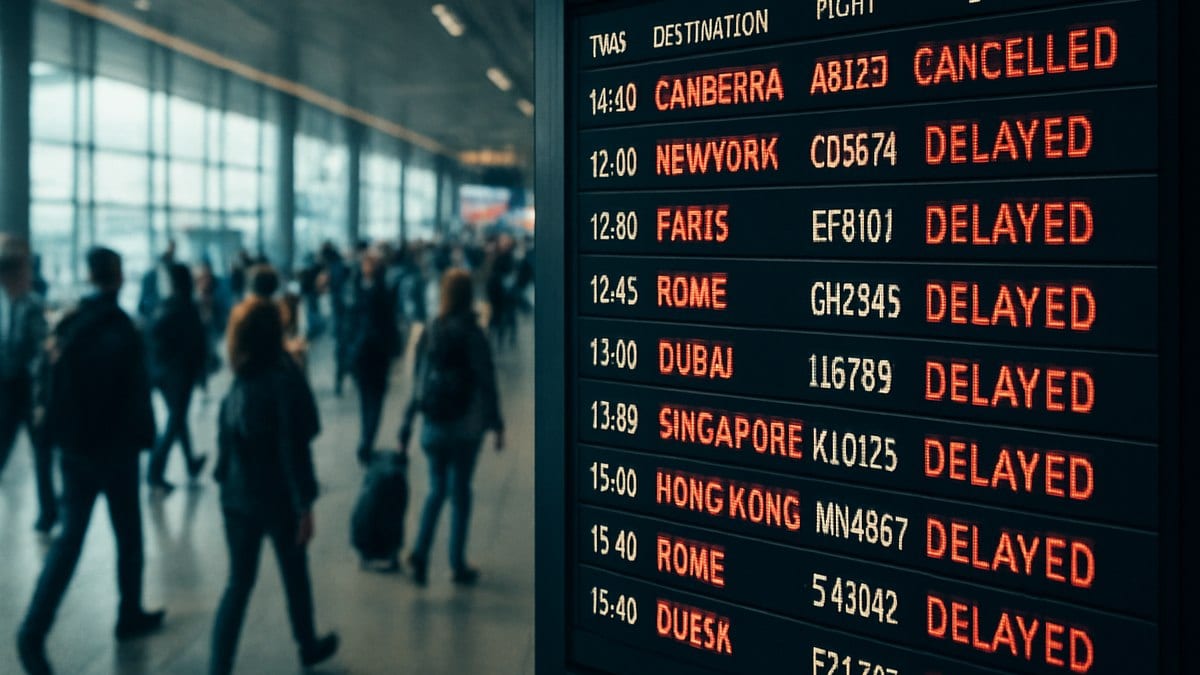
Gulf Hubs Face Renewed Disruption
Major Gulf airports including Dubai, Abu Dhabi, Doha and Bahrain are contending with a new round of flight cancellations and schedule cuts as the regional security crisis enters its sixth week. Publicly available airline updates and travel advisories indicate that operations that had tentatively resumed in March are again being reduced, with limited corridors open and many routes temporarily suspended.
Dubai International, typically one of the world’s busiest international hubs, is operating a pared-back schedule after waves of airspace closures and missile and drone activity across the wider region triggered repeated shutdowns and diversions in March. Industry summaries suggest that thousands of flights through Gulf hubs have been cancelled or heavily delayed since late February, with elevated levels of day-to-day disruption continuing into April.
In Abu Dhabi and Doha, carriers have reintroduced selected services but continue to trim frequencies and cancel departures where overflight permissions, insurance coverage or crew safety thresholds cannot be met. Regional aviation bulletins describe these hubs as being in a partial recovery phase, with the risk of fresh interruptions remaining high as the conflict evolves.
Bahrain and Kuwait, which also sit on key north–south and east–west routings, remain under varying levels of constraint, limiting their ability to absorb overflow traffic from the United Arab Emirates and Qatar. As a result, the wider regional network remains fragmented, and long-haul itineraries that rely on smooth Gulf connections are particularly exposed to last-minute changes.
Airlines Extend Suspensions and Trim Networks
Airlines based both inside and outside the Middle East are extending temporary suspensions of services into Gulf hubs, creating a patchwork of availability that changes by the day. European and Asian carriers have announced prolonged pauses on flights to Dubai, Doha, Abu Dhabi and Sharjah through March and into April, citing regional tensions and constrained routing options.
Travel industry round-ups show that some European airlines have suspended Dubai and Doha services well into the second half of March, while others have maintained only skeleton operations or rerouted passengers via alternative gateways where feasible. Several carriers have also halted flights to destinations such as Riyadh, Kuwait City and Bahrain, further shrinking the number of viable one-stop connections between Europe, Asia and Africa.
Gulf-based airlines are likewise operating reduced schedules. Publicly available statements and booking data indicate that flag carriers have prioritised point-to-point travel for residents and essential journeys, while cutting or consolidating high-frequency connecting services. Airlines are also making greater use of widebody aircraft on fewer departures in an effort to preserve capacity while limiting exposure to volatile airspace conditions.
In parallel, travel agents and online booking platforms report that rebooking windows and waiver policies remain in effect for many Middle East itineraries, though availability on alternative flights is increasingly tight. Passengers are being urged through public channels to verify flight status on the day of travel and to anticipate changes to routings and transit times at short notice.
Knock-on Effects Stretch Beyond the Gulf
The latest cancellations at Gulf hubs are bringing renewed disruption far beyond the region, as airlines adjust global networks that depend heavily on Middle East connections. Aviation analytics briefings suggest that cumulative cancellations across the Gulf and Levant since late February have reached into the tens of thousands, cutting deeply into capacity between Europe and South Asia, Southeast Asia and Australasia.
Pakistan has been among the most visible examples of this ripple effect. Local media coverage from early April notes that dozens of flights from cities including Karachi, Lahore, Islamabad and Peshawar were abruptly cancelled on routes to Dubai, Abu Dhabi, Sharjah, Bahrain, Kuwait, Riyadh, Jeddah, Fujairah and Doha. Passengers faced long queues and extended airport waits as airlines attempted to consolidate services and manage the loss of key Gulf transit points.
Elsewhere, travellers in Europe, North America and East Asia who had booked itineraries via Dubai or Doha are encountering extended journey times, forced stopovers or, in some cases, outright trip cancellations. A portion of demand has shifted to alternative one-stop routings that bypass the Gulf, such as nonstop Europe–Asia services or connections via Istanbul and select South Asian hubs, but capacity on these routes is limited and fares have risen accordingly.
Corporate travel planners and logistics managers are also feeling the strain, with meeting schedules, crew rotations and cargo flows all affected by the reduced reliability of Gulf hub operations. Industry risk assessments highlight the potential for further volatility, noting that even airports that remain technically open may see significant day-of-operation cancellations if security conditions deteriorate or new airspace advisories are issued.
Gradual Reopenings Tempered by Ongoing Risk
Despite the fresh wave of cancellations, there are signs of cautious reopening at some Gulf airports. Recent travel advisories from regional agencies and major booking platforms indicate that Dubai, Al Maktoum, Sharjah, Ras Al Khaimah and Fujairah have all resumed limited commercial services, with airlines steadily adding back select regional and long-haul routes where safe corridors have been confirmed.
Saudi Arabia’s main airports at Riyadh, Jeddah and Dammam are operational but continue to experience frequent cancellations and diversions linked to overflight restrictions and evolving conflict dynamics. Doha and Abu Dhabi are similarly described in recent industry reports as operating under constrained conditions, with carriers reviewing schedules on a rolling basis and making near-term adjustments as security notices and insurance guidance are updated.
Aviation security and infrastructure briefings emphasise that the primary constraint is not only physical damage at certain facilities but also the complex overlay of closed or restricted airspace, electronic interference, and heightened insurance requirements for flights crossing sensitive zones. This combination means that even routes that appear geographically distant from active hostilities can be affected if they rely on waypoints or flight information regions that are currently restricted.
Advisories issued in late March and early April consistently describe the regional outlook as volatile, with the potential for sudden escalations that could lead to renewed airport closures or airspace shutdowns. For airlines and passengers, this creates an environment in which schedules are inherently provisional, and recovery is likely to be uneven across different hubs and markets.
What Travellers Should Expect in the Coming Weeks
For travellers with upcoming itineraries through the Gulf, the latest cancellations underscore the need for flexibility and close monitoring of official travel information. Public guidance from airlines and travel agencies stresses that passengers should avoid heading to airports without confirmed, same-day flight details and should be prepared for alternative routings or date changes.
Industry observers note that, while some capacity is gradually returning, it may be several more weeks before a clear pattern of stable operations emerges at the major Gulf hubs. In the interim, travellers transiting between Europe and Asia, or connecting from Africa and the Indian subcontinent via the Gulf, are likely to continue facing reduced flight options, longer journey times and potential overnight layovers created by irregular schedules.
Travel providers are encouraging customers to build additional time into itineraries that involve the region, especially where onward cruise departures, major events or nonrefundable hotel stays are concerned. Flexible tickets, comprehensive travel insurance that specifically addresses disruption in conflict-affected regions, and contingency planning for alternative routes are being highlighted as prudent measures in publicly available advice.
With the geopolitical situation still fluid, aviation analysts expect that airlines will keep adjusting their networks on a short lead time, adding or removing flights as security assessments evolve. For now, the Gulf’s role as a seamless global transfer hub has been temporarily curtailed, and both regional residents and international transit passengers are bearing the brunt of a travel environment defined by uncertainty.