

More news on this day
Air travelers across parts of the United States are facing a fresh wave of flight disruptions in April 2026, as severe weather systems, holiday crowds and a stretched aviation network converge to snarl operations in at least five states.
Get the latest news straight to your inbox!
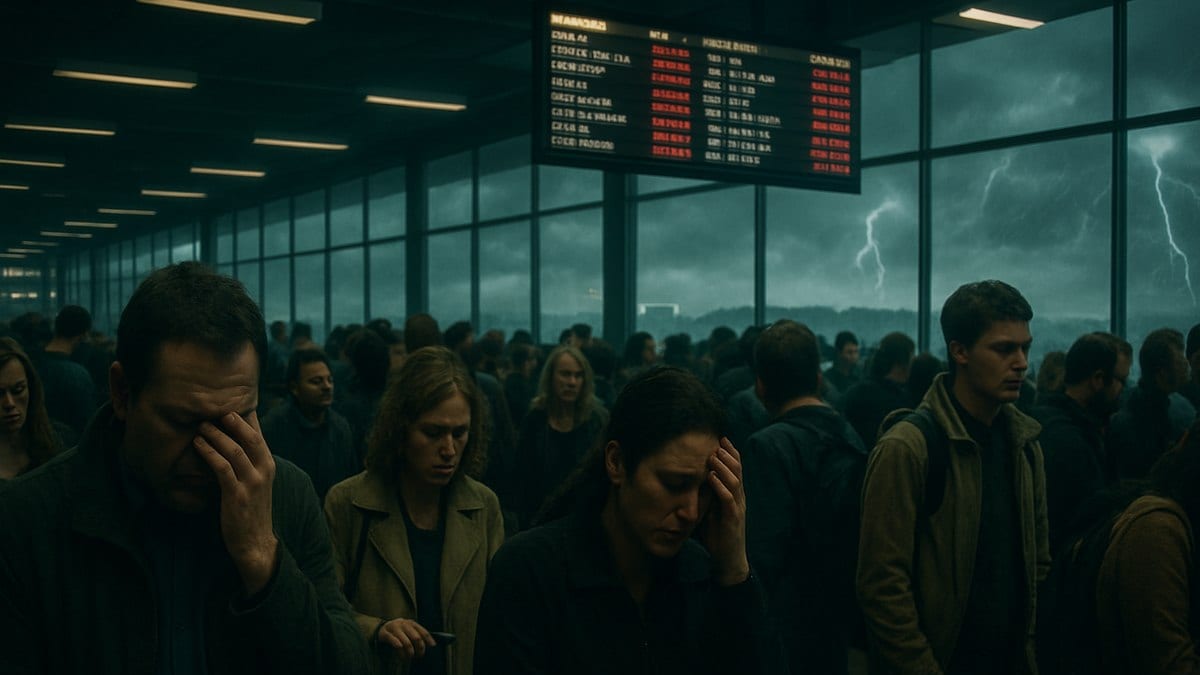
Storm Systems Drive New April Turmoil
Early April has brought a series of volatile storm systems sweeping across large sections of the country, triggering repeated bouts of flight disruption. Reports from aviation tracking platforms and travel advisories indicate that thunderstorms, high winds and intense rain bands have been the primary catalysts for cascading delays and cancellations this month.
On April 2, thunderstorms over northern Illinois prompted a ground stop impacting flights at Chicago O’Hare and Midway, temporarily halting some arrivals and forcing departure queues to build across airline networks. By the Easter period from April 2 to April 4, nationwide data compiled by outlets such as Newsweek and major financial publications pointed to more than 15,000 delays and hundreds of cancellations across the United States as storms swept through key hubs.
These conditions have not been confined to a single region. Analysts tracking spring weather patterns highlight a shifting corridor of severe storms stretching from the Midwest into the Southeast and up the East Coast, repeatedly intersecting some of the country’s busiest airports. As each system passes through, knock on effects ripple into otherwise clear airspace, as aircraft and crews are left out of position for subsequent rotations.
Insurance and risk industry briefings on the Easter storm period describe the events as part of a broader early April outbreak, with losses tied to severe convective weather and localized flooding in several states. That backdrop has heightened concern among airlines and travel planners that even brief bursts of bad weather can now trigger disproportionately large operational shocks.
Five States See Concentrated Disruption
Within this wider national picture, at least five states have emerged as focal points for the latest April disruptions: Illinois, Georgia, Florida, New York and Washington. Each plays host to major hubs or high volume airports that serve as critical nodes in domestic and international networks.
In Illinois, the combination of a ground stop at O’Hare and weather related constraints at Midway early in the month forced carriers to meter arrivals and departures, creating rolling delays that echoed across connecting banks. Publicly available data shows that even relatively short ground delays in Chicago can quickly disrupt schedules for flights heading to both coasts.
In Georgia, Hartsfield Jackson Atlanta International Airport has once again been a barometer of system strain. Flight tracking aggregators report hundreds of delays tied to spring storms and congestion, with Atlanta’s role as a primary connecting hub meaning that disruptions there spill into routes serving smaller cities throughout the South and Midwest.
Florida and New York, both central to Easter holiday and spring break travel, have seen repeated weather and demand related bottlenecks. Miami and Orlando have faced thunderstorms and heavy traffic linked to leisure demand, while New York’s LaGuardia, John F. Kennedy and Newark airports have navigated waves of delays as storm lines and low clouds have moved up the Eastern Seaboard. On the West Coast, major airports in Washington state, including Seattle, have also reported elevated delay levels as unsettled weather and knock on effects from inland hubs combine to slow operations.
Holiday Demand Magnifies Operational Strain
The timing of the latest disruptions has coincided with the peak of Easter and late spring break travel, a period when airlines are already operating close to capacity. Industry coverage in national newspapers notes that carriers expected to transport millions of passengers daily through March and April, leaving little slack in the system when weather or air traffic control constraints arise.
During the Easter weekend itself, analyses based on FlightAware and similar platforms showed that single day totals ran into thousands of delays and hundreds of cancellations for flights within, into or out of the United States. These figures followed a pattern established earlier in 2026, when winter storms produced some of the highest cancellation counts since the pandemic, underscoring how tightly scheduled operations have become.
Travel industry outlets emphasize that when aircraft are scheduled on dense, back to back rotations, disruptions at one or two hubs can leave planes and crews far from where they need to be for subsequent flights. This has been evident in April, with travelers on routes far from active storm cells still encountering late departures because their aircraft arrived behind schedule from a weather affected city.
As a result, airports in the five heavily affected states have frequently reported crowded terminals and long customer service lines, even when local skies appeared relatively calm. For many passengers, the operational strain has manifested as missed connections, last minute itinerary changes and overnight stays in unplanned cities.
Data Highlights Scale of April Flight Disruptions
Multiple data snapshots assembled by travel rights organizations, analytics firms and newsrooms illustrate the scale of the April 2026 disruption. One widely cited analysis from early April reported more than 3,500 disrupted flights in a single day, including over 3,400 delays and more than 100 cancellations, as storms affected airports from Miami and Atlanta to New York, Los Angeles and Seattle.
Other aggregations covering the Easter period pointed to more than 5,600 delayed flights and nearly 500 cancellations on just one Saturday, with overall counts across the long holiday weekend climbing far higher. Travel focused outlets have noted that, taken together, early April totals build on an already elevated baseline of disruption from March, when lingering winter storms had slowed operations across the eastern half of the country.
Risk assessments compiled by the insurance sector point to an early April severe weather outbreak generating multibillion dollar economic losses, including impacts on transport and logistics. Although these reports do not break out aviation specific costs, they underline the link between increasingly volatile weather and the reliability of tightly coupled travel networks.
Observers tracking disruption patterns caution that these figures almost certainly understate the practical inconvenience faced by travelers. Many affected passengers experience multiple rolling delays rather than outright cancellations, while others rebook before flights are officially listed as disrupted, making the true tally of impacted journeys considerably higher than headline numbers alone suggest.
Travelers Confront a More Fragile Flight Network
The fresh wave of April disruptions across five U.S. states is contributing to a growing perception among travelers that the flight network has become more fragile. Publicly available investigations by government oversight bodies in recent years have highlighted how staffing, aircraft availability and scheduling practices interact with weather to shape both delays and cancellations.
Current April conditions fit that pattern. Reports indicate that when storms or air traffic control restrictions appear, airlines must rapidly adjust by rerouting aircraft, trimming schedules or issuing waivers that allow passengers to shift their plans without penalties. While these steps can reduce short term congestion, they also redistribute disruption, sometimes concentrating it at secondary airports away from headline storm zones.
Travel advisories and consumer advocacy guidance emphasize that passengers flying through hubs in affected states stand a higher risk of disruption for at least several days after major weather events. Even as skies clear, crew duty limits, aircraft inspections and lingering backlogs can force airlines to keep altering schedules, especially on regional routes and late evening departures.
Looking ahead through the rest of April 2026, analysts quoted in industry coverage suggest that travelers should expect intermittent pockets of disruption whenever new storm systems intersect with peak demand days. With key hubs in Illinois, Georgia, Florida, New York and Washington already under pressure, the latest turmoil reinforces how quickly routine spring weather can now cascade into nationwide delays for flyers.