

More news on this day
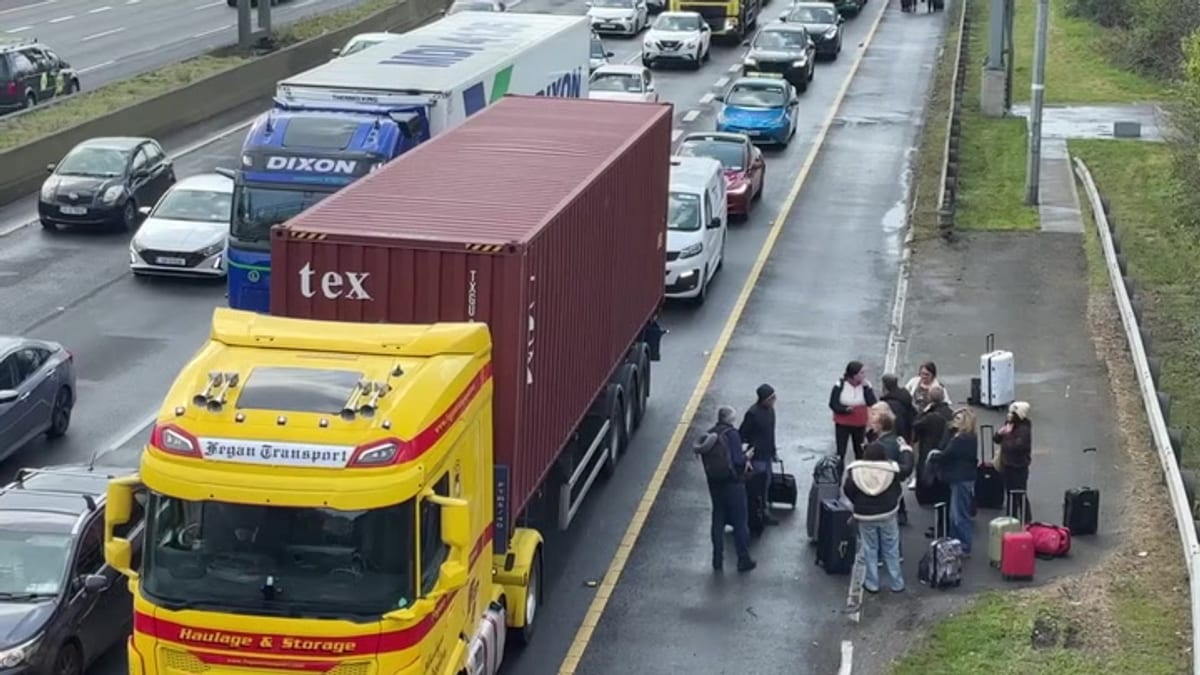
Fuel price protests across Ireland have brought sections of the motorway network to a standstill this week, with some holidaymakers reporting that they abandoned vehicles and walked along busy roads to reach airports in time for departing flights.
Get the latest news straight to your inbox!
Motorway Gridlock Leaves Travellers on Foot
Rolling fuel protests that began on 7 April have caused long tailbacks on major Irish routes, including parts of the M1 and M50 corridors serving Dublin Airport. Accounts shared on travel forums and social media describe coaches coming to a halt on approach roads, with passengers deciding to disembark and continue their journey on foot with luggage in hand.
One recent post from a cross-border coach user described people “literally walking down the M1” after their service was trapped in a blockade, capturing the sense of urgency among travellers trying to avoid missed flights. Similar comments on Ireland-focused travel boards refer to partial closures and severe slowdowns on stretches of motorway normally relied upon as the fastest route to the terminal.
Publicly available information from Dublin Airport and Irish transport operators indicates that services have remained technically operational, but access has been significantly complicated. Buses have been diverted off main approaches, journey times have become unpredictable and travellers have been warned that reaching the terminal can take far longer than usual during peak protest hours.
The resulting images of passengers walking along hard shoulders and service roads underline how quickly a surface transport issue can spill over into the aviation system, even when airport runways and terminals continue to function normally.
Fuel Price Anger Spreads Across Key Transport Corridors
The current wave of Irish fuel protests has focused on the high cost of petrol and diesel and wider cost of living pressures. Convoys of lorries, tractors and private cars have staged slow drives and rolling blockades around major arteries such as the M50 Dublin ring road and other national routes, creating bottlenecks that ripple outward across the country.
Coverage in Irish and international outlets points to blockages not only around Dublin but also on bypasses near Limerick and Portlaoise, and on routes serving regional hubs. Traffic updates circulated by motorists suggest that some slip roads and junctions have been intermittently closed or heavily restricted, forcing drivers onto local roads that are quickly overwhelmed.
The tactics mirror go slow and blockade actions seen in other European countries in response to rising fuel prices, but Ireland’s relatively concentrated motorway network means that disruption at a handful of junctions can affect access to multiple cities and airports at once. Travel advisory sites describe a patchwork of delays, tailbacks and occasional clear runs, making it difficult for passengers to predict how long any given journey will take.
For holidaymakers on tight schedules and with non-flexible tickets, the uncertainty is proving particularly stressful. Reports indicate that some travellers are building in several additional hours of buffer time and still encountering unexpected delays close to departure.
Airports and Bus Operators Struggle to Keep Passengers Moving
Airport and transport operators have responded by issuing frequent online travel updates and urging passengers to allow significantly more time for their journeys. Dublin Airport has used its official channels to highlight protest activity affecting the wider road network and to recommend that travellers consider alternative routes or modes of transport where possible.
Bus operators including intercity and cross-border services have confirmed diversions and delays on key routes linking regional towns and cities with the airport. Some services have reportedly been curtailed before reaching central Dublin due to blockages, leaving passengers to find other ways to complete the final leg to the terminal.
Rail services, including trains into Dublin, have been presented by some travel advisers as a relatively reliable first stage for airport-bound journeys, with passengers then transferring to buses, taxis or ride hailing vehicles for the final stretch. However, with bridges, quays and radial roads in the capital also subject to congestion, even these multi leg strategies are not guaranteed to be smooth.
Information shared by travellers suggests that flexibility is proving crucial. Those who are able to switch departure times, depart from different regional airports or adjust itineraries at short notice are having more success avoiding the worst of the disruption, while those locked into early morning or evening peak flights face the greatest risk of being caught in gridlock.
Holiday Plans Tested as Peak Travel Season Nears
The timing of the protests, coinciding with spring breaks and the build up to the main summer holiday season, is amplifying the impact on leisure travellers. Irish and overseas holidaymakers using Dublin as a gateway for European sun destinations or long haul trips are among those most affected by motorway disruption and changing bus schedules.
Online discussions among travellers planning imminent departures from Ireland show a growing focus on contingency planning. Holidaymakers are debating whether to book airport hotels, leave their cars at park and ride facilities further from the capital or share taxis and private transfers to reduce the number of vehicles caught in potential blockades near airport junctions.
Some tour operators and travel advisors are beginning to incorporate explicit protest related guidance into their pre departure information, reminding clients that travel insurance typically does not cover missed departures caused by road traffic disruption unless additional cover has been purchased. The message emerging across many platforms is that personal planning and early departure from home are currently as important as passports and boarding passes.
For families with children, older travellers and those with limited mobility, the prospect of walking any length of motorway or carrying luggage over long distances is particularly daunting. As a result, there is rising interest in alternative routes that minimise exposure to potential standstills, even if they add distance or cost to the journey.
Practical Advice for Travellers Facing Ongoing Protests
With further protest activity anticipated, travel planning experts are urging passengers to track conditions closely in the 24 hours before departure. Real time traffic feeds, public transport alerts and updates from airlines and airports are being highlighted as essential tools for assessing when to set off and which route to take.
Holidaymakers are also being encouraged to build in generous time margins. For many, that means aiming to arrive at Dublin Airport at least an hour earlier than usually recommended and, where possible, choosing flights outside the busiest commuting and protest periods. In some cases, travellers are opting for very early morning departures from home to reduce the risk of encountering rolling blockades.
Another recurring piece of advice is to consider backup options in case a planned route becomes impassable. This can include identifying secondary motorways, park and ride facilities, rail links into Dublin or pre booked taxis that can reroute at short notice. Travellers reliant on coaches are being advised to confirm with operators that services are running as scheduled and to have a taxi or rideshare number on hand in case of diversions.
While the sight of holidaymakers walking along motorways to reach departures captures the most dramatic side of the current disruption, reports from across Ireland suggest that with careful preparation it is still possible to complete most journeys. For now, however, anyone flying into or out of Dublin is being urged to treat access to the airport as a potential pinch point and to plan accordingly.