


More news on this day
Kuala Lumpur has joined Singapore, Bangkok, New Delhi, Tokyo Haneda and Seoul Incheon at the center of a sprawling web of disruptions, as cascading fuel routing constraints and airspace bottlenecks trigger more than 2,600 single-day flight delays across some of Asia’s busiest corridors, according to aggregated flight-tracking data and regional aviation reports.
Get the latest news straight to your inbox!
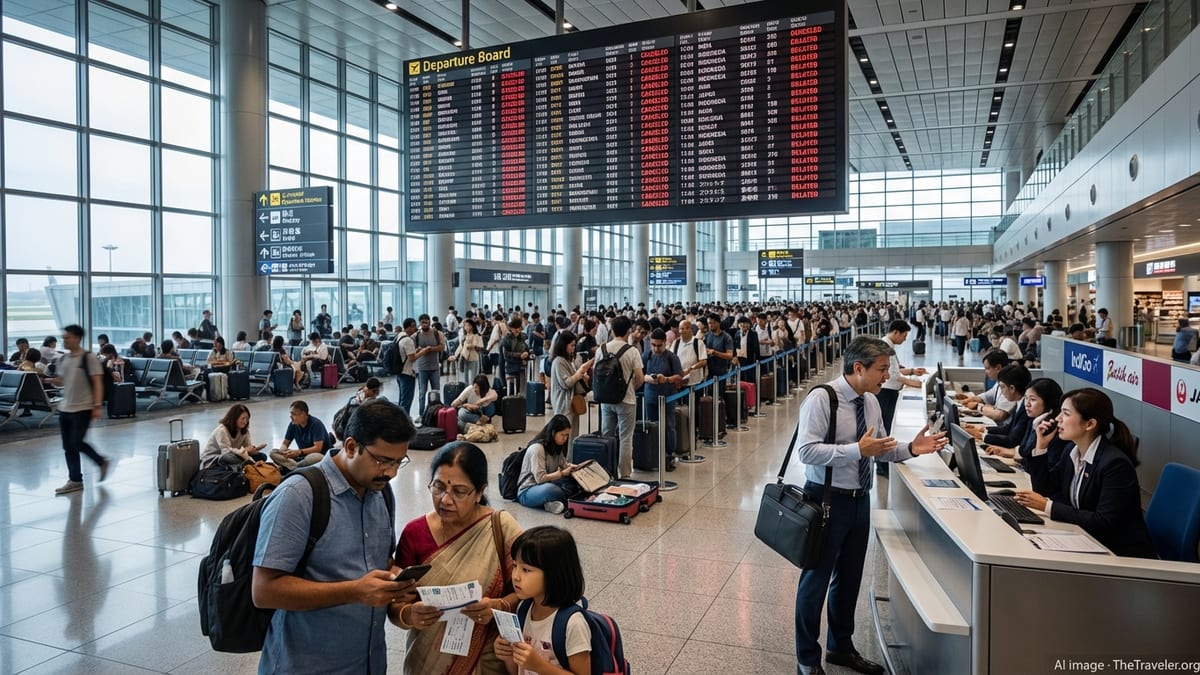
Fuel Supply Strains Ripple Across Major Asian Hubs
Recent disruptions in regional jet fuel logistics and refining capacity are converging with already stretched airline schedules, creating a fragile operating environment at Asia’s primary connecting hubs. Publicly available aviation and energy market bulletins indicate that jet fuel availability and routing flexibility have tightened significantly, particularly for carriers operating long-haul and multi-leg itineraries through Southeast and East Asia.
Industry data and regional reporting show that Singapore Changi, Bangkok Suvarnabhumi, Kuala Lumpur International, New Delhi Indira Gandhi, Tokyo Haneda and Seoul Incheon have all seen surges in delayed departures and arrivals on select days as carriers rework fuel uplift strategies, adjust alternates and refile flight plans. These hubs sit at the crossroads of dense regional networks and intercontinental services, so even modest constraints at one point in the chain can quickly translate into missed slots and knock-on delays across the region.
A combination of higher jet fuel prices, refinery outages and tighter pipeline and tanker capacity has increased the need for complex refueling patterns, particularly on routes that rely on intermediate stops. Aviation market analyses published in recent weeks describe airlines trimming frequencies, consolidating flights and shifting routings to manage uplift and cost, narrowing the margin for recovery when schedules come under stress.
As a result, operational days in which more than 2,600 flights across the broader Asian network record delays of at least 15 minutes are becoming more common during peak travel periods, according to aggregated flight-tracking dashboards that monitor on-time performance and airport congestion in real time.
Kuala Lumpur’s Role in a Choked Southeast Asian Corridor
Kuala Lumpur International Airport’s emergence as a significant transfer point between South Asia, Southeast Asia and long-haul routes to Europe has magnified the impact of any disruption in regional fuel routing. Traffic data for 2024 highlight strong growth on intercontinental sectors linking Kuala Lumpur with European and Middle Eastern hubs, while low-cost and full-service carriers continue to expand short-haul connectivity to Bangkok, Singapore and key Indian cities.
When flight plans are adjusted to account for alternate airports, holding fuel and potential diversions, Kuala Lumpur-based operations often must rebalance uplift between origin, intermediate and destination airports. Aviation planning documents and regional performance bulletins show that even small discrepancies in expected versus available fuel can force last-minute payload restrictions, departure holds or schedule swaps, particularly on heavily booked departures to Bangkok, Singapore and North Asian hubs.
On days when fuel routing constraints coincide with weather or air traffic flow restrictions, delays across the Kuala Lumpur network can quickly propagate. Flights arriving from secondary cities in Indonesia, Vietnam or India that land behind schedule risk missing their onward departure slots, complicating the outbound bank of evening long-haul and regional services. In turn, missed slots at Kuala Lumpur can remove critical capacity on itineraries that connect through Singapore, Bangkok, Haneda or Incheon, reinforcing the pattern of congestion throughout the corridor.
Travel forums and passenger reports in recent months have described itineraries unraveling after a single delayed arrival into Kuala Lumpur triggered missed connections downline, including onward sectors to Bangkok and Seoul that were already operating with limited spare capacity.
Singapore, Bangkok and Delhi Struggle to Absorb Schedule Shocks
Singapore and Bangkok, long-established as primary gateways for Southeast Asia, have been especially exposed to the latest round of disruptions. Singapore’s extensive long-haul network to Europe, North America and Australia, combined with dense regional connectivity to Malaysia, Indonesia and Thailand, means aircraft are often scheduled on tight turnarounds. When carriers adjust fuel uplift or change routing to manage supply and cost, those tight turns become more vulnerable to slippage.
Bangkok’s dual-airport system, with Suvarnabhumi and Don Mueang sharing a mix of full-service and low-cost traffic, adds another layer of complexity. Published coverage and traveler accounts describe a patchwork of delays and schedule changes as some carriers reduce frequencies, temporarily suspend lightly trafficked routes or retime flights to manage crew and fuel. This has left certain corridors, such as late-night or early-morning departures to secondary cities, with fewer recovery options if an inbound aircraft is late.
New Delhi, a key junction for flows between Europe, the Middle East and Southeast Asia, has also been affected. Publicly available flight statistics and traveler reports point to a pattern in which late-arriving inbound services compress turnaround times and shrink the buffer needed for refueling, crew changes and maintenance checks. When fuel routing issues constrain flexibility, airlines operating from Delhi face a choice between holding flights for connecting passengers and crews, or departing closer to schedule at the risk of stranding travelers who miss tight connections.
The net effect is a corridor in which a delay in one hub rapidly surfaces as missed connections, rolling gate changes and rebookings in another, with Kuala Lumpur now firmly embedded in that chain of vulnerability.
Tokyo Haneda and Incheon Highlight Network Fragility
Tokyo Haneda and Seoul Incheon, two of the most critical North Asian hubs, illustrate the global nature of the current disruption. Both airports serve as major transfer points for trans-Pacific and intra-Asian traffic, with schedules that depend on precisely timed arrival and departure waves to feed onward connections to North America, Europe and within Asia.
Recent episodes of regional weather disruption and temporary airspace restrictions have shown how limited slack there is in these systems. Publicly available flight-tracking data from such days indicate that even short ground stops or departure flow controls at one of the hubs can push dozens of flights into delay categories, particularly for evening banks when aircraft and crews are nearing daily operating limits.
In this environment, fuel routing constraints compound the problem. Airlines have less ability to tanker fuel from alternative airports, must plan more conservative reserves, or find themselves subject to intermittent supply restrictions at specific outstations. That can result in additional technical stops, extended routings or reduced cruising speeds, all of which increase block times and further erode on-time performance.
Reports from recent disruption days show that Incheon and Haneda have each experienced spikes in delayed departures and arrivals aligned with network-wide shocks elsewhere, underscoring how interlinked scheduling, fuel logistics and airspace management have become across the wider Asian system.
Passengers Confront Longer Journeys and Greater Uncertainty
For travelers, the confluence of fuel routing pressures and crowded skies is translating into longer journeys and greater uncertainty, even on routes that are not directly affected by local shortages. Passenger accounts from across the region describe trips extended by several hours, missed connections at Kuala Lumpur, Singapore or Bangkok, and last-minute rerouting via alternative hubs such as Tokyo Haneda or Incheon.
Reports indicate that airlines are increasingly advising passengers to allow more time for connections, particularly when itineraries string together multiple regional legs through these congested hubs. Travel advisories and online booking guidance commonly recommend longer minimum connection times through Southeast Asian and North Asian gateways during peak travel periods, in an acknowledgment of the reduced resilience of current schedules.
Travelers are also being encouraged, through airline notices and airport information channels, to monitor real-time flight status tools and be prepared for sudden gate changes or revised departure times. With aircraft and crews operating closer to regulatory duty limits, a delay of even an hour on an early sector can cascade through an aircraft’s entire daily pattern, affecting flights many time zones away.
While aviation regulators and infrastructure planners in the region have outlined long-term measures to bolster resilience, including additional runway capacity, modernized air traffic management systems and diversified fuel supply chains, most of these initiatives will take years to fully materialize. In the near term, the combination of tight fuel routing, packed schedules and volatile demand suggests that Asia’s key air corridors, with Kuala Lumpur now firmly in the mix, will continue to face days when more than 2,600 flights fall behind schedule.