

More news on this day
Global air travelers are facing a fresh wave of price shocks as airlines around the world move to raise fares, fuel surcharges and fees in response to a sharp spike in jet fuel costs linked to the Iran conflict and disruption in the Strait of Hormuz.
Get the latest news straight to your inbox!
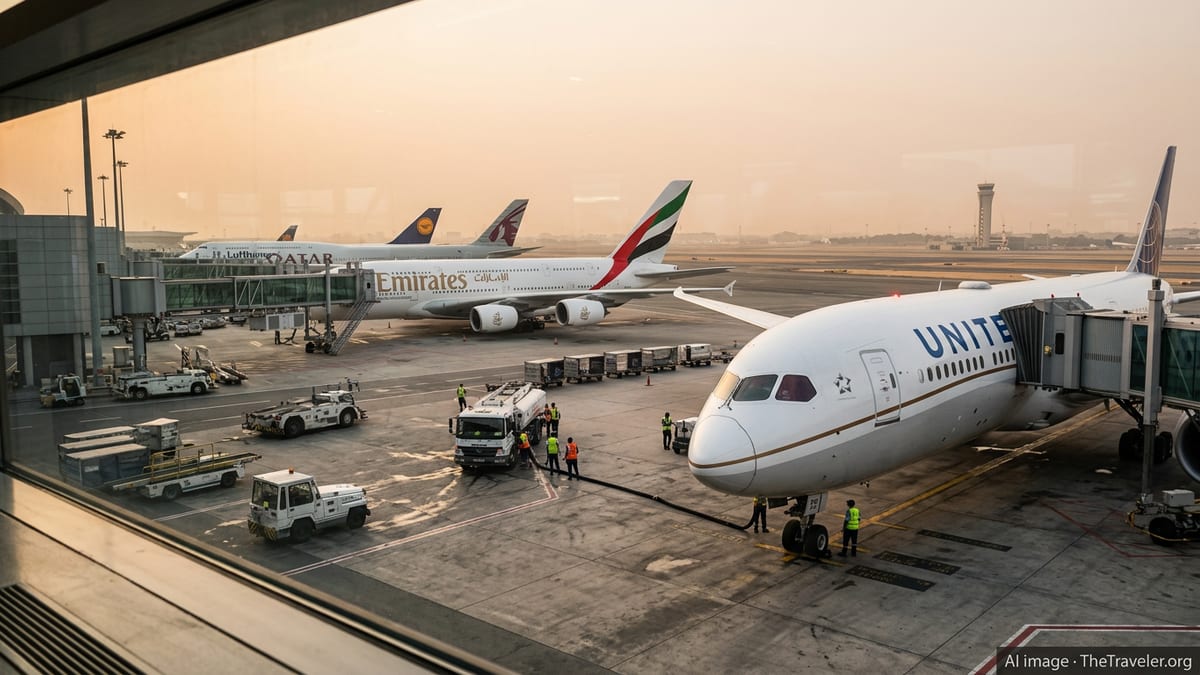
Jet Fuel Spike Turns Into Worldwide Ticket Pressure
Jet fuel prices have climbed at their fastest pace in years, propelled by the Iran war and turbulence in the Strait of Hormuz, a critical artery for global oil shipments. Industry monitors indicate that average jet fuel prices in key markets have risen sharply since late February, in some regions more than doubling compared with the start of the year. European aviation data shows jet fuel climbing to its highest level since mid-2024, while other regional trackers cite increases of over 100 percent in March alone.
Fuel typically accounts for around a quarter of an airline’s operating costs, and analysts note that such rapid increases leave carriers with limited room to absorb the blow through internal cost cuts. In previous cycles, airlines often waited months before adjusting fares across networks. This time, evidence from multiple markets suggests pass-through to ticket prices and surcharges is occurring far more quickly as carriers seek to protect thin profit margins.
Recent financial outlooks from industry bodies highlight that, even before the current shock, fuel was expected to remain a stubbornly high expense in 2026. Forecasts released late last year projected only marginal relief in jet fuel prices through this year, leaving airlines exposed when the latest geopolitical crisis sent oil markets into a new bout of volatility.
The result for travelers is a broad-based upward drift in what they pay, whether in the form of higher base fares, carrier-imposed fees or new charges attached to once-standard services. On heavily traveled long-haul routes, these layered costs are increasingly shaping the final price far more than the headline fare alone.
From Bag Fees to Fuel Surcharges, Airlines Pass On Costs
In North America, large carriers are responding with a series of visible fee increases. Publicly available information shows that United Airlines has lifted checked bag fees by 10 dollars on many routes across the United States, Mexico, Canada and Latin America, taking the first bag to 45 dollars and the second to 55 dollars. United has also outlined a more tiered premium fare structure that strips out benefits such as advance seat selection at lower price points, effectively nudging passengers toward higher-yield products.
JetBlue recently raised its checked baggage charges by as much as 9 dollars, with the first checked bag on many itineraries now at 39 dollars off-peak and higher during peak travel periods. Delta joined the move in early April, announcing a first-bag fee increase to 45 dollars, making it the third major United States carrier in a week to adjust baggage pricing amid the fuel surge. Travel industry commentary notes that these changes are part of a broader strategy to shift more of the fuel burden into ancillary revenue streams rather than headline fares alone.
Across the Atlantic and the Pacific, many airlines are relying on fuel surcharges and carrier-imposed fees to recover higher costs. Travel trade reports indicate that Air France and KLM have increased long-haul surcharges following a sharp rise in kerosene prices, while Australian flag carrier Qantas has implemented what it describes as airfare adjustments tied directly to fuel. In Asia, Cathay Pacific, AirAsia and Thai Airways are among the carriers raising fares or surcharges, with some routes reportedly seeing increases in the 10 to 15 percent range.
In emerging markets, regulators are also allowing higher fuel surcharges on tickets. In the Philippines, for example, recent notices have authorized airlines to move to a higher surcharge band for early April departures, adding the equivalent of up to several thousand pesos on certain international itineraries. Travel forums and local media coverage suggest similar patterns in other parts of Southeast Asia where carriers are heavily exposed to imported fuel costs.
Transatlantic and Asia-Pacific Routes Feel the Squeeze
Long-haul corridors are bearing the brunt of the current turmoil, particularly transatlantic and Asia-Pacific routes that rely on fuel-intensive widebody aircraft and often involve long stretches over fuel-price-sensitive regions. A recent analysis by a fare-tracking service estimated that major United States and European airlines could see fuel bills climb by high single to low double digits this year, with some scenarios pointing to transatlantic economy fares rising by around 15 to 20 percent if oil prices remain elevated.
Travel forecasting reports for 2026 already described transatlantic fares entering the year at elevated levels due to the lingering post-pandemic demand surge and earlier fuel increases. Many European and United States carriers reintroduced or expanded fuel surcharges in 2024 and 2025, and these charges are still embedded in ticket prices today. By appearing as carrier-imposed fees rather than base fares, they help establish a de facto floor under economy prices, limiting how far promotional sales can pull fares down even when competition intensifies.
In the Asia-Pacific region, the pressure is similarly acute. Airlines in Australia, Hong Kong, Thailand and New Zealand have publicly linked recent price rises directly to higher fuel costs. Reports from regional media and travel publications cite double-digit percentage increases on some international routes, particularly to Europe and North America, where extended flying times and reroutings around sensitive airspace multiply fuel consumption.
Network planners warn that, beyond outright price hikes, the next phase of adjustment could involve schedule cuts on marginal routes. Coverage in business media suggests that some airlines are prepared to reduce or suspend flights that cannot generate enough revenue to offset higher fuel bills, especially secondary long-haul city pairs and low-demand off-peak services.
Travel Demand Remains Strong but Risks a Slowdown
Underlying demand for air travel remains resilient for now. Global traffic forecasts from airline and travel industry groups point to continued passenger growth through 2025 and 2026, albeit at a slower pace than the immediate post-pandemic rebound. Surveys conducted last year indicated that a majority of travelers expected to maintain or increase their flying frequency, bolstered by strong leisure demand and a gradual recovery in corporate travel budgets.
However, the latest fuel-driven price surge is testing that resilience. United Airlines has warned in financial media interviews that if current oil prices persist, it could require fare increases of up to roughly 20 percent for the carrier simply to cover the added fuel expense, a level executives suggest might begin to erode consumer demand. Other major airlines have signaled similar concerns, noting that higher ticket prices and fees inevitably force some travelers to reconsider trips or downgrade to cheaper options.
Corporate travel managers are also recalibrating budgets. A recent business travel forecast highlights that while companies were prepared for modest airfare inflation this year, the speed and magnitude of the fuel shock are pushing some to tighten approval processes, promote virtual meetings for non-essential trips and renegotiate airline contracts. Travel management firms are advising clients to pay closer attention to ancillary fees and to seek bundled fares that cap extra charges where possible.
For leisure travelers, the risk is that peak-season trips, particularly in the northern summer, become prohibitively expensive on key routes. Consumer advocates are encouraging passengers to track total trip costs rather than base fares alone, as baggage fees, seat selection charges and fuel surcharges combine to drive the final price higher than advertised lead-in fares might suggest.
What Travelers Can Expect in the Months Ahead
Looking ahead to the rest of 2026, multiple scenarios hinge on the trajectory of the Iran conflict and its impact on energy markets. If oil and jet fuel prices stabilize or retreat, airlines may be able to cap further fare increases, but industry guidance from late 2025 already assumed relatively high fuel costs, suggesting that a return to pre-crisis ticket levels is unlikely in the near term. If supply disruptions deepen or extend into next year, more aggressive pricing actions are anticipated across both full-service and low-cost carriers.
Analysts expect airlines to continue leaning on dynamic pricing technology, adjusting fares frequently in response to load factors, competitor moves and fuel benchmarks. This means travelers are likely to see more volatility in ticket prices, with sharp swings around holidays, weekends and major events. Even where average fares rise, targeted flash sales may appear on select routes, though often paired with stricter conditions or reduced flexibility.
Ancillary revenue is projected to play an even larger role as carriers search for ways to offset fuel and other operating costs. Industry forecasts for 2025 and 2026 already pointed to record levels of income from services such as checked baggage, preferred seating, early boarding and changeable fare options. The latest wave of fee increases by major United States airlines is widely viewed as an early indicator that this trend is accelerating under fuel pressure.
For travelers planning international trips, the emerging pattern is clear: booking earlier, remaining flexible on dates and routings, and closely monitoring carrier-imposed fees are becoming essential strategies. While some regional markets may see occasional relief if competition intensifies or fuel prices ease, the broader environment points to a sustained period in which air travel costs more and price spikes can arrive with little warning when geopolitical tensions flare.