

More news on this day
Major new investments at the Port of Galveston are reshaping cruise travel along the Gulf Coast, as expanded and newly built terminals prepare to welcome larger, more luxurious ships and a growing wave of international passengers.
Get the latest news straight to your inbox!
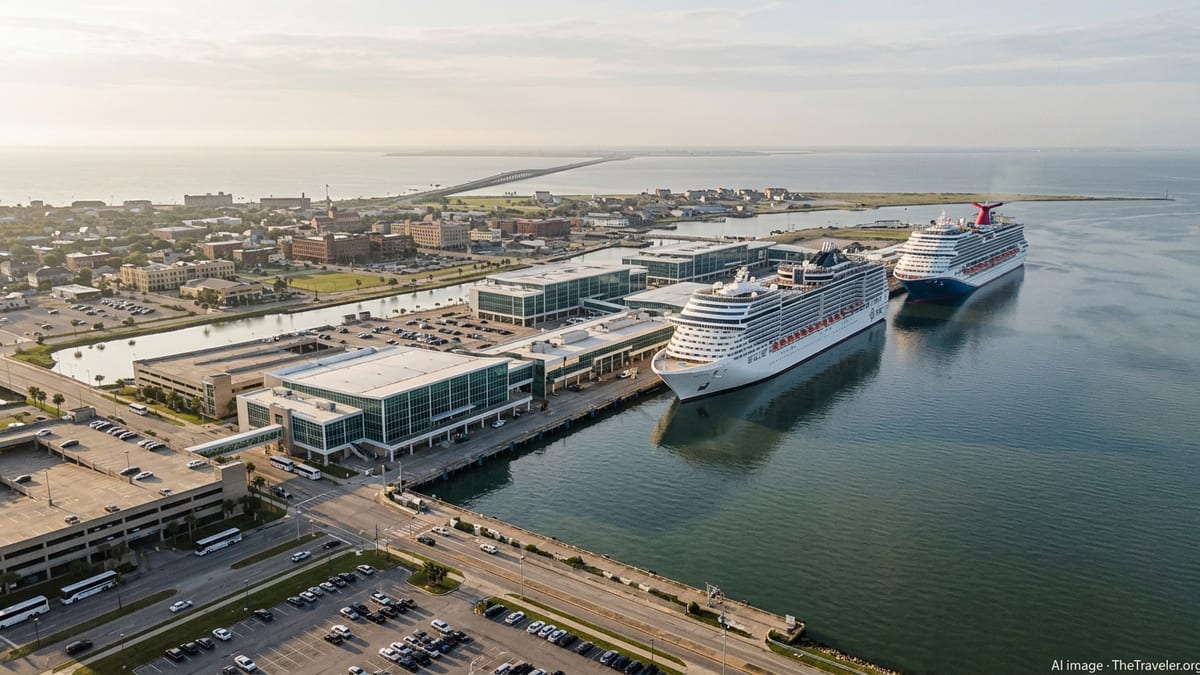
New Terminals Position Galveston as a Gulf Coast Powerhouse
Galveston is moving through one of the most significant expansion phases in its 25-year history as a cruise homeport. Publicly available planning documents show that construction is advancing on a fourth cruise terminal complex at Pier 16, building on a recent period of record passenger growth. Port figures indicate that Galveston handled around 1.5 million cruise passengers in 2023, with projections of continued double-digit growth as new facilities come online.
The fourth terminal, often referred to in port plans as Cruise Terminal 16, is described as a full-service complex including a modern terminal building, structured parking and upgraded roadway access. State transportation summaries note that the facility is expected to open in late 2025, expanding Galveston’s dedicated cruise footprint along the eastern waterfront and reinforcing its status as Texas’s primary cruise gateway.
In parallel, Galveston’s long-range master planning outlines the potential for additional cruise terminals over the next two decades, with new berths and supporting infrastructure envisioned along multiple piers. This staged buildout is designed to accommodate larger ships and higher passenger volumes while spreading operations across a broader footprint to manage congestion on peak sailing days.
The port’s growing terminal portfolio, combined with its proximity to Houston’s air market and drive-in demand from across Texas and the central United States, is helping Galveston compete more directly with Florida’s established cruise hubs for premium itineraries and new-build ships.
MSC and Norwegian Join Carnival and Royal Caribbean in Expansion Wave
Galveston’s latest terminal expansion is also reshaping the competitive landscape among cruise lines in the Gulf region. An agreement between Galveston Wharves and MSC Cruises details a long-term concession for the new Pier 16 complex, with reports indicating a development value of around 140 million dollars. The project includes converting a former cargo facility into a modern terminal and infrastructure capable of hosting a large MSC ship on a year-round basis.
Industry coverage notes that MSC Seascape is slated to homeport at the new terminal after its opening, underscoring the line’s push to establish a stronger foothold in the North American market through Gulf Coast deployments. Additional reporting suggests that Norwegian Cruise Line is also positioned to use the new facilities, multiplying brand choice for travelers sailing from Texas.
These moves build on earlier milestones, including Royal Caribbean’s dedicated terminal at Pier 10, which opened in 2022 to serve Oasis-class and other large vessels, and Carnival Cruise Line’s deepening investment in its Galveston fleet. Carnival’s LNG-powered Carnival Jubilee, introduced to the Texas market following a 53 million dollar upgrade of Terminal 25, has become a highly visible symbol of the port’s pivot toward newer, more efficient ships.
Collectively, the presence of Carnival, Royal Caribbean, MSC, Norwegian and other brands positions Galveston as one of the most diversified cruise homeports in the Gulf of Mexico, with a mix of short Caribbean getaways and longer, more upscale itineraries.
Luxury Amenities and Sustainable Design Redefine the Passenger Experience
The new generation of terminals at Galveston is being designed with both comfort and sustainability as key selling points, aligning with broader trends in the luxury cruise sector. Documentation from the port and cruise operators highlights features such as expansive check-in halls, improved baggage handling systems and streamlined security flows intended to reduce wait times and create a more seamless embarkation experience.
Royal Caribbean’s Galveston facility has emerged as a flagship for environmentally focused terminal design. According to sustainability reports, the building has achieved high-level green building certifications, including recognition for energy and carbon performance. These credentials reflect the growing emphasis on solar generation, efficient climate control and shore power readiness in new cruise infrastructure.
Terminal 25’s expansion for Carnival Jubilee likewise illustrates a shift toward higher-end amenities in what was once a purely utilitarian space. The renovation introduced refreshed interiors, upgraded gangways and reconfigured circulation areas to handle thousands of guests boarding and disembarking on the same day, while also accommodating the additional technical requirements of an LNG-powered vessel.
As the fourth terminal and other planned expansions move forward, local and state planning materials describe a focus on better ground transportation links, multi-level parking and clearer pedestrian routes. These elements are intended to make cruise days feel less congested for passengers and residents alike, while reinforcing Galveston’s appeal as a convenient, resort-style gateway rather than just a transit point.
Economic Ripple Effects Across the Gulf Coast Region
Galveston’s cruise terminal expansion is also being framed as a regional economic catalyst. Studies produced for transportation and maritime agencies point to cruise-related spending on hotels, dining, retail and entertainment in Galveston and the wider Houston area, alongside jobs tied directly to port operations, ship services and ground transportation.
State-level maritime impact summaries describe the Port of Galveston as a major contributor to the Texas economy, with cruise activity representing a growing share of that influence. With the fourth terminal and related infrastructure projects in progress, projections suggest that passenger throughput and associated spending could rise significantly over the next several years, supporting thousands of additional direct and indirect jobs.
The benefits are not confined to Texas. As lines add more premium and longer itineraries from Galveston, ports in Mexico and the Western Caribbean report increasing calls from newer ships sailing from the Gulf Coast. This pattern strengthens tourism flows to destinations such as Cozumel, Costa Maya and Roatan, tying Galveston’s expansion to a broader network of waterfront economies around the region.
Industry analysts indicate that competition among Gulf Coast ports remains strong, but Galveston’s mix of new construction, strategic partnerships and diversified cruise line presence has positioned it as a key driver of the next phase of luxury cruise growth in the region.
Shaping the Future of Gulf Coast Luxury Cruising
The timing of Galveston’s cruise terminal expansion coincides with a wider shift in traveler expectations, particularly at the higher end of the market. Cruise lines are deploying larger ships with more suites, elevated dining concepts and private retreat areas, while passengers are increasingly seeking easy drive-to or short-flight access to embarkation ports.
By adding capacity and modernizing its terminals, Galveston is aligning itself with these trends and strengthening its role as a launch point for premium experiences in the Western Caribbean and beyond. New terminal designs emphasize bright natural light, upgraded finishes and technology-enabled check-in, intended to mirror the onboard luxury that guests encounter once they step onto the ship.
Looking ahead, port planning documents anticipate additional cruise facilities over the next two decades, along with streetscape improvements and public waterfront spaces that integrate more closely with the surrounding city. If delivered as outlined, these initiatives would further embed cruise activity into Galveston’s urban fabric, while giving Gulf Coast travelers an expanded menu of luxury options without the need to connect through Florida or other distant hubs.
For now, the cranes, construction sites and refurbished terminals along Harborside Drive signal a clear message: Galveston is betting on a long-term future as a premier gateway for luxury cruising across the Gulf of Mexico, and cruise lines are responding with some of their newest and most sophisticated ships.