

More news on this day
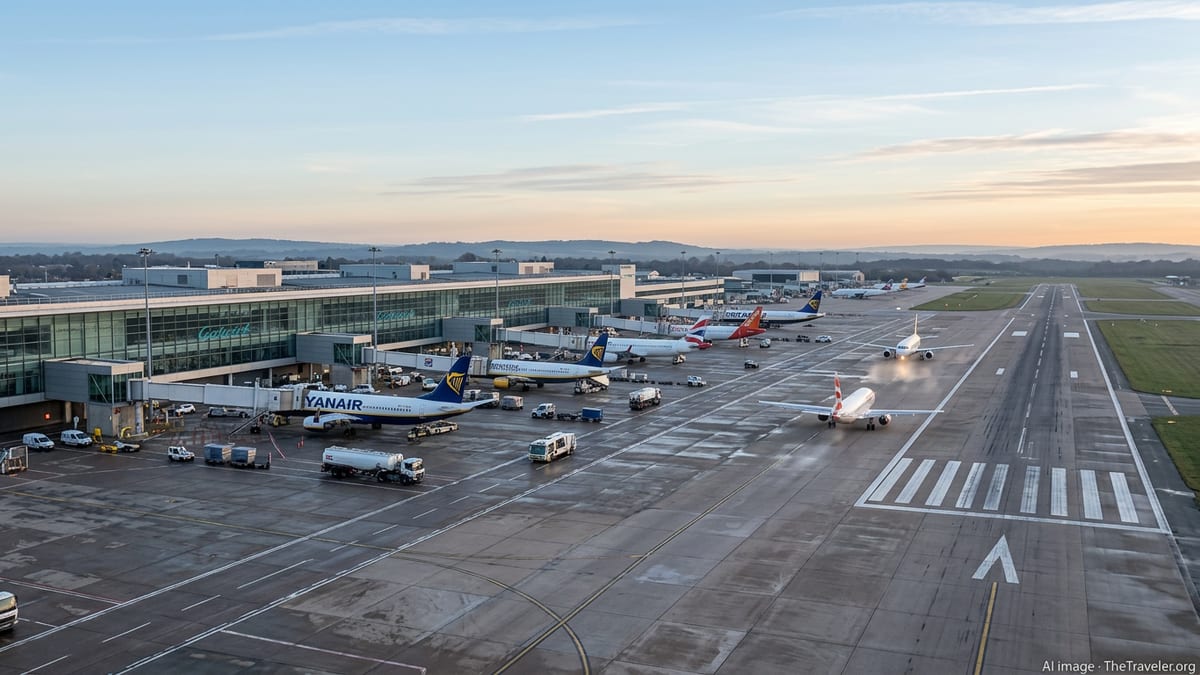
London Gatwick Airport is emerging from 2025 with a notably strong performance, with recent traffic and financial updates indicating renewed momentum in international connectivity, route development and operational upgrades across the UK’s second‑busiest hub.
Get the latest news straight to your inbox!
Passenger Growth Underscores Gatwick’s 2025 Recovery
Publicly available data for 2025 indicate that Gatwick has consolidated its post‑pandemic recovery, with traffic edging above 2024 levels and reinforcing the airport’s role in the wider London aviation system. Industry summaries of UK airport statistics for 2025 show overall passenger journeys increasing nationally, with Gatwick maintaining its position among the country’s busiest airports even as volumes at some peers fluctuate.
Figures drawn from UK Civil Aviation Authority trends for the first quarter of 2025 show Gatwick handling roughly 8.4 million passengers, a year‑on‑year increase that points to resilient demand across both leisure and business segments. Aviation sector coverage notes that this early‑year strength set a positive tone for the rest of 2025, aligning the airport with the broader recovery seen across Europe and within the global network of VINCI Airports, Gatwick’s majority owner.
While final audited full‑year 2025 passenger totals for Gatwick are reported in the context of VINCI’s group results rather than as a standalone data release, those group publications describe 2025 as an outstanding year, with airport traffic across the portfolio surpassing 334 million passengers. Within that performance, Gatwick is referenced as delivering solid long‑haul growth despite softer domestic trends, underscoring its evolution into a more internationally focused gateway.
The airport’s 2025 trajectory is particularly significant for airlines planning capacity over the next several scheduling seasons. Robust load factors, rising global passenger volumes and stabilizing profitability across the airline sector, highlighted in recent IATA outlooks, provide a supportive backdrop for Gatwick’s continued development as an attractive base for both low‑cost and full‑service carriers.
International Network Expansion Strengthens Global Links
Gatwick’s strong 2025 performance is closely tied to its expanding long‑haul and international network. Industry coverage of VINCI Airports’ 2025 traffic points to Gatwick as a key contributor on intercontinental routes, with long‑haul passenger numbers through the first half of the year rising by more than 3% and reaching just over 3 million travelers. This growth reflects both new destinations and frequency increases on existing services.
Route announcements and schedule filings highlight a broader reshaping of Gatwick’s long‑haul portfolio. Services connecting the airport to markets in Asia, the Middle East and Africa have been particularly dynamic, with Gulf and Saudi carriers adding capacity to destinations such as Doha, Bahrain, Medina, Jeddah and the emerging Neom Bay development. Industry reports also point to additional connectivity into South and Southeast Asia, including services to Pakistan and Singapore, which together deepen Gatwick’s reach into fast‑growing travel markets.
Looking ahead, publicly reported plans for 2026 show further reinforcement of Gatwick’s international role. Trade outlets have detailed a pipeline of new airlines preparing to launch operations at the airport, including carriers from China planning seasonal links between Qingdao and Gatwick and other operators eyeing transatlantic and Middle Eastern routes. Although these services are scheduled beyond 2025, decisions to base them at Gatwick are rooted in confidence generated by the airport’s 2025 performance.
This widening global footprint also supports London’s status as one of the world’s busiest multi‑airport cities. Recent European and global airport rankings continue to place the London system near the top for international passengers, with Gatwick functioning as a complementary hub to Heathrow by providing a dense network of point‑to‑point routes and an expanding roster of long‑haul options for both leisure and price‑sensitive travelers.
Airline Operations Benefit from New Technology and Capacity Plans
Gatwick’s operational performance in 2025 is being shaped by a combination of incremental efficiency gains and long‑term capacity planning. Aviation industry briefings in early 2025 highlighted the introduction of advanced arrival management technology at Gatwick, known in the sector as Intelligent Approach, to optimize separation between aircraft on final approach. Public descriptions of the system suggest it is designed to enhance runway resilience, support more consistent landing rates and help reduce delays and fuel burn for airlines.
At the strategic level, VINCI’s recent results outline a major infrastructure milestone for Gatwick: the approval of a plan to convert the airport’s existing Northern Runway for dual use alongside the main runway. This multibillion‑pound project, cleared by UK authorities in 2025, is presented in company documentation as a way to increase capacity within the current footprint while accommodating forecast growth in aircraft movements. The project is expected to underpin airline network planning well into the 2030s.
Operational reliability has been under particular scrutiny following several years in which UK airports, including Gatwick, faced criticism over delays and congestion. While some consumer analyses still rank the airport among the more delay‑prone hubs based on earlier data, the combination of new air‑traffic tools, ongoing recruitment and training, and investments in ground processes is intended to gradually improve on‑time performance. Gatwick’s 2025 results are therefore being interpreted by industry observers not only as a sign of traffic strength but also as a test of these operational reforms.
For airlines, the evolving operational environment at Gatwick is central to decisions on where to deploy scarce aircraft and crew. As global fleet growth is constrained by supply chain issues identified in recent IATA outlooks, airports that can offer resilient runway operations, predictable turnaround times and competitive charges are likely to attract a greater share of future capacity. Gatwick’s 2025 performance and infrastructure commitments position it to compete actively for that investment.
Europe‑Focused Low‑Cost Traffic Drives Volume
A defining feature of Gatwick’s 2025 performance is the strength of its short‑ and medium‑haul European network, dominated by low‑cost carriers. Sector analyses of VINCI Airports’ 2025 traffic emphasize the outperformance of low‑cost operators, particularly on intra‑European leisure routes, and recognize Gatwick as one of the key beneficiaries of this trend within the portfolio.
CAA‑based traffic tables for early 2025 show Gatwick handling millions of passengers on routes to major European hubs and holiday destinations, with Amsterdam, Mediterranean resorts and key city‑break markets featuring prominently. Expanded frequencies to popular summer destinations such as the Italian Adriatic and continued growth on Spanish and Greek routes have helped stabilize load factors through peak travel periods and shoulder seasons alike.
The dominance of leisure‑oriented demand at Gatwick has also encouraged carriers to experiment with new combinations of schedule timings, ancillary services and connecting options. Industry commentary notes that more passengers are using Gatwick for self‑connection, taking advantage of growing route density to build their own itineraries between Europe, long‑haul services and UK regional points. This pattern strengthens the airport’s role as an informal transfer node even without the full suite of alliance hub structures seen at Heathrow.
However, the emphasis on low‑cost, high‑volume traffic has also meant that domestic routes have not grown as quickly. Available data and commentary suggest weaker UK domestic flows at Gatwick in 2025, with some airlines reallocating capacity to more profitable European or long‑haul sectors. The resulting mix reinforces the airport’s identity as a primarily international gateway, anchored by continental Europe and an expanding ring of long‑haul destinations.
Financial Position and Investment Support Future Growth
Gatwick’s operational and traffic gains in 2025 are tied closely to its financial strategy as part of VINCI Airports. Group publications for full‑year 2025 performance describe an increase in revenue and a record level of free cash flow, providing the financial flexibility to sustain major capital spending across the airport portfolio, including the Gatwick Northern Runway project and associated terminal enhancements.
Supporting documents relating to Gatwick’s financing outline steps the airport has taken in recent years to strengthen its balance sheet, including bond issuances with maturities stretching into the 2040s and extensions of existing credit facilities. These measures are framed in public filings as tools to secure long‑term funding for infrastructure upgrades while managing interest costs and maintaining investment‑grade credit quality.
The combination of robust group‑level cash generation and targeted Gatwick financing is enabling continued investment not only in runways and stands but also in passenger‑facing improvements. Sector coverage of Gatwick’s 2025 performance highlights upgrades to security areas, with streamlined screening contributing to smoother peak‑time flows and supporting the airport’s ability to handle the higher passenger numbers recorded during the year.
As the wider aviation industry heads into 2026 with global passenger volumes and airline profitability projected to rise, Gatwick enters the new year on a relatively strong footing. Its 2025 results showcase an airport leveraging renewed demand, international route growth and substantial capital investment to reinforce its status as a crucial international gateway for the United Kingdom.