

More news on this day
The Gulf Cooperation Council’s long-discussed unified tourist visa is edging closer to reality, with 2026 widely flagged as the pivotal year that could turn the UAE, Saudi Arabia, Qatar, Kuwait, Bahrain and Oman into a seamlessly connected tourism zone.
Get the latest news straight to your inbox!
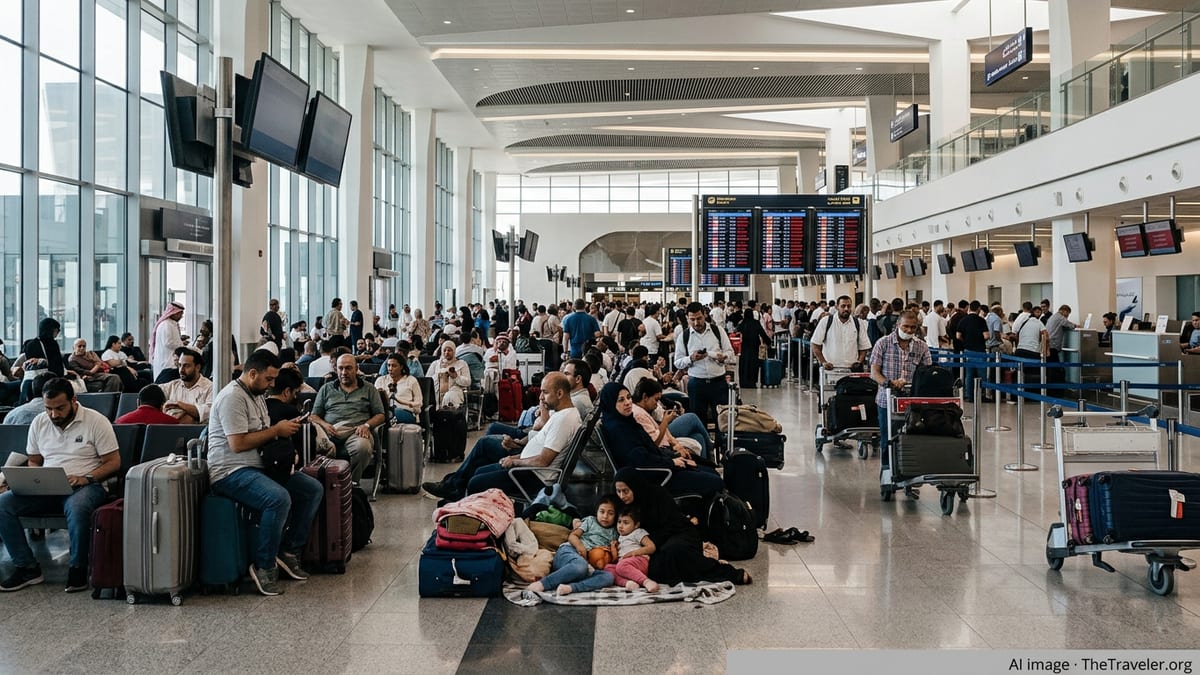
What The GCC Unified Tourist Visa Actually Is
Publicly available information describes the GCC unified tourist visa as a single short-stay permit that would allow visitors to travel across all six Gulf Cooperation Council states using one application and one approval. Instead of applying separately for the United Arab Emirates, Saudi Arabia, Qatar, Kuwait, Bahrain and Oman, eligible travelers would be able to enter multiple countries on a shared authorization modeled on Europe’s Schengen system.
Coverage from regional outlets indicates that tourism ministers have agreed on a 2026 launch window after several years of technical and legal preparation. The visa is often referred to in policy documents and commentary as the “GCC unified tourist visa” or “GCC Grand Tours” visa, reflecting its role in encouraging multi-destination itineraries that link key hubs such as Dubai, Riyadh, Doha, Muscat and Manama.
While final regulations are still being drafted, reports suggest the permit is expected to be a multiple-entry visa with a total stay of up to 90 days within a defined validity period. Observers note that this structure would align with common global benchmarks for short-term tourism and business visits, while remaining flexible enough for regional stopovers, events and cruise calls.
The unified visa is designed for non-GCC nationals. Citizens of GCC states already move visa-free within the bloc, but the new system aims to simplify entry for international visitors who currently face an overlapping patchwork of national e-visas, visa-on-arrival rules and consular processes.
Timeline: From Approval To Expected 2026 Rollout
Discussion of a shared Gulf visa has circulated for more than a decade, but momentum accelerated in the early 2020s as the region repositioned itself as a year-round tourism belt. By 2023, ministers from Bahrain and the UAE were publicly outlining a Schengen-style concept and signaling that internal systems were being upgraded to support data sharing and common security standards.
According to later coverage summarizing Gulf ministerial meetings, GCC states formally approved the unified tourist visa framework in mid-2025. Subsequent reporting from specialist travel and consulting outlets indicated that a common technology roadmap and single-window application platform were agreed, enabling the project to move from concept to implementation.
Several reports now converge on 2026 as the target year for the visa’s operational launch. Some analyses reference a pilot phase beginning as early as late 2025 or 2026, likely involving limited routes and traveler cohorts before a full-scale rollout. Travelers should expect a phased approach in which the system is stress-tested with select markets and carriers before becoming the default entry channel for most international visitors to the GCC.
As of April 2026, no unified visa portal for the public is live, and individual national visa regimes remain in force. Prospective visitors are being urged by regional commentators and consular advisories to continue applying under existing country-specific schemes until formal implementation details are released through official government channels.
How Travel Across Dubai, Riyadh, Doha, Muscat, Manama And Kuwait City Could Change
If delivered as described, the unified tourist visa would significantly alter how travelers plan trips across the Gulf. A single visa for the six states would, in practical terms, turn the region into one large destination allowing multi-stop itineraries built around city breaks, desert experiences, sporting events and cultural festivals spread across different countries.
Travel analysts point out that the existing infrastructure already supports this vision. Dubai and Abu Dhabi serve as global hubs with extensive long-haul links, Riyadh and Jeddah have been rapidly expanding capacity, Doha’s Hamad International Airport has grown into a major transit point, while Muscat, Bahrain and Kuwait City are reinforcing regional connectivity. A common visa would allow airlines and tour operators to package these gateways together without the friction of multiple entry applications.
In practical terms, a visitor could land in Dubai for a few nights, connect onward to Riyadh for heritage and sports attractions, continue to Doha for museums and events, and finish with a coastal break in Oman or Bahrain, all under one authorization. Industry commentary suggests cruise operators in particular are watching the plans closely, as a shared visa could unlock new Gulf-wide itineraries that call at several ports without separate clearances.
At the same time, observers caution that border procedures, transport schedules and insurance policies will need to adapt. Even with a unified visa, travelers can expect standard immigration checks at each point of entry, and rules on driving licenses, vehicle insurance and internal flights will remain national. Clear communication from carriers and travel agents will be essential during the transition period.
Eligibility, Costs And Application Process: What Is Known So Far
Detailed eligibility criteria and fees have not yet been published in full, but regional media and consultancy briefings offer early indications. The unified visa is widely expected to target leisure and short-stay business travelers, requiring a passport with at least six months’ validity, proof of onward or return travel and basic accommodation details, broadly mirroring existing tourist visa conditions in individual GCC states.
Commentary in financial and travel press suggests that the application process will likely be digital-first, using a single online portal that routes data to all six member states simultaneously. Biometric capture, security screening and fee payment are anticipated to be handled through this unified platform, reducing duplication and shortening processing times compared with separate national applications.
As for pricing, analysts expect the unified visa to sit above the cost of the cheapest single-country tourist e-visas, but below the combined total of multiple separate permits. Some reports reference internal discussions about tiered pricing or bundled products, such as short-stay transit visas tailored to airline stopover programs or event-linked visas tied to major festivals, expos and sporting tournaments.
Travelers should be prepared for potential transitional inconsistencies as the system goes live. Recent experience with evolving e-visa rules elsewhere in the region shows that implementation can involve temporary outages, shifting documentation requirements and case-by-case decisions. Monitoring official GCC and national government updates, as well as airline travel advisories, will remain important even after launch.
Steps Travelers Can Take Now While Waiting For 2026
Although the unified tourist visa is not yet active, the prospect of a 2026 rollout is already influencing how travelers plan Gulf trips. For visitors targeting multi-country itineraries, one practical step is to map out desired routes and check current visa regimes for each stop, including the latest e-visa platforms, visa-on-arrival conditions and insurance requirements.
Travel planners are also recommending that visitors pay attention to hub choice. Selecting an arrival airport with multiple onward connections, such as Dubai, Abu Dhabi, Doha or Riyadh, can create flexibility to add extra destinations later if the unified visa comes into effect close to the time of travel. Airlines may progressively adjust schedules and fare bundles in anticipation of smoother cross-border movement.
Prospective travelers should also watch for announcements around any pilot phases. If an initial rollout focuses on specific corridors or nationalities, early adopters may be able to test the unified visa on limited routes while others continue to use traditional visas. Travel insurance providers and corporate travel departments are likely to issue guidance as soon as the contours of the system become clearer.
For now, the most important point for visitors is that current national rules still apply. The GCC unified tourist visa remains a forthcoming layer rather than a replacement for existing processes. Until the new scheme officially opens, travelers heading to Dubai, Riyadh, Doha, Muscat, Manama or Kuwait City should continue to rely on each country’s official visa channels and treat 2026 as a working goal rather than a guaranteed switch-over date.