

More news on this day
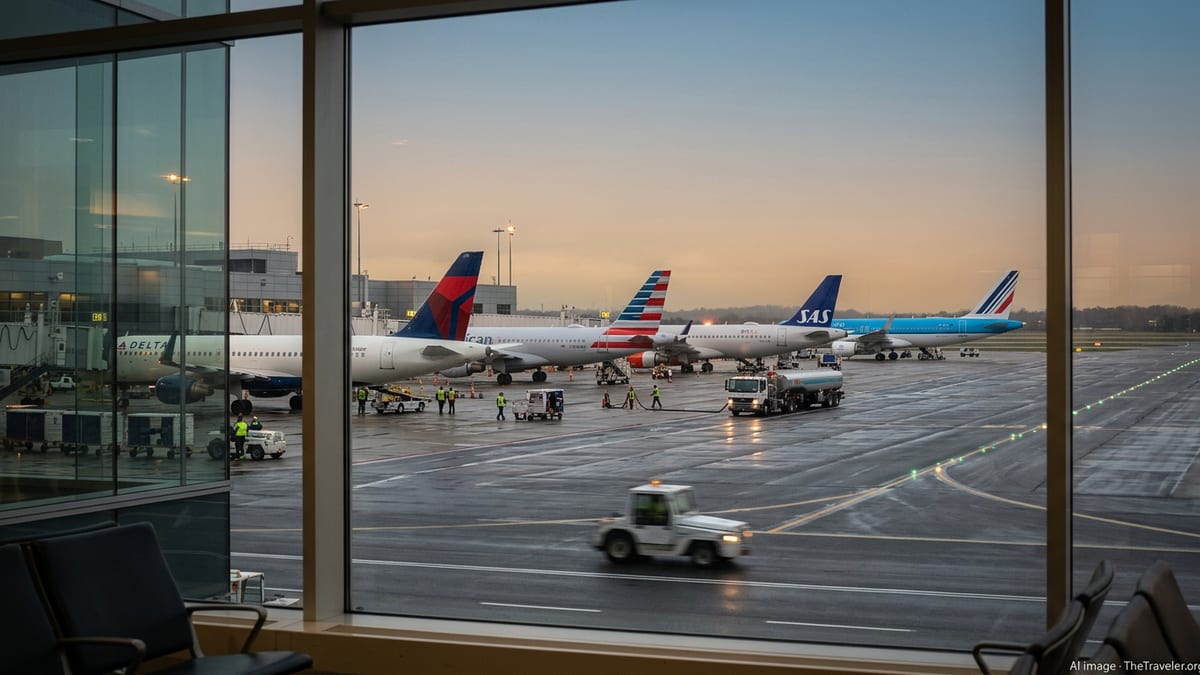
Global air travel is being squeezed by a sudden spike in jet fuel prices and mounting security risks, as Delta Air Lines joins American Airlines, SAS AB and Air France-KLM in rolling out emergency fuel surcharges and altering routes in response to the escalating conflict centered on Iran and the Strait of Hormuz.
Get the latest news straight to your inbox!
Jet Fuel Shock Ripples Across Major Carriers
Jet fuel prices have climbed at their fastest pace in years in early March 2026, driven by the Iran war and the effective shutdown of the Strait of Hormuz, a critical chokepoint for global oil supplies. Industry trackers report benchmark jet fuel costs more than doubling in a matter of days compared with late February, with some regional markets seeing increases of more than 70 percent in a single month.
Publicly available aviation analyses indicate that global carriers are now paying the equivalent of more than 200 dollars a barrel for jet fuel in key hubs, a level that quickly erodes already thin airline margins. With fuel often representing 20 to 30 percent of an airline’s operating costs, even well capitalized groups are moving rapidly to pass the shock on to passengers.
Against this backdrop, a growing list of airlines has confirmed new or higher fuel surcharges on tickets and freight. Air France-KLM recently outlined additional surcharges tied both to surging fossil fuel costs and its existing program to fund sustainable aviation fuel, while Scandinavian carrier SAS has publicly acknowledged that higher operating costs are feeding directly into route cuts and pricing decisions.
US airlines are now following suit. Market commentary and investor notes highlight Delta Air Lines and American Airlines among the carriers adjusting fare structures and surcharge tables on international services, particularly on long haul routes that burn the most fuel and have the fewest options to refuel outside the Middle East supply chain.
Delta and American Confront an Exposed Fuel Position
Unlike several large European rivals, major US network carriers largely abandoned fuel hedging strategies in the years following earlier oil price swings. Financial market discussions and airline filings over recent quarters show Delta and American entering 2026 with limited protection against sudden surges in jet fuel costs.
As a result, the current conflict is feeding straight through to their bottom lines. Investor commentary in early March points to share price declines for Delta and American alongside other US travel stocks as oil pushed toward 100 dollars per barrel and jet fuel benchmarks climbed even faster. Analysts warn that without hedges, these airlines have little choice but to rely on fuel surcharges and higher base fares to protect margins.
Network data and disruption alerts show Delta already trimming capacity and consolidating flights on select international corridors where fuel burn is highest and alternative routings are most complex. American is applying higher surcharges on some long haul tickets and selectively reducing frequencies on routes that are now significantly longer as aircraft detour around the Gulf region and adjacent airspace.
For travelers, the impact is immediate and visible in fare searches. Economy round trips that only weeks ago were priced as shoulder season bargains, particularly between North America and South Asia, are now several hundred dollars higher, with fuel and war risk surcharges itemized or embedded in the final ticket price.
Air France-KLM and SAS Adjust Networks Around the Gulf
European airlines sit closer to the epicenter of the disruption and have moved aggressively to insulate their operations. According to recent European press coverage, KLM has suspended multiple Middle East routes, citing both security considerations and the lack of economically viable routings that avoid affected airspace yet still allow for profitable operations amid soaring fuel costs.
Air France-KLM, which entered 2026 with a comparatively high level of fuel hedging, is nonetheless adding surcharges to passenger fares and freight shipments to offset the residual exposure and rising war risk premiums. Publicly available statements describe a strategy that pairs these new charges with continued investment in sustainable aviation fuel, but the near term effect for passengers is a visible uptick in taxes and fees on itineraries touching Europe, Africa and parts of Asia.
Scandinavian carrier SAS AB is also under pressure. Regional media and traveler reports describe rolling cancellations and reduced frequencies on select long haul routes, particularly services that would traditionally make use of the shortest great circle paths near the Middle East. With jet fuel costs elevated and demand still normalizing after the pandemic era, SAS appears to be prioritizing core profitable routes while adding or increasing surcharges across its remaining long haul network.
Collectively, these moves illustrate how even airlines with fuel hedges or state support must revisit their pricing when geopolitical shocks are both sudden and severe. Hedging can soften the blow, but cannot fully absorb the combination of higher fuel costs, higher insurance premiums and longer, more circuitous routings.
Record Surcharges and Longer Flight Times for Travelers
The most visible consequence for travelers is a surge in ticket surcharges that, in some markets, rivals or exceeds the increases seen during earlier crises. Aviation pricing trackers covering Asia to Europe routes have documented economy fares rising by several hundred to more than 900 percent over their lowest promotional levels, with fuel and war risk surcharges accounting for a significant share of the jump.
For itineraries that once passed routinely through Gulf megahubs, airlines are now being forced to fly longer routes that skirt sensitive airspace or to rely on secondary hubs farther from the conflict zone. This can add one to three hours of flight time on some long haul services, increasing fuel burn per passenger even as fuel itself becomes dramatically more expensive.
On the ground, traveler experiences reflect the strain. Airport departure boards across Europe and parts of Asia show a rolling pattern of cancellations and last minute aircraft changes as airlines rebalance capacity. Travel forums are filled with reports of unplanned overnight layovers, reroutings through alternate hubs and difficulty securing award seats as carriers prioritize higher yielding passengers to help offset surging operating costs.
Industry observers note that while many airlines are framing the surcharges as temporary and linked directly to current fuel benchmarks, history suggests that some charges can linger even after wholesale energy prices begin to fall. Once embedded in fare structures and revenue management systems, surcharges can be slow to unwind, particularly if the broader economic backdrop remains uncertain.
Broader Implications for Global Air Connectivity
The fuel shock and route disruptions are landing at a sensitive moment for global aviation, which has spent the past two years rebuilding networks after the pandemic. The Iran conflict and related closure or restriction of key air and sea corridors are now testing that recovery, especially for carriers that depend on connecting traffic between continents.
Analysts warn that sustained high fuel prices and elevated surcharges could curb discretionary long haul travel, particularly for price sensitive passengers and small businesses. Higher ticket costs may push some travelers to delay trips, downgrade from premium cabins or opt for closer-to-home destinations, reshaping demand patterns just as airlines were reintroducing capacity.
At the same time, alternative hubs and routings are emerging as relative winners. Airlines based outside the immediate conflict zone, or operating from regions less dependent on Middle Eastern fuel supplies, are signaling plans to add capacity on select corridors where competitors have pulled back. This could gradually redraw parts of the global route map, at least for the duration of the crisis.
For now, travelers booking international trips in 2026 face a landscape of record jet fuel surcharges, longer and less predictable routings and rapidly changing schedules. Delta, American, SAS AB and Air France-KLM are at the forefront of the adjustments, but aviation experts expect more airlines to follow as the geopolitical and energy fallout from the conflict continues to reverberate through the global travel system.