

Rail travel in Georgia is not as dense as in the Northeast or Europe, but it remains a practical and atmospheric way to move between key cities such as Atlanta and Savannah while linking into local transit. With a little planning, you can combine Amtrak’s intercity routes with Atlanta’s MARTA rail network and buses or rideshares to stitch together rewarding, car‑free trips across the state. This guide focuses on current options for traveling between major Georgia destinations by train and on what to expect before you board.
Understanding Georgia’s Passenger Rail Landscape
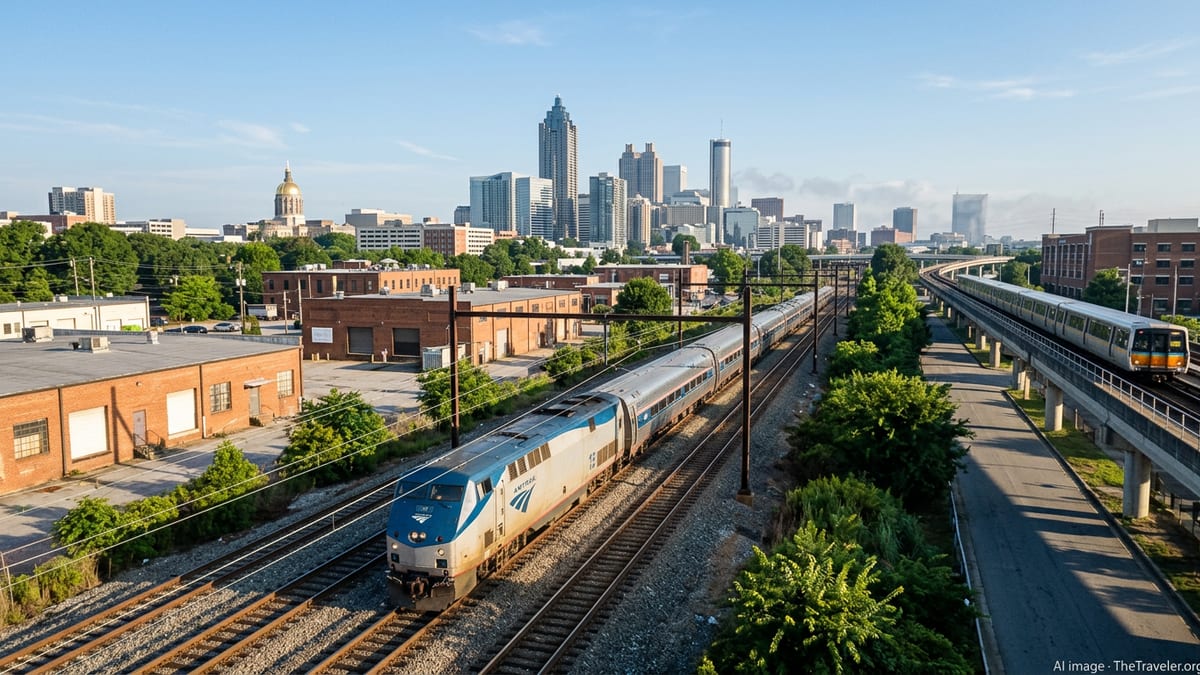
Georgia’s modern passenger rail network is centered on a single long‑distance Amtrak service and one major urban rail system. Intercity travel relies primarily on Amtrak’s Crescent route, which passes through Atlanta on its journey between New York City and New Orleans, with additional Georgia stops in places such as Gainesville and Toccoa. A separate Amtrak station in Savannah serves trains heading along the East Coast, including services between the Northeast and Florida. Within metro Atlanta, the MARTA rail network functions as the primary high‑frequency urban rail spine, connecting downtown, Midtown, key neighborhoods and Hartsfield‑Jackson Atlanta International Airport.
Unlike some states that sponsor state‑supported corridor trains running every few hours, Georgia currently has only these national network Amtrak services operating one or two times per day, often on overnight schedules. That means that travelers must time their trips carefully and, in many cases, be prepared to travel at off‑peak or late‑night hours. On the other hand, tickets can be competitively priced compared with flying, especially if you book coach seats in advance and remain flexible on dates.
For travelers planning rail journeys exclusively within Georgia, the practical effect is that most long‑distance segments will link Atlanta with Savannah or with out‑of‑state cities such as New Orleans, Birmingham or Charlotte, with connections by bus, rental car or rideshare filling in the gaps. Atlanta’s MARTA network, which runs from early morning into the night on four color‑coded lines, plays a critical supporting role by getting passengers to and from the city’s Amtrak station and airport without needing a car.
The key to making Georgia rail travel work is to think in layers. Long‑distance Amtrak trains connect the large nodes. MARTA and local transit carry you across Atlanta’s urban core. Regional buses and shuttles bridge places that trains do not reach. When planned together, these layers can form a surprisingly efficient alternative to driving between major cities.
Intercity Amtrak Routes Serving Georgia
Two main Amtrak routes are relevant for travelers moving between major Georgia cities: the Crescent and the East Coast services that serve Savannah. The Crescent, which operates daily between New York and New Orleans, stops at Atlanta’s Peachtree Station as well as a handful of smaller Georgia communities, including Gainesville and Toccoa to the northeast and stations across the state line in Alabama to the west. This train effectively serves as the primary rail artery through inland Georgia, providing overnight connections to cities such as Washington, Philadelphia and New York to the north and Birmingham and New Orleans to the south.
Savannah, on the coast, is served by Amtrak at a dedicated station that currently hosts multiple East Coast trains. These services link Savannah with major hubs in the Northeast corridor and with Florida, making the city an important rail gateway even though its station sits a short drive from the historic downtown. One of the trains historically terminating in Savannah was reconfigured in late 2024 as part of a route consolidation, underscoring how timetables and train names can shift over time. Travelers should always confirm exact schedules and service patterns close to their departure date, especially if they are planning an overnight journey.
For trips entirely within Georgia, the most straightforward intercity rail itinerary is between Atlanta and Savannah with a connection, typically by bus or rental car, at one or both ends. There is no direct Atlanta–Savannah Amtrak train today. Instead, passengers can ride the Crescent into or out of Atlanta, then connect in another state or at a hub city to reach a Savannah‑bound train. This form of travel requires more coordination and will usually be less direct than driving, but it can be rewarding for rail enthusiasts or those who prefer not to fly.
Smaller Georgia cities like Jesup and Savannah’s surrounding communities also see Amtrak service on certain long‑distance trains, offering options for travelers who want to explore the coast beyond the big hubs. Because these trains typically run once daily in each direction, space can sell out during peak travel periods and holiday weekends. Booking early and considering midweek departures often yields the widest choice of fares and seat types.
Atlanta’s Peachtree Station and How to Use It
Atlanta’s Peachtree Station is the state’s primary Amtrak facility and the stop for the Crescent. Located on Peachtree Road in the Brookwood neighborhood between Midtown and Buckhead, it is a relatively small, historic station rather than a grand downtown terminal. The building dates back to the early twentieth century and today offers basic amenities such as a waiting area, restrooms, staff assistance at set hours and limited paid parking. There are no sprawling concourses or extensive food courts here, so you should arrive already equipped with snacks or a meal, especially if you are boarding an overnight train.
The station has both a side platform and an island platform serving two main tracks, reached via a short walkway from the waiting room. Boarding procedures are straightforward: staff typically make announcements for coach and sleeper passengers and then direct small groups to the platform once the train has arrived. Because the Crescent can arrive very early in the morning or late at night in either direction, you should be prepared for off‑hour operations, including reduced staffing and limited rideshare availability at the curb, particularly on holidays or in inclement weather.
Connecting between Peachtree Station and Atlanta’s broader transit system requires a short surface trip, since the Amtrak stop is not directly on the MARTA rail lines. The closest MARTA stations are in Midtown and the Arts Center area to the south and in Buckhead to the north, reachable by local bus routes or a short rideshare journey depending on traffic. Many travelers choose to take a taxi or rideshare between Peachtree Station and their hotel or nearest MARTA station, especially if they are carrying luggage or arriving before dawn.
Given its modest size and limited services, Peachtree Station works best for travelers who have mapped out their next steps before arrival. Confirm how you will get from the station to your lodging or onward transportation, and keep in mind that Atlanta’s rush‑hour traffic can easily add time to short trips. If you are connecting to a morning flight from Hartsfield‑Jackson after an overnight arrival on the Crescent, allow a generous buffer to reach the airport by MARTA or car.
MARTA Rail: Essential Urban Link in Atlanta
Once you are in Atlanta, MARTA’s rail network is the fastest way to move between many of the city’s major neighborhoods, downtown attractions and the airport. The system consists of four color‑coded lines: Red and Gold running roughly north–south, and Blue and Green running east–west. All four intersect at Five Points Station in downtown Atlanta, the central transfer hub. Trains generally operate from early morning until around 1 a.m., with the most frequent service during weekday rush hours when headways can be around 10 minutes and slightly less frequent service during evenings and weekends.
For travelers, the most important MARTA segment is often the shared trunk of the Red and Gold lines between the Airport and the northern neighborhoods. Both lines terminate at Airport Station, which is directly attached to the domestic terminal at Hartsfield‑Jackson. From there, trains run north through College Park and East Point into downtown at Five Points, then on to Midtown, Buckhead and the northern suburbs. Blue and Green line riders can transfer at Five Points to reach the airport or other north–south stops, making it possible to stay in a wide range of neighborhoods without ever renting a car.
Accessing MARTA is straightforward: you purchase a reloadable smart card or paper ticket at vending machines in the stations and tap through fare gates. Fares are based on a flat structure rather than distance, so riding from downtown to the airport costs roughly the same as a shorter hop within the urban core, though prices can change, so checking the latest fare table before travel is wise. The system is fully integrated with bus routes that fan out into surrounding communities, giving riders access to areas beyond walking distance of the rail lines.
Recent planning efforts in Atlanta focus on expanding and modernizing the network. Debate continues about how best to extend rail or bus rapid transit service along the Atlanta BeltLine corridors and into neighborhoods that have historically lacked convenient transit. Projects such as the planned Murphy Crossing infill station on the shared Red and Gold line corridor are intended to improve connectivity and support redevelopment in underserved areas. For visitors, the immediate takeaway is that MARTA provides a dependable backbone for car‑free travel across central Atlanta, particularly when combined with walking, bikes, app‑based shuttles and occasional rideshares.
Reaching Savannah and Coastal Georgia by Train
Savannah is Georgia’s primary coastal rail destination and a natural focal point for travelers who want to experience both the state’s beaches and its rail network. Amtrak’s Savannah station is located several miles from the historic district, in a low‑rise commercial area west of downtown. The mid‑century modern building, opened in the early 1960s, has a functional layout with surface parking, a waiting area and direct platform access. Because the station is not within easy walking distance of most hotels or tourist sites, nearly all passengers continue their journeys by taxi, rideshare, hotel shuttle or local bus.
Amtrak routes serving Savannah connect the city with major East Coast markets. Services to and from the Northeast typically run either overnight or over the course of a long day, depending on direction and routing, while trains to and from Florida function as important links for snowbirds and vacationers. For those using Savannah as part of an all‑rail itinerary within Georgia, these trains offer a scenic approach to the coast through marshes and rivers, especially in daylight hours.
One common way to include Savannah in a Georgia rail trip is to pair it with air travel. Travelers might fly into Savannah, spend several days exploring the historic district and nearby Tybee Island, then board an Amtrak train north or south along the coast before looping back by rail or air. Conversely, riders coming from the Northeast may arrive by train, stay in Savannah, then continue to Atlanta by rental car or bus. While a direct Atlanta–Savannah train would undoubtedly be convenient, current infrastructure and service patterns mean that travelers should plan on at least one mode change between the two cities.
Beyond Savannah itself, a small number of additional coastal or near‑coastal communities in Georgia and neighboring states host Amtrak stations that can function as gateways to beaches, nature reserves and small‑town getaways. Because services to these smaller stops may be limited and schedules can change from year to year, it is important to review timetables and, where possible, build in flexibility. Weather events during Atlantic hurricane season can also affect operations on coastal tracks, leading to delays or temporary suspensions whenever storms threaten the region.
Planning Rail Itineraries Between Major Georgia Cities
Designing a rail itinerary between major Georgia cities requires balancing the romance of train travel with the realities of limited service. The most popular urban pair, Atlanta and Savannah, does not currently have a direct passenger line, so travelers must think in terms of multi‑modal solutions. A practical approach is to use rail for the long interstate legs and supplement it with buses or rental cars for the intrastate portions. For example, you might ride the Crescent to or from Atlanta as part of a longer trip and then connect to a Savannah‑bound train in a neighboring state, or pair an Amtrak segment with a scenic drive through central Georgia.
Travelers who prioritize remaining car‑free can combine trains and buses. Intercity bus operators run frequent services between Atlanta and Savannah, and while these are highway‑based rather than rail, they can effectively extend the reach of your train ticket. In practical terms, it is often easiest to ride Amtrak into Atlanta or Savannah and then continue by bus to your final Georgia destination, including cities such as Augusta, Macon or Columbus that lack passenger rail. Coordinating schedules between train arrivals and bus departures is essential, especially for evening or overnight trains, to avoid long waits at terminals.
Time of day is another crucial factor. The Crescent’s stops in Atlanta occur at times that can be early morning or late night depending on direction and timetable adjustments. That can make same‑day connections tricky, particularly if you need to navigate across Atlanta to Peachtree Station or travel onward to the airport. Building an overnight stay into your itinerary, whether in Atlanta or Savannah, often leads to a more relaxed experience and creates space to enjoy the cities rather than viewing them solely as transfer points.
Budgeting also plays a role. Sleeper accommodations on long‑distance trains can be significantly more expensive than coach seats but include meals and more privacy for overnight legs. Within Georgia, where distances between major cities are relatively short compared with the entire length of a route like the Crescent, many travelers opt for coach and reserve their splurge for longer out‑of‑state segments. Booking early, traveling midweek and being flexible on dates are reliable strategies for finding lower fares.
Practical Tips for Riding Trains in Georgia
A bit of preparation goes a long way toward making rail travel in Georgia comfortable and predictable. First, always verify schedules close to your travel date. Long‑distance trains share tracks with freight traffic, and timetable adjustments or delays can and do occur. Amtrak’s website and app provide near‑real‑time status updates, and it is wise to check them before you leave your hotel for the station, especially if you are making a tight connection or traveling during busy holiday periods.
Second, pack with the train environment in mind. Even short intrastate segments can involve sitting for several hours, particularly if your train experiences congestion outside major terminals. Comfortable layers, a light jacket for over‑air‑conditioned cars, noise‑reducing headphones and a small pillow can improve the experience significantly. While Amtrak long‑distance trains offer café service and, for sleeper passengers, full meals, having water, snacks and any essential medications within easy reach is invaluable, especially if the café car is crowded.
On the urban side, MARTA riders should familiarize themselves with basic station layouts and line colors before arrival. Many first‑time visitors are surprised by how straightforward the system is once they recognize that Red and Gold share a trunk to and from the airport while Blue and Green cross east–west through downtown. Loading a transit pass with enough value for your planned trips and possibly a day or multi‑day pass simplifies moving through the fare gates, and trains are generally frequent enough during daylight and early evening that you rarely need to plan around exact departure times.
Safety and comfort considerations are similar to those in other large American cities. Stations and trains are typically staffed and patrolled, especially during peak hours, but traveling in well‑lit areas, keeping valuables secure and being aware of your surroundings is advisable. Late‑night riders on either Amtrak or MARTA may encounter quieter cars and fewer fellow passengers, which many find relaxing but which also calls for standard urban travel precautions.
The Takeaway
Rail travel in Georgia offers a distinctive way to experience the state’s geography, from the dense urban core of Atlanta to the marshes and coastal plain around Savannah. Although the network is not extensive and travelers cannot simply hop on a direct train between every pair of major cities, combining Amtrak’s long‑distance services with MARTA and regional buses can unlock practical, comfortable and often scenic journeys without a car.
Success hinges on planning: understanding which trains actually serve Georgia, how Atlanta’s Peachtree Station connects with the rest of the city, what role MARTA plays in your movements, and how to bridge the gaps with other modes. Travelers willing to adapt to overnight schedules, build in connection buffers and remain flexible on routes are rewarded with a less stressful alternative to interstate driving and airport security lines.
As Georgia’s cities continue to grow and regional leaders debate the future of passenger rail and transit, options may expand in the years ahead. For now, thoughtful use of the services that already exist can turn the state’s limited yet strategically placed rail lines into the backbone of memorable trips between its major destinations.
FAQ
Q1. Can I travel directly by train between Atlanta and Savannah?
There is currently no direct passenger train between Atlanta and Savannah. Travelers typically combine Amtrak with buses, rental cars or flights to move between the two.
Q2. Which Amtrak route serves Atlanta?
Atlanta is served by the Crescent, a long‑distance train running between New York City and New Orleans that stops at Peachtree Station in the Brookwood area.
Q3. How often do Amtrak trains run through Georgia?
Amtrak services in Georgia usually operate once daily in each direction on the routes that pass through the state, so departures are limited and often scheduled at off‑peak hours.
Q4. How do I get from Atlanta’s Amtrak station to MARTA?
Atlanta’s Peachtree Station is not directly on the MARTA rail lines. Most travelers use a short rideshare, taxi or bus trip to reach nearby MARTA stations in Midtown, Arts Center or Buckhead.
Q5. Is there a train from Atlanta’s airport to downtown?
Yes. MARTA’s Red and Gold lines serve Airport Station inside the domestic terminal at Hartsfield‑Jackson and run directly to downtown, Midtown and other neighborhoods.
Q6. Where is Savannah’s Amtrak station located?
Savannah’s Amtrak station sits a few miles west of the historic district in a commercial area. Passengers typically continue by taxi, rideshare, shuttle or local bus.
Q7. Do major Georgia cities like Macon or Augusta have Amtrak service?
Cities such as Macon and Augusta do not currently have regular Amtrak service. Travelers usually reach them by car or intercity bus after arriving in Atlanta or Savannah by train.
Q8. Are overnight trains comfortable for travel within Georgia?
Overnight trains like the Crescent are designed for long distances. For shorter intrastate segments, most travelers book coach seats, which are spacious compared with typical airline economy.
Q9. How early should I arrive at the station before my train?
Arriving 30 to 45 minutes before departure is usually sufficient at smaller stations like Atlanta’s Peachtree and Savannah, but allow more time if you are checking bags or unfamiliar with the station.
Q10. Is rail travel in Georgia suitable for travelers with limited mobility?
Most Amtrak and MARTA stations in Georgia offer step‑free access and assistance, but facilities vary. It is wise to notify Amtrak in advance and review accessibility information for your specific stations.