

More news on this day
Thousands of air passengers faced major disruption across Germany today as at least 249 flights were cancelled and many more delayed, with services operated by Ryanair, easyJet, Lufthansa, British Airways, Austrian Airlines and other carriers heavily affected on key routes through Berlin, Munich and Frankfurt.
Get the latest news straight to your inbox!
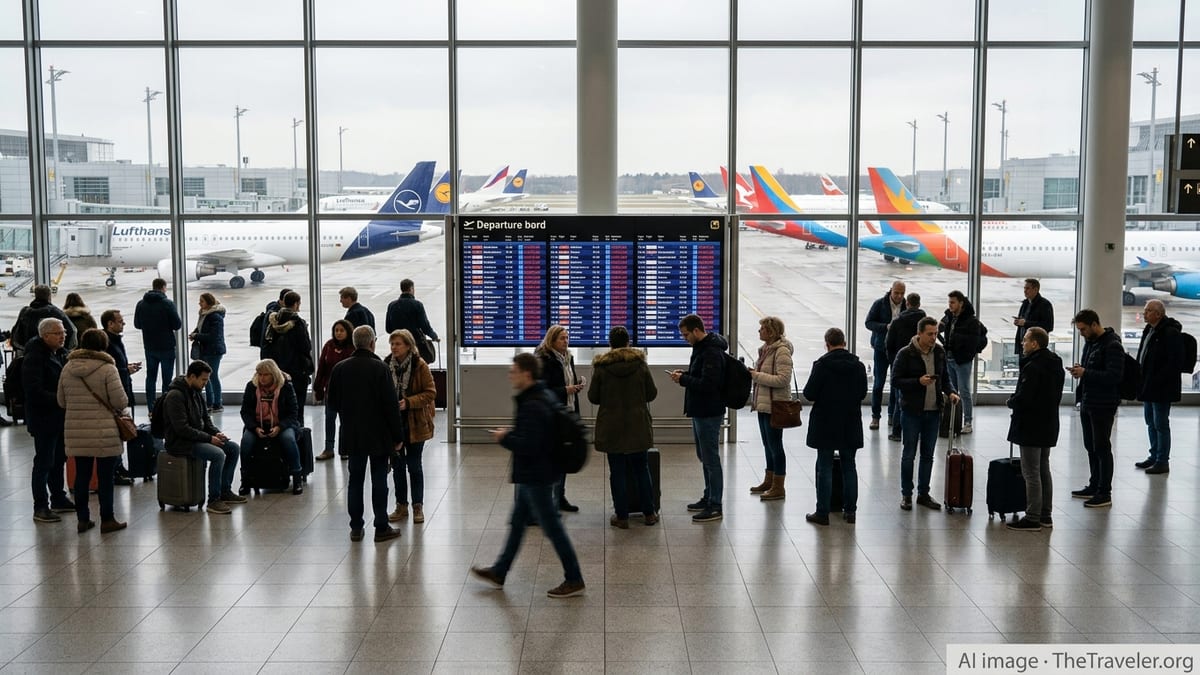
Wave of Cancellations Across Key German Hubs
Publicly available airport and tracking data indicate that German aviation hubs experienced a sharp spike in disruption, with a combined 249 cancellations reported at Berlin Brandenburg, Munich and Frankfurt airports alongside extensive knock-on delays. The disruption affected a broad mix of domestic, European and long haul services, leading to crowded terminals and lengthening queues at check in, security and rebooking counters.
The impact was most visible at Frankfurt and Munich, where Lufthansa’s extensive hub operations connect Europe with North America, Asia and the Middle East. Cancellations on feeder services into these hubs forced many travellers to replan multi leg itineraries at short notice, while delayed departures further compressed already busy afternoon and evening banks of flights.
Berlin Brandenburg, a key base for low cost carriers including Ryanair and easyJet, also saw significant disruption, particularly on short haul routes to popular European city and holiday destinations. Reports from flight status boards and passenger tracking platforms showed clusters of cancelled and heavily delayed departures to major cities such as London, Vienna and Amsterdam, as well as Mediterranean leisure routes.
Although operations continued at all three airports, the scale of the cancellations and rolling delays created a day of uncertainty for travellers, with many facing missed connections, extended waits or the need to arrange overnight stays near the airports.
Major Airlines Hit, From Low Cost to Full Service Carriers
The disruption cut across airline business models and alliances, affecting low cost carriers and full service networks alike. Data compiled from airport timetables and independent tracking services pointed to cancellations and delays on flights operated by Ryanair, easyJet, Lufthansa, British Airways, Austrian Airlines and several smaller European carriers serving German hubs.
Lufthansa and Austrian Airlines, both central to hub operations in Frankfurt, Munich and Vienna, accounted for a significant share of the disrupted long haul and connecting traffic. The cancellations reduced capacity on important trunk routes linking Germany with other European capitals and onward intercontinental services, placing pressure on remaining flights that quickly filled with rebooked passengers.
Ryanair and easyJet, which operate high frequency short haul schedules to and from Berlin and other German cities, were particularly exposed on popular intra European routes. Even where outright cancellations remained limited on some rotations, accumulated delays of more than an hour were frequently recorded, compressing turnarounds and pushing later flights further behind schedule.
British Airways and other network carriers flying into Frankfurt, Munich and Berlin also reported affected services, notably on links to London and other major Western European gateways. For many travellers, this meant potential disruption at both ends of their journey, with congested conditions at departure and arrival airports as carriers worked to absorb displaced passengers.
Berlin, Munich and Frankfurt Routes Under Strain
The disruption was concentrated on routes linking Berlin, Munich and Frankfurt with other major European hubs and key regional destinations. High demand services to cities such as London, Paris, Vienna, Zurich and Amsterdam reported a mix of cancellations and delays, magnifying the impact for connecting passengers who rely on tight transfer windows.
Domestic routes within Germany, including services between Berlin, Munich and Frankfurt themselves, also came under pressure. These flights serve as crucial connectors for travellers heading to long haul departures, and their removal or delay from the schedule created gaps that were difficult to fill at short notice. Some passengers attempting same day connections were forced to accept rebookings a full day later or reroutes via alternative European hubs.
Holiday traffic was likewise affected, with several cancellations and substantial delays recorded on flights from Berlin and Munich to Mediterranean resorts and island destinations. As these routes often operate near full capacity in peak periods, spare seats for disrupted travellers were limited, pushing some passengers to consider rail alternatives within Europe or to postpone their trips entirely.
Operational data suggest that the cumulative effect of these route level disruptions was felt throughout the day, as delayed aircraft and crew movements at one airport cascaded into further schedule instability at others, particularly during late afternoon and evening peaks.
What Today’s Disruptions Mean for Travellers
The scale of cancellations and delays across German airports underlines the continuing fragility of aviation operations during busy travel periods. Even when weather conditions remain generally flyable and infrastructure operates normally, modest schedule disruptions can quickly multiply, especially at complex hub airports where a single late inbound aircraft can affect several onward departures.
For travellers, the events highlight the importance of monitoring flight status in real time and building additional buffer time into itineraries that rely on critical connections through hubs such as Frankfurt and Munich. Airlines and airports now offer a range of digital tools, from mobile apps to push notifications and real time departure boards, that can help passengers react more quickly when schedules begin to unravel.
Passengers on affected flights within the European Union may benefit from consumer protections that, depending on the cause of the disruption and the length of the delay, can include meal vouchers, hotel accommodation, refunds or compensation. Specialist passenger rights platforms emphasise that travellers should keep boarding passes, booking confirmations and receipts for any extra costs incurred in order to support later claims.
Travel sector observers note that repeated waves of disruption across European skies in recent seasons, whether driven by staffing constraints, airspace congestion, strikes or technical issues in wider aviation systems, have encouraged many passengers to reconsider how tightly they plan connections and how flexible their arrangements are when unexpected cancellations strike.
Planning Ahead as Europe’s Travel Season Builds
With Europe’s travel calendar moving toward traditionally busy spring and summer periods, the latest wave of disruption in Germany serves as a reminder that even a single day of concentrated cancellations can ripple through wider travel plans. Airlines are working to refine schedules, increase resilience and improve communication with passengers, yet industry reports indicate that capacity remains tight on many core routes in and out of German hubs.
Travel advisers and consumer organisations consistently recommend that passengers build contingency into their plans when transiting major hubs, especially when travelling with checked luggage, families or on itineraries that combine multiple airlines. Choosing longer connection windows, early day departures and flexible ticket options can provide additional room to manoeuvre when the unexpected occurs.
For Germany specifically, Frankfurt, Munich and Berlin are likely to remain focal points for any future disruption simply due to the volume of traffic they handle and their role as transfer points between continental Europe and global destinations. Travellers who route through these airports are encouraged to remain alert to changing conditions, including weather patterns, air traffic control constraints and operational updates from airlines.
As operations gradually stabilise following the latest round of cancellations and delays, many passengers will still be working through rebookings and onward arrangements. The experience is likely to feed into future booking decisions, with some travellers prioritising more robust schedules and clearer disruption support when choosing between carriers and routes for their next journey through Germany.