

More news on this day
Across Europe, destinations known for “Old-World” grandeur are seeing renewed interest, and recent travel trends indicate that Germany is increasingly being grouped with Austria, France and Hungary as a premier choice for visitors seeking layered history, landmark architecture and a refined cultural atmosphere.
Get the latest news straight to your inbox!
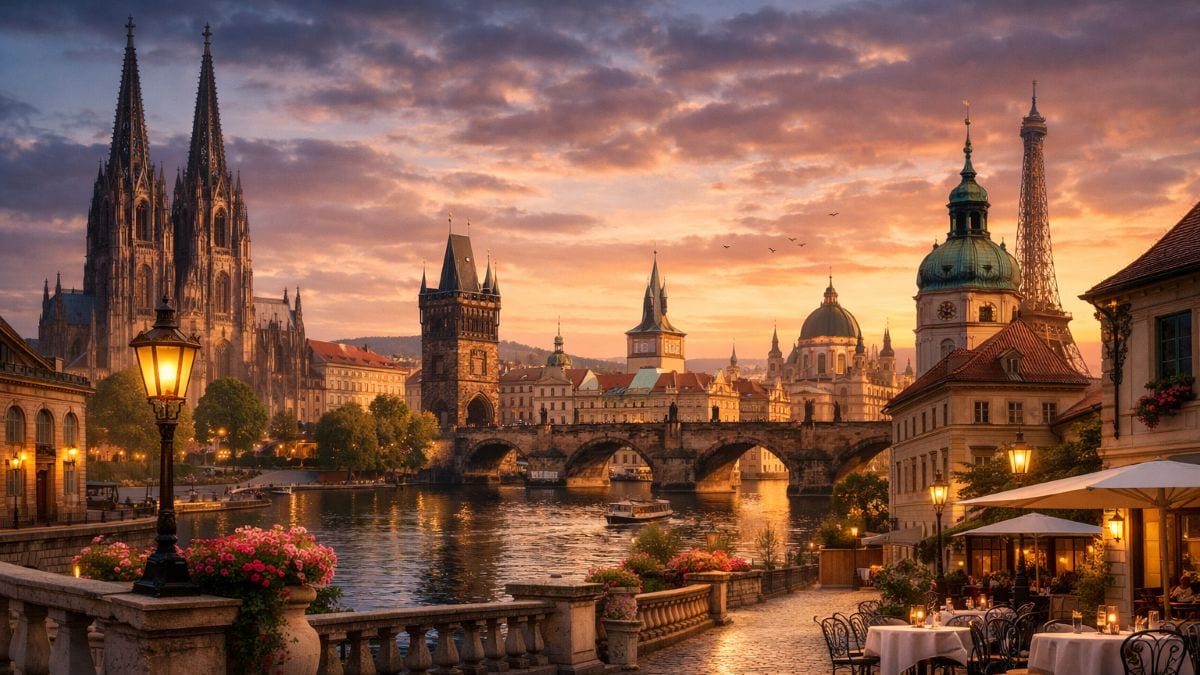
Image by Latest International / Global Travel News, Breaking World Travel News
Heritage Travel Surges Across Europe’s Historic Heartland
Recent travel industry analysis points to sustained growth in heritage-focused tourism, with travelers prioritizing cities where centuries of history remain visible in the streetscape, urban fabric and cultural institutions. Projections cited by international market researchers suggest that global heritage tourism could more than double by 2035, reflecting a wider shift toward immersive, educational journeys over short, purely leisure-based stays.
Against this backdrop, Germany has started to feature more prominently alongside longtime favorites such as Austria, France and Hungary. Reports from national and regional tourism bodies describe increasing demand for itineraries structured around historic quarters, palace complexes and museums, mirroring trends already well established in Vienna, Paris and Budapest. These four countries now form a closely linked corridor for visitors seeking Old-World elegance with modern visitor infrastructure.
Published coverage from European cultural organizations further indicates that coordinated events, anniversary programs and cross-border campaigns are drawing travelers who may once have considered only a single capital. Today, multi-country rail and river routes that combine Germany’s medieval towns with Austria’s imperial boulevards, France’s royal châteaux and Hungary’s riverside palaces are becoming a recognizable product segment.
Germany Showcases Romantic Routes and Cultural Capitals
Germany’s tourism authorities have been actively positioning the country as a destination where historic ambiance is central to the visitor experience. According to recent promotional materials, initiatives branded around “Romantic Germany” and “Cultureland Germany” emphasize river valleys lined with castles, UNESCO-listed old towns and routes that connect Baroque residences and medieval market squares. Travel trade guides for 2025 and 2026 highlight regions such as the Moselle and Rhine, the Swabian Alb and the Ammergau Alps as places where landscape and cultural history are tightly interwoven.
City-focused programs are also placing Germany more firmly in the Old-World elegance conversation. Chemnitz holds the title of European Capital of Culture for 2025, with a year-long schedule showcasing its industrial heritage, art nouveau architecture and museums. Travel features note that this designation encourages visitors to look beyond Berlin and Munich to discover mid-sized cities where restored façades, historic theatres and civic buildings tell a story of nineteenth- and early twentieth-century prosperity.
Specialist travel media continue to underline the breadth of Germany’s architectural offering, from Gothic cathedrals and Renaissance town halls to Bauhaus modernism. Articles promoting cultural travel in 2025 draw attention to routes through the Black Forest and to cities such as Regensburg and Trier, where Roman remains and medieval towers stand close to contemporary cultural venues. This mix of eras allows Germany to compete directly with its neighbors for travelers seeking a visually rich, historically layered environment.
Austria, France and Hungary Double Down on Historic Icons
Austria, France and Hungary, long associated with grand avenues and ornate façades, are reinforcing their appeal through major preservation and redevelopment efforts. In France, extensive investment programs are reshaping access to some of the country’s best-known cultural landmarks, with projects under way at institutions including the Louvre and major heritage sites in regions such as the Loire and Champagne. National audits referenced in French media outline multi-billion-euro commitments over the coming decade aimed at ensuring that historic buildings remain structurally sound and visitor-ready.
High-profile reopenings are further stoking interest. Paris’s Notre-Dame Cathedral, reopened to visitors after years of restoration work following the 2019 fire, has rapidly resumed its position as a focal point for cultural tourism. National and regional platforms promoting travel in 2025 highlight the cathedral alongside the Palais Garnier opera house and royal estates as emblematic of France’s architectural legacy and decorative arts.
In Austria, official statistics and municipal reports show that Vienna remains one of the world’s leading congress and culture cities, bringing in visitors drawn by its imperial palaces, coffeehouse traditions and performance venues. The city’s late-nineteenth-century Ringstrasse architecture, combined with Baroque churches and grand museums, supports its longstanding reputation for Old-World sophistication. Beyond the capital, smaller Austrian towns with well-preserved centers and historic spa culture complement the urban offering.
Hungary, meanwhile, continues to receive attention for Budapest’s riverside silhouette and monumental architecture. Travel guides and curated design features produced for 2025 describe the city’s skyline of domes, spires and bridges as a visual summary of central European history, with the neo-Gothic Parliament, Buda Castle and Matthias Church regularly singled out. According to tourism-focused reports, record visitor numbers in recent years have been driven in part by interest in these manmade landmarks and by a perception of Budapest as a more affordable yet deeply atmospheric alternative to other capitals.
Iconic Architecture Anchors the Sense of Old-World Elegance
Across all four countries, landmark architecture functions as both attraction and symbol, shaping how travelers imagine “Old-World” Europe. In Germany, UNESCO-listed ensembles in cities such as Regensburg and the Roman monuments of Trier are promoted alongside Rococo pilgrimage churches and the legacy of the Bauhaus movement, allowing visitors to trace stylistic evolutions over two millennia. Travel planners point to this density of sites as a competitive advantage for itineraries focused on art and architecture.
In France, major museums and châteaux continue to define the national image abroad, even as they undergo major transformation projects. Reports in European media describe large-scale redesigns at the Louvre intended to ease overcrowding and reshape the visitor flow to world-famous works of art, while regional coverage highlights the adaptive reuse of former industrial sites as contemporary museums and cultural centers. These developments are framed as a way to keep the country’s architectural heritage relevant to new generations of travelers.
Austria and Hungary add a strongly theatrical dimension to the Old-World picture. Vienna’s Hofburg and Schönbrunn palaces, ringed by gardens and flanked by galleries, provide the backdrop for classical concerts and seasonal balls, experiences which feature prominently in tourism campaigns. Budapest’s Danube panorama, designated as a World Heritage site, links restored waterfront buildings, hillside fortifications and grand boulevards, with international bodies closely monitoring ongoing reconstruction projects in the historic Buda Castle Quarter to balance authenticity with visitor expectations.
Together, these cities and regions present visitors with streetscapes where period architecture remains central to daily life rather than isolated in open-air museums. This integration of living neighborhoods and historic structures appears to be a key selling point for travelers seeking a feeling of continuity with Europe’s past.
Cultural Programs and Seasonal Events Deepen the Experience
Beyond bricks and stone, current programming choices in Germany, Austria, France and Hungary seek to translate historic settings into active cultural stages. German event calendars for 2025 and 2026 highlight classical music festivals, literary commemorations and themed routes dedicated to composers such as Bach, as well as anniversaries for protected landscapes and long-distance walking trails. These initiatives invite visitors to experience historic churches, concert halls and town squares as working venues rather than static attractions.
France continues to expand European Heritage Days and related initiatives, opening thousands of sites, many of them rarely accessible, over concentrated weekends in September. National newspapers report that more than six million people visited heritage locations during the most recent edition, underlining the domestic and international appetite for behind-the-scenes access to historic buildings, gardens and industrial complexes now repurposed for cultural use.
In Hungary, cultural festivals, riverfront events and museum programming in Budapest are designed to capitalize on the city’s built environment, from nighttime illuminations along the Danube to exhibitions in castle and palace settings. Design-focused travel guides describe curated routes that link Art Nouveau cafés, thermal bath complexes and historic theatres, positioning the city as a destination where day and night are structured around its heritage architecture.
Austria similarly leverages its concert seasons, opera schedules and Christmas markets set against Baroque and neo-Renaissance façades. Vienna’s event statistics, which keep the city near the top of global rankings for congresses and cultural meetings, suggest that visitors are increasingly combining business and leisure stays, spending time in traditional coffeehouses, museums and concert halls that have changed little in appearance over the past century.