

More news on this day
German holidaymakers are being swept into a widening storm of air travel disruption as the escalating crisis in West Asia forces carriers including Lufthansa, British Airways, Air India and Emirates to cut routes, reroute long-haul services and warn passengers of protracted delays and refund complications.
Get the latest news straight to your inbox!
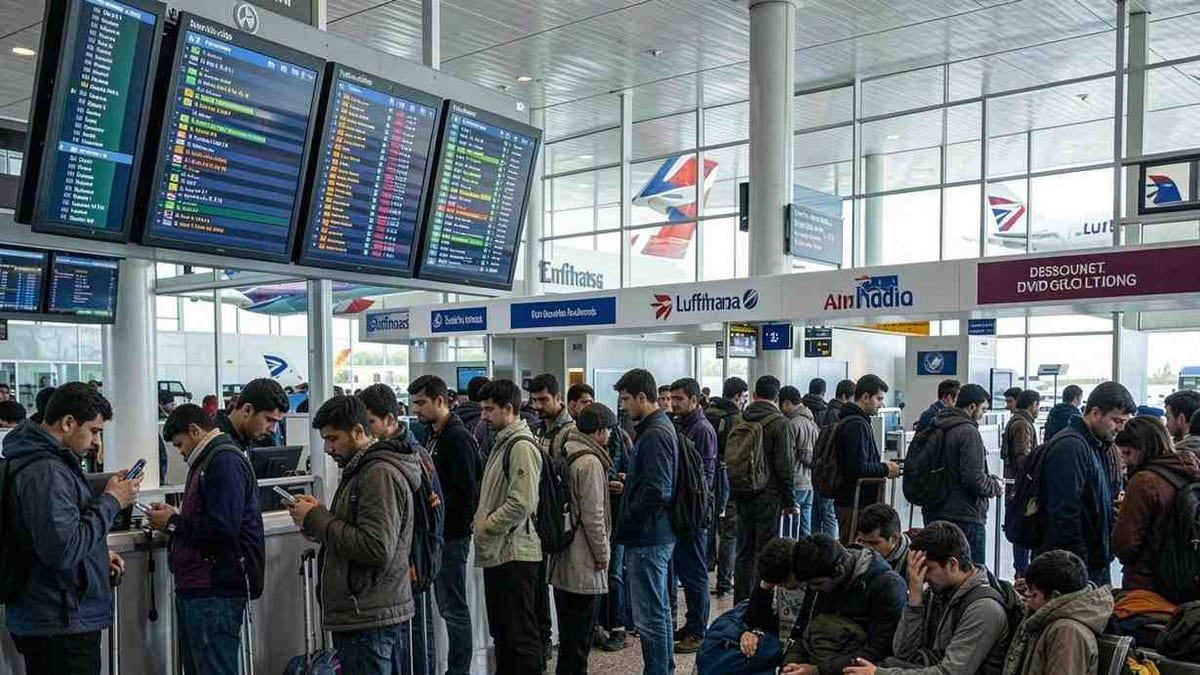
Image by Travel And Tour World
West Asia Conflict Redraws Global Flight Paths
Escalating military tension across West Asia has triggered some of the most significant airspace closures since the pandemic, hitting routes that connect Europe, North America and Asia. Air corridors over Iran, Iraq, Israel and parts of Syria have been periodically restricted or shut, according to publicly available aviation data and media coverage. The area has long served as a busy bridge between continents, so each closure forces wide detours for long-haul flights.
Reports from industry analysts indicate that airlines are absorbing higher fuel burn and longer block times as they arc north over the Caucasus or south over the Red Sea to avoid no-fly zones. This has translated into missed connections, rolling delays and, in many cases, outright cancellations. The disruption is rippling far beyond the immediate conflict zone, affecting journeys that simply use the region as a transit corridor between Europe and Asia or between India and the Americas.
Travel and tourism organizations estimate that the conflict is stripping hundreds of millions of dollars a day from global visitor spending as passengers postpone or cancel trips amid the uncertainty. Summer leisure plans for travelers from Italy, the United Kingdom, the United States, France, Spain and now Germany are increasingly at risk, particularly for itineraries involving multiple connections across affected hubs.
For many travelers, the crisis is less about safety on any single flight and more about the unpredictability of whether they will reach their destination at all, or what options they will have if their original routing becomes untenable at short notice.
Lufthansa Extends Suspensions as German Holiday Plans Unravel
Germany has moved to the center of the turbulence as Lufthansa and its group airlines adjust schedules in response to the fast-changing security picture. Public statements and timetable updates show that the Lufthansa Group has extended a suspension of passenger services to Tel Aviv and maintained a halt or sharp reduction on select routes into the Gulf, including Dubai and other key West Asia gateways.
Lufthansa has also been rerouting many Europe to Asia flights away from traditional corridors, adding hours to journeys and straining tightly timed banked connections through Frankfurt and Munich. Published route changes and media analysis indicate that the airline has shifted additional capacity to alternative long-haul markets such as Singapore, Cape Town and certain African destinations in an effort to keep aircraft and crews productively deployed while West Asia capacity is constrained.
For German vacationers heading to or from popular winter-sun and Easter break destinations, the impact is immediate. Travelers returning from Southeast Asia report being forced onto complex, multi-stop routings via secondary hubs, while others have seen their flights repeatedly canceled as schedules are revised week by week. With Germany already grappling with broader economic headwinds, the added uncertainty over outbound holidays and family visits is feeding a sense of disruption that stretches well beyond aviation.
Tour operators catering to the German, Italian, French and Spanish markets are reporting higher levels of rebooking requests and last-minute itinerary changes. Package providers appear to be steering some clients away from itineraries involving high-risk airspace and toward routes via northern Europe or the Atlantic, often at higher cost.
British Airways, Emirates and Air India Warn of Delays and Detours
British Airways, Emirates and Air India have each issued schedule updates and passenger advisories indicating that flights touching West Asia may operate on modified routings, at different times or not at all on certain days. According to published coverage of airline timetables, British Airways has pulled services to several Gulf points and increased frequencies to Southeast Asian destinations such as Bangkok and Singapore from London to capture displaced demand from disrupted Middle East hubs.
Emirates, which relies heavily on Dubai as a global super-hub, has been forced to trim a substantial portion of its schedule while rerouting many remaining services around restricted airspace. Travel industry reports suggest that the airline’s reduced connectivity is complicating onward journeys for passengers from the United States, the United Kingdom and continental Europe who typically use Dubai as a one-stop bridge to South and Southeast Asia, Australia and New Zealand.
Air India, meanwhile, has adjusted a number of routes that previously tracked over the Gulf and Iran, with selected flights reportedly operating longer great-circle paths to Europe and North America. That has left Indian-origin travelers and tourists from the US and Europe facing longer flights, congested rebooking queues and uncertainty over whether connections in Delhi and Mumbai will hold.
Collectively, these shifts have narrowed the options for travelers across Italy, France, Spain, Germany, the UK and the US, as several of the most commonly used one-stop combinations between Europe, India and Asia Pacific rely on smooth operations through Gulf and Levantine hubs.
Refunds and Rerouting Become a Headache Across Markets
Alongside the operational turmoil, refund and rerouting policies have emerged as a major pain point for affected travelers. Publicly available information on airline websites and consumer forums indicates that many carriers are offering fee-free date changes or vouchers for disrupted flights but are slower or more restrictive when it comes to cash refunds, particularly when passengers have already begun their trips.
For European carriers such as Lufthansa and British Airways, compensation rules under EU and UK regulations intersect with the concept of extraordinary circumstances. Because the current disruptions stem from an armed conflict and related airspace closures, many cancellations fall into categories that limit mandatory compensation, even though passengers are still entitled to refunds when flights are canceled. This technical distinction is often poorly understood by travelers, fuelling frustration when long delays do not automatically translate into payouts.
Reports from India, the UK and mainland Europe also highlight inconsistency in how frontline teams apply rebooking policies. Some passengers describe being moved swiftly onto partner airlines or alternative routings, while others recount long waits, limited options and repeated referrals between airline, online travel agency and tour operator. In hub airports where multiple major carriers are trimming schedules at once, stranded travelers sometimes find that every alternative long-haul option is already fully booked for days.
Travel protection products are under scrutiny as well. Insurers often exclude war-related disruptions or apply complex sublimits, leaving some policyholders surprised at how little coverage applies when cancellations are linked, even indirectly, to conflict. Industry observers suggest that the West Asia crisis may accelerate demand for more flexible cancellation options and clear, easily understood coverage for geopolitical risk.
Impact on Italy, France, Spain, UK and US Vacationers
While Germany has recently emerged as a focal point of the disruption, travelers from Italy, France, Spain, the United Kingdom and the United States have been grappling with similar challenges for weeks. Many of these markets are heavily exposed to routes transiting the Middle East, whether for journeys to the Indian Ocean, East Africa, India or Southeast Asia. As airlines cut capacity and lengthen routings, a classic one-stop holiday journey can quickly turn into a multi-day odyssey.
Reports from European tourism boards and trade associations suggest a noticeable uptick in cancellations and booking hesitancy, particularly for itineraries scheduled for late spring and early summer that involve complex connections. Some travelers are opting to swap long-haul beach escapes for shorter, intra-European breaks that feel less vulnerable to global disruptions. Others are pushing plans into late 2026 in the hope that airspace patterns stabilize.
For US travelers, the disruption is especially acute on trips that combine Europe and Asia in a single itinerary. Detours around West Asia add flight time and increase the risk of misconnecting at European hubs already juggling altered banks of long-haul departures. Travel advisors in the North American market are reportedly nudging clients toward more conservative routings, including direct transpacific services to Asia or single-stop options through north Asian hubs rather than the Gulf.
Despite the turmoil, demand for international travel remains robust. Industry data shows that many passengers are willing to accept longer itineraries, higher fares and the risk of irregular operations in order to pursue long-delayed trips. For now, however, vacationers across Germany, Italy, the UK, the US, France and Spain are learning that flexibility, patience and a detailed understanding of their rights are essential tools when navigating an air network reshaped by conflict.