

More news on this day
Gillette, Wyoming’s Northeast Wyoming Regional Airport has emerged as one of the most reliable small airports in the United States, with a new national analysis highlighting its exceptionally low rates of long delays and cancellations, and positioning the regional hub among the country’s most punctual performers.
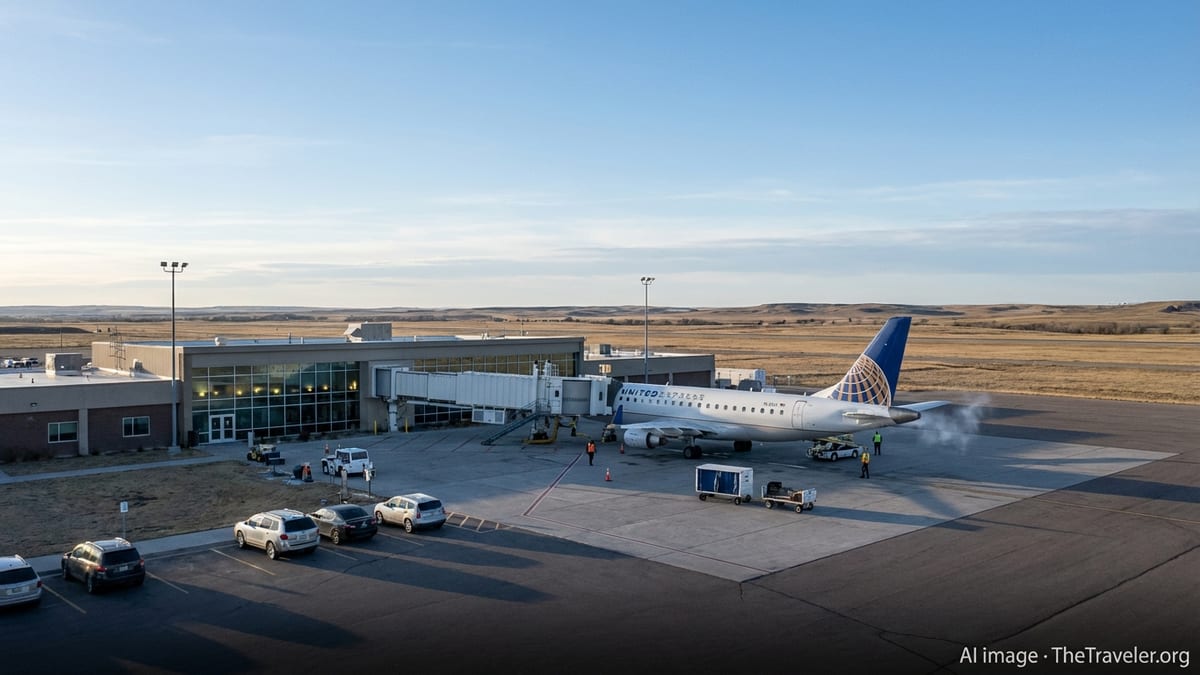
Data Puts Gillette’s Regional Hub in the National Spotlight
The latest report from air travel data firm AirAdvisor, released this week, ranks Gillette’s Gillette–Campbell County Airport among the most punctual small airports in the nation, citing its rarity of long, evening delays and strong schedule integrity. The findings place the northeast Wyoming facility in an elite group of regional hubs that consistently get travelers where they need to go on time.
Analysts examined federal on-time statistics for dozens of small commercial airports across the United States, focusing on the share of flights suffering delays of an hour or more, especially during late afternoon and evening departure banks. Gillette–Campbell County Airport stood out for having very few disruptions that spill into the final departures of the day, a key factor for passengers with limited backup options in smaller markets.
The report notes that long delays at Gillette are uncommon and that the airport “rarely sees disruptions extend into evening departures,” a performance profile that sharply contrasts with some peer airports where even minor schedule issues can cascade into serious late-day reliability problems.
For a facility that serves a relatively small but growing catchment area, the new ranking marks a significant moment of national recognition. It underscores how a remote energy and ranching community has come to depend on an airfield that performs on par with, and in some cases better than, much larger regional competitors.
Near-Record Traffic and Remarkably Few Cancellations
The strong reliability scores come on the heels of a banner year for passenger traffic in Gillette. According to figures shared at a recent airport board meeting, the Northeast Wyoming Regional Airport handled just over 62,000 passengers in 2024, a 14 percent increase over the previous year and the second-busiest year on record for the facility.
Airport leadership reports that flights were highly utilized, averaging about 86 percent full over the course of the year. Despite those robust load factors, only around 1.3 percent of scheduled flights in 2024 were canceled, an unusually low rate in an era of frequent operational disruptions driven by weather, staffing constraints and air traffic system strains.
Local officials say that combination of rising demand and solid operational performance helps validate years of investment in the airport’s infrastructure and air service, much of it supported by Wyoming’s Air Service Enhancement Program. The state initiative has long underwritten key regional routes, including United Express service operated by SkyWest between Gillette and Denver, giving the community dependable access to one of the nation’s largest hub airports.
With most flights running on time and few cancellations, travelers in Campbell County and surrounding areas have increasingly opted to begin their journeys at home instead of driving hours to larger airports in Rapid City or Billings. That shift has further reinforced the airport’s role as a critical transportation lifeline for northeast Wyoming.
Why Small-Airport Reliability Matters for Rural Travelers
In large metropolitan areas, a delayed or canceled flight often comes with alternatives: dozens of daily departures, nearby airports and ample connecting options. For travelers in places like Gillette, where the commercial schedule is compact and the final departure of the day may be the only way out, reliability can make the difference between making a crucial business meeting, medical appointment or family event and missing it altogether.
Industry analysts note that small airports with strong on-time records deliver outsized value to rural communities. When long delays are rare and evening departures generally push back as scheduled, passengers face lower risks of overnight stranding and unexpected hotel stays in hub cities. For employers relying on air travel to move staff quickly in and out of remote regions, that reliability can directly affect productivity and cost.
Gillette’s performance also illustrates how operational discipline at a small field can help offset the vulnerability that comes with a thin schedule. By keeping daytime disruptions from cascading into the evening, the airport and its airline partners reduce the chances that mechanical issues or passing weather will snowball into missed connections and cancelled last flights.
That reliability, combined with short security lines and easy terminal access, feeds into a broader quality-of-travel narrative that many rural airports are now using to compete with larger hubs. For Gillette, the new ranking offers concrete data to back up what many local flyers say they have experienced anecdotally for years.
Balancing Growth with Upcoming Runway Work
The recognition for on-time performance comes as Gillette’s airport prepares for a significant airfield project this spring. A planned pavement maintenance closure of its primary runway from early April through late May 2026 is expected to temporarily affect commercial air service, with officials cautioning that schedules will be adjusted while the work is underway.
Airport executives emphasize that the short-term disruption is a calculated trade-off aimed at preserving long-term reliability. Maintaining the main runway, they say, is essential to ensuring that aircraft can continue to operate safely and efficiently in harsh High Plains weather conditions, from winter snow and ice to strong summer crosswinds.
During the closure, the airport and its airline partner will coordinate closely on revised schedules and passenger communication, leaning on the same operational rigor that has contributed to strong on-time metrics. Travelers are being encouraged to book early, monitor itineraries closely and allow extra flexibility during the construction window.
Once the project is complete, officials expect the improved runway surface to strengthen the airport’s resilience to weather-related delays and help preserve the punctuality record that has now drawn national notice.
A Model for Other Regional Gateways
Gillette’s emergence as one of the nation’s most on-time small airports is being watched by peers across the Mountain West and Great Plains, where communities face similar challenges of distance, weather and limited air service options. The example suggests that even modestly sized facilities can attain top-tier reliability with the right mix of carrier partnerships, infrastructure upkeep and operational focus.
State-level support has been a key part of that equation. By using targeted funding to stabilize essential routes and encourage consistent service, Wyoming’s air service program has helped create conditions in which airlines can operate predictably, aircraft can be well utilized and passengers can count on schedules that largely hold.
Local leaders in Gillette say they hope the new ranking will help attract additional routes or larger aircraft over time, further expanding options for leisure and business travelers while maintaining the punctual performance that has put the airport in the national spotlight. For now, the recognition confirms that this High Plains outpost has quietly become one of America’s most reliable regional gateways.