

More news on this day
Airline heavyweights from Qantas to British Airways are splashing out dividends and share buybacks on the back of record profits, even as signs of a tightening global margin environment emerge in key routes linking Australia, the United States, the United Kingdom and China, raising questions for investors and hotel partners such as Hilton, Marriott and Accor about how long the payout boom can last.
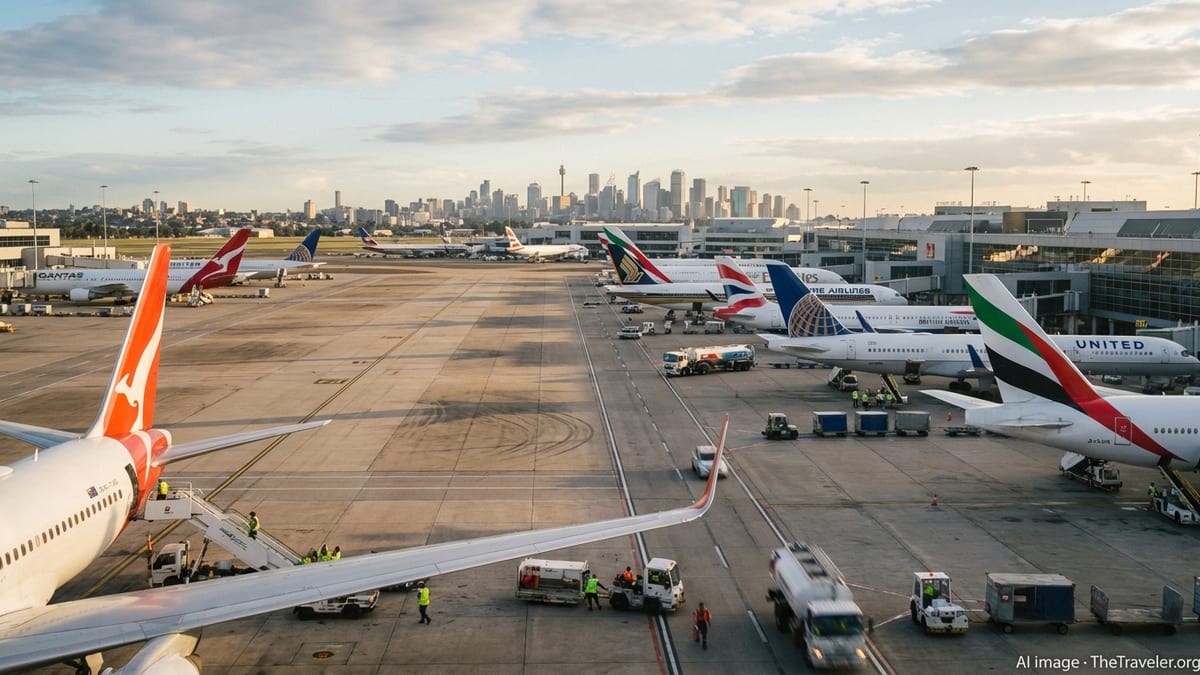
Qantas Turns On Cash Returns As Costs Climb
Qantas Airways has moved decisively to re‑engage income‑hungry investors, unveiling an interim fully franked dividend of 19.8 cents a share alongside an expanded on‑market buyback program after reporting a half‑year underlying profit before tax of around A$1.46 billion and operating margins in the low teens. The Australian flag carrier framed the move as a return to “normal” capital management following the post‑pandemic repair of its balance sheet and the sharp rebound in international and domestic travel demand.
Beneath the headline numbers, however, Qantas acknowledged that operating conditions are becoming more complex. Capacity growth, particularly on leisure‑heavy routes to Japan and Southeast Asia, is starting to put pressure on yields, while the airline pushes ahead with the most ambitious fleet renewal in its history, keeping net capital expenditure close to A$1.8 billion in the half. That spend, together with higher labour and maintenance costs, is eating into the unit cost gains that powered the early post‑COVID recovery.
The group’s loyalty business, long regarded as its most reliable profit engine, delivered double‑digit revenue growth as Qantas announced the biggest overhaul of its frequent flyer program in decades, including the ability to roll over status credits and earn them through everyday spending. The strategy underscores how much of Qantas’s earnings resilience now rests on quasi‑financial services rather than pure flying, even as the carrier leans on cash returns to keep shareholders onside during a period of heavy investment and regulatory scrutiny.
For global hotel brands, Qantas’s strong cash flow and continued focus on network connectivity across Australia and the Pacific remain crucial. Hilton, Marriott and Accor rely on sustained inbound traffic into Sydney, Melbourne and Brisbane to support room rates and pipeline growth, but any prolonged margin squeeze at Qantas could ultimately constrain capacity growth or push fares higher, with knock‑on effects for occupancy and corporate travel budgets.
US and UK Carriers Chase Premium Demand While Watching Costs
Across the Pacific and Atlantic, United Airlines and British Airways are charting their own delicate balance between rewarding shareholders and defending profitability. After several quarters of robust transatlantic and long‑haul demand, both carriers have flagged that cost pressures, particularly around labour contracts, aircraft leasing and maintenance, are eroding some of the pricing power they enjoyed when capacity was still heavily constrained.
United has leaned into the long‑haul premium segment from US hubs such as Newark, San Francisco and Houston, expanding capacity to London, Sydney and key Asian gateways. The strategy has helped sustain load factors and premium cabin yields, but the carrier has also signalled that non‑fuel unit costs will remain elevated as it absorbs wage increases and copes with ongoing aircraft delivery delays. Investors are watching closely to see whether share repurchases and future dividend ambitions can be supported without a visible deterioration in margins if demand softens.
In the UK, British Airways’ parent International Airlines Group has just reported record profits for 2025, with operating margins above 15 percent at both BA and Iberia and an 8 to 9 percent uplift in the dividend. A new €1.5 billion share buyback on top of last year’s programme underlines management’s confidence, yet the market reaction has been cautious, with the group’s shares slipping as analysts questioned how sustainable current pricing and capacity discipline will prove in a more competitive European short‑haul environment.
For hotel operators with heavy exposure to London, New York and key US gateway cities, the health of these transatlantic workhorses is critical. Premium leisure and blended business travel have been central to record room rates in central London and Manhattan, but any moderation in airline margins could translate into tighter capacity growth or sharper discounting in shoulder seasons, which in turn would ripple through to hotel revenue per available room and development appetite.
Asia’s Powerhouses Pivot Around China And North Asia
In Asia, Singapore Airlines and Emirates are navigating a more uneven demand picture that hinges increasingly on the pace of recovery in China and wider North Asia. Singapore Airlines has reported a sharp rebound in quarterly operating profit and record revenue after a volatile 2025 that saw profits temporarily squeezed when capacity expanded faster than demand and total expenses rose by double digits. Recent figures show net profit recovering as routes to Japan, South Korea and mainland China fill up again and load factors climb.
The carrier has struck a notably optimistic tone on the outlook, pointing to sustained demand for premium cabins and connecting traffic through its Changi hub. At the same time, management has acknowledged that yields across the region have come under pressure as more capacity returns and competition intensifies, especially on secondary Chinese routes. That dynamic is forcing a greater focus on ancillary revenue and loyalty partnerships, echoing the model long championed by Qantas.
Emirates, which sits outside the listed‑company dividend race but remains a bellwether for global travel flows, continues to post record half‑year earnings and strong margins backed by high passenger volumes and a thriving cargo arm feeding Chinese ecommerce demand. Yet even Emirates has seen its passenger seat factor ease slightly as capacity is added back, underlining how sensitive yields are becoming across the broader Asia Pacific corridor.
For Hilton, Marriott and Accor, these shifts matter because they help determine the mix of travellers moving through key hubs like Singapore, Dubai, Hong Kong and Shanghai. A tilt toward price‑sensitive leisure or group segments as airlines chase volume could temper the extraordinary room rate growth global chains have enjoyed in markets such as Singapore and Dubai since borders reopened, even if occupancy remains healthy.
Global Margin Squeeze Or Healthy Normalisation?
The International Air Transport Association expects global airline net profit margins to stabilise at about 3.9 percent in 2025 and 2026, roughly in line with last year despite record absolute profits and passenger numbers forecast to reach more than 5 billion. That headline suggests a sector that is profitable but still struggling to earn its cost of capital as higher wages, congested supply chains and regulatory costs offset efficiency gains.
Against that backdrop, the surge in dividends and buybacks at groups such as Qantas and IAG looks less like a pure victory lap and more like an attempt to lock in investor goodwill while conditions remain favourable. With capacity steadily normalising on trunk routes linking Australia, the US, the UK and China, and with fares already off their post‑pandemic peaks in many markets, airlines have limited room to raise prices further without damaging demand.
Hotel majors are watching these trends closely. Their development strategies in markets from Sydney and Melbourne to Los Angeles, London, Shanghai and Guangzhou rest on assumptions of continued growth in long‑haul arrivals and relatively disciplined airline capacity. If carriers see their margins compressed and respond by trimming growth plans, consolidating frequencies or reallocating aircraft to more profitable regions, the impact on future hotel performance and pipeline timing could be significant.
For now, the story is one of transition rather than crisis. Travel demand remains robust across much of the world, but the easy profitability of the first post‑pandemic years is fading. As airlines juggle shareholder payouts with the need to invest in fleets, sustainability and service, the question for both carriers and their hotel partners is whether today’s dividend cheques are a sign of enduring strength, or a peak in the cycle before a more demanding phase for margins sets in.